Global Pharmaceutical Market Outlook 2026: How Obesity and Oncology Drugs Are Driving the Next Growth Breakthrough
Amid the accelerated restructuring of the global pharmaceutical industry, companies with capabilities in cross-border resource integration and innovative drug distribution are becoming increasingly critical. International pharmaceutical import-export service platforms such as Dengyue are playing a pivotal role in connecting China’s biopharmaceutical innovation with global demand, actively participating in this new wave of industry transformation. Looking ahead to 2026, the global pharmaceutical market stands at a key intersection of innovation and demand, where breakthroughs in obesity and oncology are propelling the industry toward a new phase of growth.
According to IQVIA, the global pharmaceutical market is expected to grow at a compound annual growth rate (CAGR) of approximately 5%–8%, reaching nearly $2.6 trillion by 2030. This expansion is primarily driven by the rapid uptake of GLP-1-based obesity therapies and the accelerated commercialization of innovative oncology treatments, particularly antibody-drug conjugates (ADCs) and bispecific antibodies.
Obesity Drugs: From Explosive Growth to Broad-Based Adoption
Obesity has evolved from a simple weight issue into a complex chronic disease involving cardiovascular, renal, and metabolic systems. The emergence of GLP-1 receptor agonists and related incretin-based therapies has fundamentally transformed the treatment landscape.
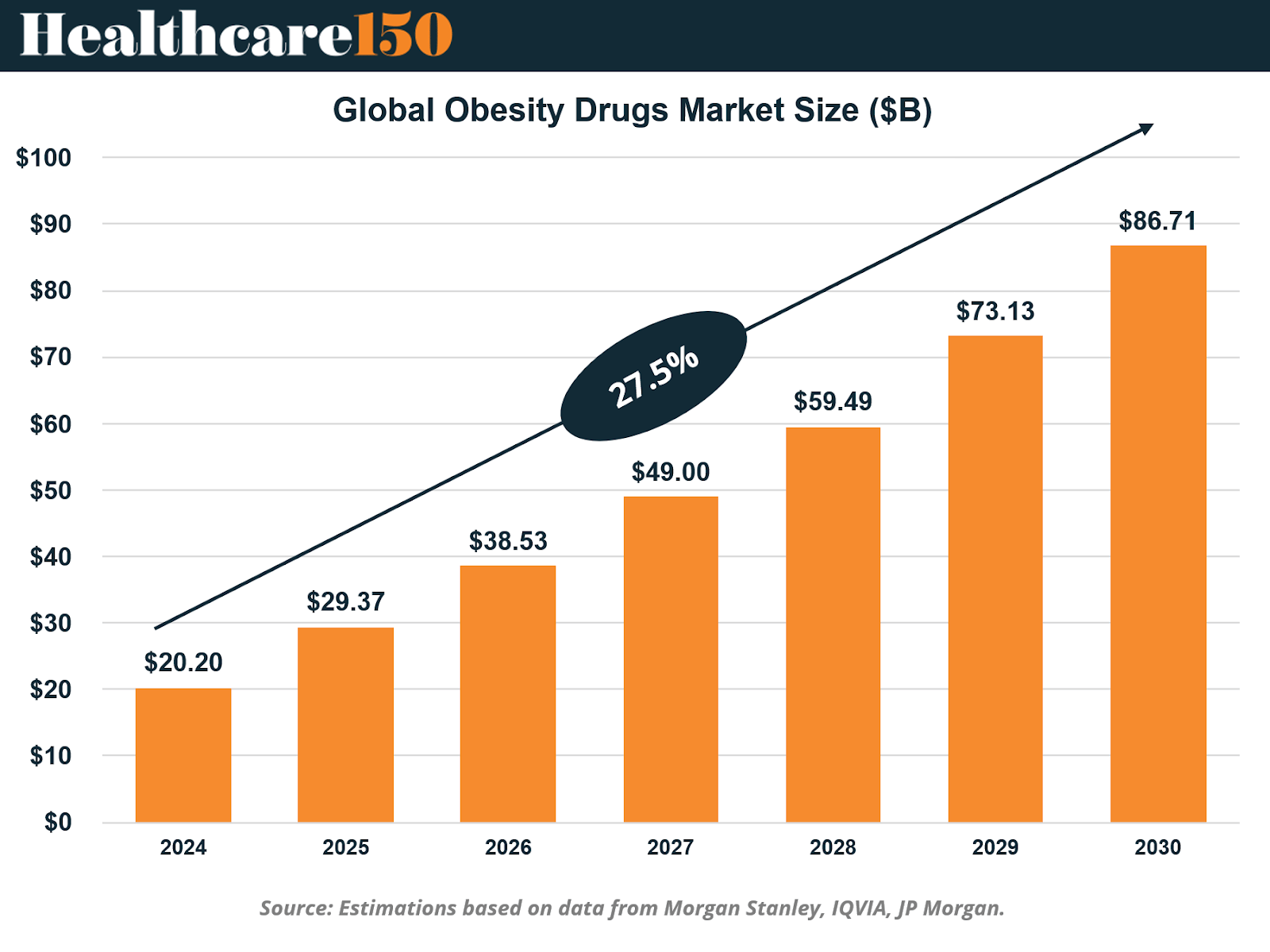
Flagship drugs such as semaglutide and tirzepatide have demonstrated robust weight-loss efficacy and cardiovascular benefits in large-scale clinical trials, driving the market beyond $70 billion in 2025. As the industry enters 2026, the focus is shifting from efficacy validation to improving accessibility and market penetration.
Oral formulations represent a key inflection point. The rollout of oral semaglutide, along with the anticipated launch of small-molecule GLP-1 receptor agonists such as orforglipron, significantly lowers barriers to treatment, enhances patient adherence, and expands use in primary care settings. This shift not only improves patient experience but also substantially increases market scalability.
The growth of the obesity drug market is driven by three primary factors:
- The continued rise in global obesity and metabolic disease prevalence
- Expansion of indications into cardiovascular risk reduction and chronic kidney disease
- Supply-side optimization, including oral formulations and future generics/biosimilars
In addition, multi-target therapies such as CagriSema are advancing incretin biology toward more comprehensive metabolic regulation, further strengthening long-term growth potential. The global obesity drug market is projected to approach $100 billion in 2026.
Oncology Drugs: Innovation Modalities Driving Sustained Growth
Oncology remains the largest segment of global pharmaceutical spending. With advances in molecular profiling and tumor immunology, drug development is shifting toward innovation driven by new technological modalities.
Among these, antibody-drug conjugates (ADCs) and bispecific antibodies have emerged as key growth engines:
- ADCs enable precise delivery of cytotoxic payloads and demonstrate strong efficacy across solid tumors
- Bispecific antibodies enhance immune engagement and tumor targeting through dual-antigen recognition
The ADC market alone is expected to sustain a CAGR of over 20% in the coming years.
Meanwhile, continued advancements in:
- CAR-T cell therapies
- Radioligand therapy (RLT)
- Next-generation immunotherapies
are further diversifying treatment options.
Despite the patent cliff between 2026 and 2030, strong innovation pipelines are expected to offset revenue erosion and maintain overall growth momentum.
Growth Drivers and Challenges Ahead
From a structural perspective, obesity and oncology therapies will remain the primary drivers of pharmaceutical market expansion over the next five years.
Key Growth Drivers:
- Rising prevalence of chronic diseases
- Expansion of precision medicine
- Innovation in oral drug delivery
- Integration of AI in drug discovery
Key Challenges:
- Drug pricing pressures
- Global supply chain adjustments
- Market access barriers in emerging regions
- Patent expirations and price erosion
Over the long term, demographic aging and technological innovation will continue to support sustained industry growth.
Conclusion
In 2026, the global pharmaceutical market reflects not only quantitative expansion but also a structural transformation driven by technological innovation and clinical demand.
From the widespread adoption of oral obesity therapies to the rapid evolution of oncology treatment modalities, the industry is moving toward a more efficient and accessible future.
In this process, international pharmaceutical platforms such as Dengyue are playing an increasingly important role by connecting global markets and accelerating access to innovative therapies.
As collaboration deepens across the industry, the next phase of pharmaceutical growth will not only expand market size—but also significantly improve global access to advanced medical treatments.