A New Direction in the Treatment of RAS-Mutant Cancers: Insights from Clinical Studies of daraxonrasib
RAS gene mutations have long been regarded as one of the most challenging targets in oncology. Due to the unique structure of RAS proteins and the lack of obvious drug-binding pockets, “RAS is undruggable” was considered an industry consensus for decades.
However, with the successful approval of KRAS G12C inhibitors and the continued development of next-generation pan-RAS inhibitors, RAS-targeted therapy is entering a new era.
Recently, Revolution Medicines announced that the renowned medical journal The New England Journal of Medicine (NEJM) published a report presenting Phase 1/2 clinical trial data of the investigational RAS inhibitor daraxonrasib in previously treated patients with metastatic RAS-mutant pancreatic ductal adenocarcinoma (PDAC).
As one of the most closely watched next-generation RAS inhibitors, daraxonrasib is bringing new hope to patients with RAS-mutant cancers.
Pancreatic cancer is often referred to as the “king of cancers” due to its extremely high mortality rate. The disease is characterized by three major features:
- Most patients are diagnosed at an advanced stage
- Resistance to conventional chemotherapy develops easily
- Mortality remains exceptionally high
Because early symptoms are subtle and effective screening methods are lacking, approximately 80% of patients with pancreatic ductal adenocarcinoma (PDAC) are already in advanced or metastatic stages at diagnosis.
Among major malignant tumors, PDAC is one of the cancers most commonly driven by RAS gene mutations, with over 90% of tumor samples harboring such alterations.
Why Are RAS Mutations So Important?
The RAS signaling pathway is a critical regulatory network controlling cell proliferation, differentiation, and survival.
Mutations in KRAS, NRAS, and HRAS are widely found across multiple malignancies, particularly including:
- Non-small cell lung cancer (NSCLC)
- Pancreatic cancer
- Colorectal cancer
- Melanoma
Among them, KRAS mutations are among the most common oncogenic drivers, with mutation rates exceeding 90% in certain tumor types.
Abnormal activation of RAS continuously drives tumor cell proliferation while promoting drug resistance, metastasis, and immune evasion.
Therefore, directly targeting the RAS pathway has long been considered a key direction in precision oncology.
Mechanistic Features of daraxonrasib
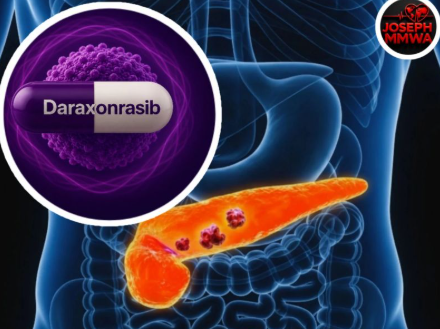
daraxonrasib is a next-generation RAS pathway-targeted inhibitor whose development focus extends beyond a single KRAS G12C mutation, aiming instead to achieve broader suppression of RAS signaling.
Compared with earlier targeted therapies, daraxonrasib may offer several potential advantages:
- Broader coverage of RAS mutation subtypes
- Interference with the RAS activation cycle
- Potential reduction of certain resistance mechanisms
- Compatibility with combination strategies involving EGFR inhibitors, MEK inhibitors, or immunotherapy
This means its future applications may not be limited to lung cancer alone, but could potentially expand to a broader range of RAS-driven solid tumors.
What Positive Signals Have Clinical Studies Revealed?
Currently available early clinical data suggest that daraxonrasib demonstrates antitumor activity across multiple RAS-mutant solid tumors, particularly in heavily pretreated patients.
Observed findings from studies include:
- Tumor shrinkage in some patients
- Improved disease control rates
- Restoration of treatment responses in certain resistant cases
- Potential synergistic effects in combination therapy regimens
Particularly in KRAS-mutant non-small cell lung cancer, researchers are investigating whether daraxonrasib can help address resistance that develops after prior KRAS inhibitor therapy.
In addition, pancreatic cancer represents another key area of investigation for daraxonrasib.
Because pancreatic cancer is highly dependent on KRAS-driven signaling, pan-RAS inhibition strategies are considered highly promising for future breakthroughs.
Why Are Pan-RAS Inhibitors Receiving So Much Attention?
RAS-targeted therapy is gradually evolving from the “single-mutation era” into the “pan-RAS era.”
Although KRAS G12C inhibitors represented a major breakthrough, their patient applicability remains limited, and resistance mechanisms are increasingly emerging.
As a result, the industry is actively exploring:
- Pan-KRAS inhibition
- Pan-RAS inhibition
- RAS(ON)-state inhibition
- Combination RAS-targeted treatment strategies
The development direction of daraxonrasib aligns closely with these trends.
If future clinical data further confirm its efficacy and safety, daraxonrasib may potentially become:
- A later-line treatment option after KRAS inhibitor resistance
- A broad-spectrum targeted therapy for multiple RAS-mutant cancers
- An important component of combination immunotherapy strategies
Future Trends in RAS-Targeted Therapy
RAS-targeted treatment may evolve in several important directions in the future.
1. Combination Therapy Will Become the Core Strategy
Monotherapy often struggles to achieve durable tumor control.
Future approaches are more likely to involve:
- RAS inhibitors + immunotherapy
- RAS inhibitors + EGFR inhibitors
- RAS inhibitors + chemotherapy
- RAS inhibitors + SHP2 inhibitors
2. Precision Stratification Will Continue to Advance
Different RAS mutation subtypes exhibit significant biological differences, making increasingly precise treatment strategies likely in the future.
3. Resistance Mechanism Research Will Continue to Deepen
How to delay or reverse resistance will become a major focus of next-generation drug development.
Conclusion
From being considered “undruggable” to becoming a major precision oncology breakthrough, the RAS treatment field is undergoing profound transformation.
As an important representative of next-generation RAS inhibitors, daraxonrasib is driving the treatment of RAS-mutant cancers toward a more broad-spectrum, precise, and combination-based future.
In DengYueMed’s view, although its long-term efficacy and ultimate clinical value still require validation through more Phase III studies, it is foreseeable that as pan-RAS therapeutic strategies continue to mature, patients with RAS-mutant tumors may gain access to increasingly diverse treatment possibilities in the future.