Where Pancreatic Cancer Develops Matters: Understanding Pancreatic Head Cancer vs. Body and Tail Cancer
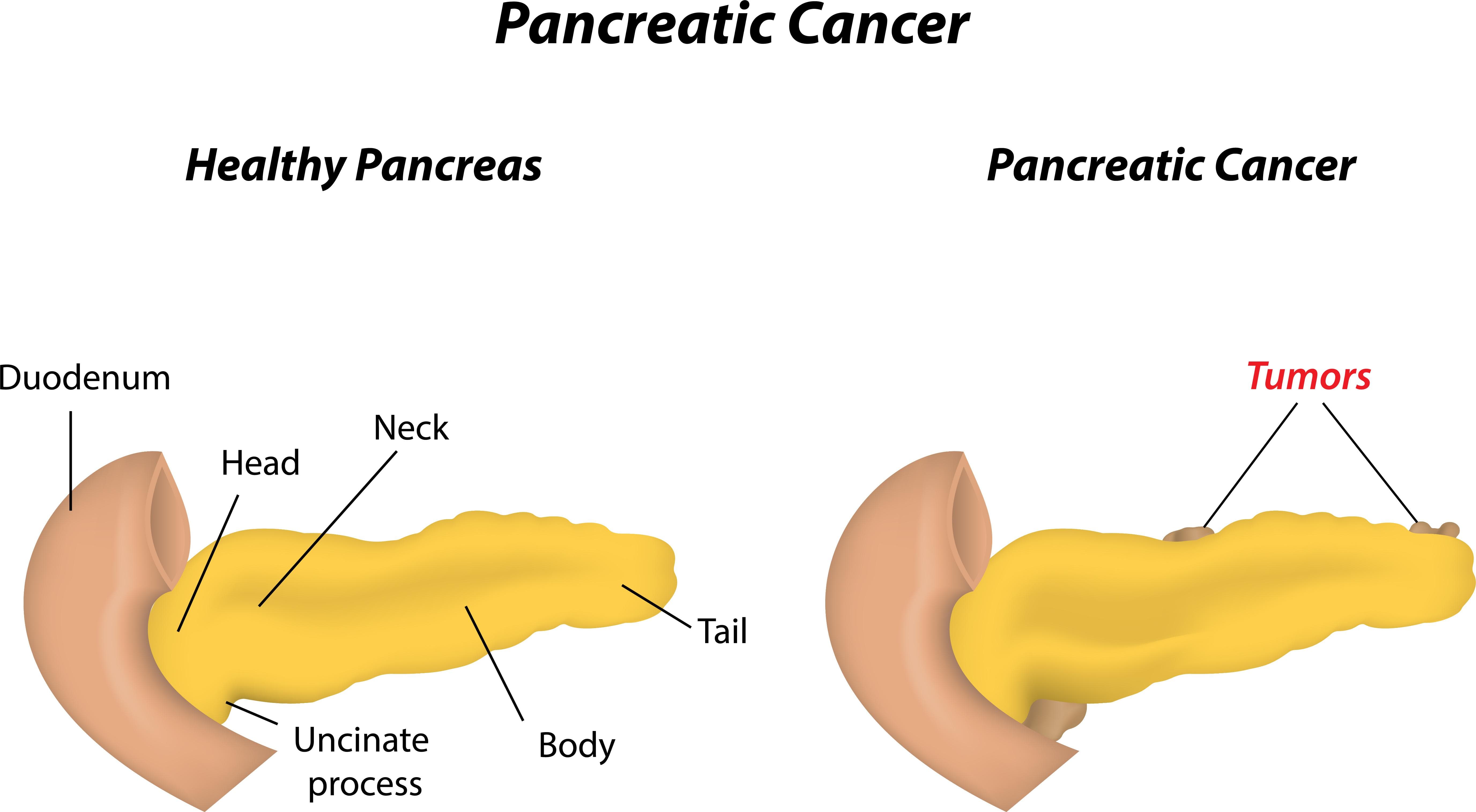
Pancreatic cancer is a malignant tumor that develops in the pancreas. While many people know that pancreatic cancer can progress rapidly, fewer realize that the location of the tumor within the pancreas can affect its symptoms, diagnosis, and treatment options.
Based on its anatomical location, pancreatic cancer is generally classified as pancreatic head cancer, pancreatic body cancer, or pancreatic tail cancer. Tumors arising in the body and tail are often collectively referred to as pancreatic body and tail cancer.
So, what is the difference between pancreatic head cancer and pancreatic body and tail cancer? Why are some patients more likely to develop jaundice, while others may have few obvious symptoms in the early stages?
Where Does Pancreatic Head Cancer and Body and Tail Cancer Develop?
The pancreas is located in the upper abdomen and can be divided into three main anatomical regions: the head, body, and tail.
Pancreatic Head Cancer: Tumors in the Head of the Pancreas
Pancreatic head cancer develops in the head of the pancreas, which is located close to the duodenum and the common bile duct.
As the tumor grows, it may compress or obstruct the bile duct, potentially causing obstructive jaundice.
Possible symptoms include:
- Yellowing of the skin or whites of the eyes
- Dark urine
- Pale-colored stools
- Upper abdominal pain
- Loss of appetite
- Unexplained weight loss
However, jaundice is not specific to pancreatic cancer. Conditions such as gallstones and other biliary diseases can also cause jaundice and require appropriate medical evaluation.
Pancreatic Body and Tail Cancer: Tumors in the Middle or Tail of the Pancreas
Pancreatic body and tail cancer develops in the body or tail of the pancreas. The pancreatic tail is located close to the spleen, while the body and tail are relatively farther from the common bile duct.
As a result, tumors in this region are less likely to cause early bile duct obstruction and jaundice.
Some patients may have few noticeable symptoms during the early stages. As the disease progresses, symptoms may include:
- Upper abdominal or left upper abdominal pain
- Back pain
- Loss of appetite
- Unexplained weight loss
- Indigestion
- Abnormal blood glucose levels or newly diagnosed diabetes
Because early symptoms can be subtle, pancreatic body and tail cancer may sometimes be diagnosed at a more advanced stage.
What Is the Main Difference Between Pancreatic Head and Body/Tail Cancer?
One of the most important differences is the relationship between the tumor and the bile duct.
| Feature | Pancreatic Head Cancer | Pancreatic Body and Tail Cancer |
|---|---|---|
| Tumor location | Head of the pancreas | Body or tail of the pancreas |
| Relationship to bile duct | Close | Relatively distant |
| Jaundice | More common | Less common |
| Early symptoms | May include jaundice | Often less specific |
| Common surgical approach | Pancreaticoduodenectomy (Whipple procedure) | Distal pancreatectomy |
| Diagnostic challenge | Symptoms may appear earlier in some patients | Early symptoms may be subtle |
However, tumor location alone does not determine prognosis. Disease stage, vascular involvement, lymph node involvement, distant metastasis, tumor biology, and whether complete surgical removal is possible are all important factors when determining treatment and prognosis.
How Is Pancreatic Cancer Diagnosed?
When pancreatic cancer is suspected, doctors generally use a combination of diagnostic tests.
Imaging Tests
Contrast-enhanced CT and MRI/MRCP can help identify the location and size of a pancreatic tumor and assess its relationship with surrounding tissues and blood vessels.
Endoscopic Ultrasound
Endoscopic ultrasound (EUS) allows doctors to obtain detailed images of the pancreas and, when necessary, perform a biopsy or fine-needle sampling.
Pathological Examination
A tissue or cell sample may be examined under a microscope to determine whether cancer cells are present.
Laboratory Tests
Tumor markers such as CA 19-9 may be used as supportive indicators. However, CA 19-9 alone cannot confirm or rule out pancreatic cancer.
For selected patients, doctors may also recommend genetic or molecular biomarker testing to identify potential treatment opportunities.
How Are Pancreatic Head and Body/Tail Cancers Treated?
Treatment depends on several factors, including tumor stage, resectability, overall health, and molecular characteristics of the tumor.
1. Surgery
For some patients with resectable pancreatic head cancer, pancreaticoduodenectomy, also known as the Whipple procedure, may be performed.
For selected patients with resectable pancreatic body or tail cancer, distal pancreatectomy may be considered. In some cases, removal of the spleen may also be necessary.
For locally advanced or metastatic pancreatic cancer, systemic treatment generally plays a more important role.
2. Chemotherapy
Chemotherapy remains an important component of systemic treatment for pancreatic cancer.
Commonly used chemotherapy drugs include:
- Gemcitabine
- Nab-paclitaxel
- Oxaliplatin
- Irinotecan
- 5-Fluorouracil (5-FU)
For example, FOLFIRINOX combines 5-FU, leucovorin, oxaliplatin, and irinotecan and may be considered for selected patients. Gemcitabine combined with nab-paclitaxel is another established treatment option in appropriate patients.
3. Targeted Therapy and Immunotherapy
As precision oncology continues to advance, molecular testing can help identify specific genetic or biomarker characteristics that may influence treatment decisions.
For example, patients with certain BRCA1/2 or other homologous recombination repair-related alterations may have specific treatment options. A small subset of patients with tumors showing biomarkers such as MSI-H or dMMR may also be candidates for immunotherapy.
Therefore, for appropriate patients, molecular testing can provide additional information about tumor biology and potentially expand treatment options.
Why Does the Location of Pancreatic Cancer Matter?
Although pancreatic head cancer and pancreatic body and tail cancer are all forms of pancreatic cancer, their anatomical locations can lead to different clinical presentations.
Pancreatic head cancer is more likely to cause jaundice because of its proximity to the bile duct, while pancreatic body and tail cancer may remain more subtle during the early stages.
Regardless of tumor location, persistent upper abdominal or back pain, unexplained weight loss, loss of appetite, or newly developed blood glucose abnormalities should be medically evaluated.
More importantly, pancreatic cancer treatment is no longer limited to a single approach. Surgery, chemotherapy, targeted therapy, immunotherapy, and molecular testing are increasingly being integrated to support more individualized treatment strategies.
DengYue Pharmacy: Supporting Access to Pancreatic Cancer Medicines
As treatment options for pancreatic cancer continue to evolve, reliable access to chemotherapy medicines, targeted therapies, and other innovative oncology products remains an important part of the healthcare supply chain.
DengYue Pharmacy specializes in the supply of innovative and specialty medicines, supporting qualified healthcare institutions, pharmacies, pharmaceutical distributors, and professional customers with pharmaceutical procurement and supply-chain services.
We continue to follow developments in pancreatic cancer and other gastrointestinal cancers, with a focus on supporting access to specialty and innovative medicines through professional and compliant supply channels.
If you are looking for specific pancreatic cancer medicines, oncology products, or other specialty medicines, DengYue Pharmacy can provide relevant product and supply information based on your specific procurement requirements.