KRAS Mutations and Precision Oncology: From KRAS G12C Inhibitors to Next-Generation RAS-Targeted Therapies
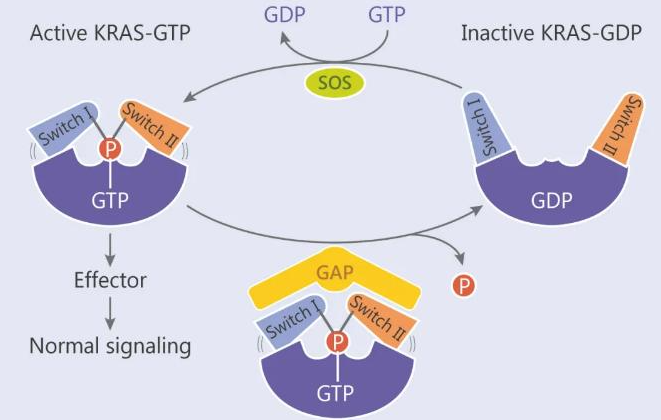
One of the key goals of precision oncology is to identify more targeted treatment strategies based on the molecular characteristics of a tumor. Among the genes involved in tumor development and progression, KRAS has long been a major focus of cancer research and targeted drug development. The KRAS gene encodes a protein involved in regulating cell growth, differentiation, and survival. When specific KRAS mutations occur, related signaling pathways may become abnormally activated, promoting tumor cell proliferation and survival.
Historically, developing drugs that directly target KRAS has been challenging because of the protein’s structural characteristics and biological functions. As researchers have gained a deeper understanding of different KRAS mutation subtypes and drug-design technologies have advanced, KRAS-targeted therapy has made significant progress. KRAS G12C inhibitors have provided new treatment options for certain patients, while next-generation inhibitors targeting other KRAS mutation subtypes and active-state RAS proteins are expanding the scope of research in precision oncology.
Daraxonrasib (development code: RMC-6236) is one of the investigational agents attracting attention in the field of RAS-targeted drug development. Its mechanism of action differs from that of conventional selective KRAS G12C inhibitors. Research into this class of drugs reflects a broader shift in RAS-targeted therapy, moving beyond individual mutation subtypes toward more extensive RAS-targeting strategies. To understand the progress in this field, it is helpful to first examine the biological role of KRAS and how different mutation subtypes influence treatment strategies.
1. Understanding KRAS Mutations: From Genetic Alterations to Abnormal Tumor Signaling
KRAS mutations are important molecular alterations found in several types of solid tumors. Their clinical significance lies not only in the biological characteristics they may indicate but also in their potential to identify therapeutic targets. However, KRAS is not a single, uniform therapeutic target. Different mutation subtypes may vary in their biological behavior, prevalence across tumor types, and sensitivity to specific drugs. Their clinical relevance must therefore be interpreted in the context of the individual molecular profile.
KRAS belongs to the RAS gene family and encodes a small GTPase involved in cellular signal transduction. Under normal conditions, KRAS cycles between active and inactive states to help regulate cell growth, differentiation, and survival. Oncogenic mutations can disrupt this regulatory process, resulting in sustained or abnormal activation of downstream signaling pathways and contributing to tumor development and progression.
KRAS mutations can occur at several positions, with common variants including G12C, G12D, G12V, G12A, G13D, and Q61 mutations. Among these, G12C is an important subtype for which selective targeted drugs have entered clinical practice. G12D has attracted considerable attention in research involving pancreatic cancer and other malignancies, while G12V is also associated with multiple solid tumor types. Because different subtypes have distinct molecular characteristics and biological behaviors, a drug developed for one mutation does not necessarily work effectively against another.
From a precision oncology perspective, identifying the specific KRAS mutation is a key step in assessing potential targeted treatment options. Clinical teams need to consider the tumor type, disease stage, previous treatments, and other molecular characteristics when determining whether a particular therapy may be appropriate. A deeper understanding of KRAS mutation biology also provides the foundation for developing inhibitors with different mechanisms of action.
2. The Evolution of KRAS-Targeted Therapy: From G12C Inhibitors to Next-Generation RAS Inhibitors
The development of KRAS-targeted therapy illustrates how cancer drug research has progressed from identifying specific molecular abnormalities to designing drugs that act on those targets. The clinical use of KRAS G12C inhibitors has demonstrated that the KRAS protein, once considered particularly difficult to target, can be addressed through rational drug design. However, because KRAS mutations are diverse, drugs designed for a single subtype cannot address every patient with a KRAS-related tumor. Researchers are therefore continuing to investigate next-generation RAS inhibitors with broader activity profiles and different mechanisms of action.
KRAS G12C inhibitors exploit a specific binding site associated with the G12C mutation to interact with the target protein and inhibit related signaling. These drugs have introduced new treatment options for certain patients with KRAS G12C-mutated cancers and have helped accelerate the development of therapies targeting other KRAS mutation subtypes. Their use, however, is generally limited by the specific mutation, tumor type, previous treatment history, and approved indications.
Beyond G12C, other subtypes, including KRAS G12D and G12V, remain important areas of drug development. Researchers are investigating selective inhibitors designed to recognize these mutations, as well as strategies that interfere with different functional states of RAS proteins. One important approach is to inhibit active-state RAS proteins, thereby disrupting their interactions with downstream effector proteins. Such strategies may broaden the scope of RAS-targeted therapy, although the clinical efficacy and safety of investigational agents must still be established through clinical studies.
Next-generation RAS inhibitors do not eliminate the need to distinguish between mutation subtypes or tumor types. Drugs can differ in their mechanisms of action, clinical trial populations, approved indications, and safety profiles. Understanding these differences helps place advances in KRAS-targeted therapy in the proper context and provides a foundation for evaluating investigational agents such as daraxonrasib.
3. Daraxonrasib: Research Progress in Next-Generation RAS-Targeted Therapy
Daraxonrasib, also known by its development code RMC-6236, is an investigational RAS(ON) multi-selective inhibitor developed by Revolution Medicines. Unlike selective inhibitors that target only the KRAS G12C mutation, daraxonrasib is designed to act on active-state RAS proteins and target multiple common oncogenic RAS variants. Its development reflects efforts to move beyond the limitations of single-subtype inhibition. Its precise clinical applications, however, depend on the available clinical evidence and regulatory approvals.
Mechanistically, daraxonrasib uses a ternary-complex approach. The drug first binds to cyclophilin A (CypA). The resulting complex then interacts with active-state RAS proteins, disrupting their interactions with downstream effector proteins and interfering with signal transmission. This mechanism differs from the specific binding approach used by conventional KRAS G12C inhibitors, making daraxonrasib an important investigational agent in the development of next-generation RAS-targeted therapies.
Pancreatic ductal adenocarcinoma is a major area of research in RAS-targeted therapy because KRAS mutations are highly prevalent in this cancer type. Daraxonrasib’s clinical development has also focused on patients with pancreatic cancer. Its research significance lies not only in exploring a new mechanism of action but also in evaluating whether therapies targeting abnormal RAS signaling can provide meaningful clinical benefits to specific patient populations.
It is important to distinguish between drug development progress, clinical trial results, and formal marketing authorization. Daraxonrasib’s regulatory status, indications, and availability may differ across countries and regions. Approval in one market does not mean that the drug has also been approved in other jurisdictions.
Overall, daraxonrasib represents the broader direction of RAS-targeted research, moving from inhibition of a single mutation subtype toward more extensive molecular targeting strategies. Its clinical significance must be assessed in light of formal regulatory information, clinical research data, and individual patient circumstances. This development also provides a broader context for understanding advances in KRAS-targeted drugs in China.
4. Progress in KRAS-Targeted Drugs in China: From Development Breakthroughs to Clinical Use
As KRAS G12C-targeted drug development has advanced, related medicines have received approval in China, providing new treatment options for patients who meet the relevant indications. These drugs primarily target tumors carrying the specific KRAS G12C mutation and illustrate how molecular testing can be integrated into targeted treatment decisions. When reviewing these medicines, it is important to distinguish their generic names, brand names, approved indications, and formal registration status rather than treating different products or development-stage agents as interchangeable.
Among the KRAS G12C inhibitors approved in China, fulzerasib and garsorasib are notable examples. These medicines inhibit signaling associated with the KRAS G12C-mutated protein and are used in accordance with their respective approved indications. Their clinical use generally requires confirmation of a KRAS G12C mutation and an assessment of the patient’s previous treatments and disease status.
| Generic name | Drug class | Relevant information |
|---|---|---|
| Fulzerasib | KRAS G12C inhibitor | Approved in China for adult patients with advanced KRAS G12C-mutated non-small cell lung cancer who meet the applicable indication criteria. |
| Garsorasib | KRAS G12C inhibitor | Approved in China for adult patients with advanced KRAS G12C-mutated non-small cell lung cancer who meet the applicable indication criteria. |
The table lists representative medicines only. Their brand names, approval dates, indications, and prescribing requirements should be verified against the latest announcements from China’s National Medical Products Administration (NMPA) and the official prescribing information before publication. Particular care should be taken to ensure that each generic name is correctly matched with its corresponding brand name and registration details.
Beyond approved G12C inhibitors, investigational drugs targeting other mutation subtypes, including KRAS G12D, continue to be studied. These programs may eventually expand the scope of KRAS-targeted therapy. However, investigational candidates must be clearly distinguished from approved medicines: drugs still in clinical development should not be presented as routinely authorized treatment options. Their efficacy, safety, and eligible patient populations must be established through appropriate studies and regulatory review.
Overall, the clinical use of KRAS G12C inhibitors in China has expanded treatment options in precision oncology, while research into other KRAS mutation subtypes represents a potential direction for future development. Both approved medicines and investigational agents must be evaluated in light of molecular testing results, clinical evidence, and applicable regulatory requirements.
5. Clinical Value and Practical Challenges of KRAS Precision Oncology
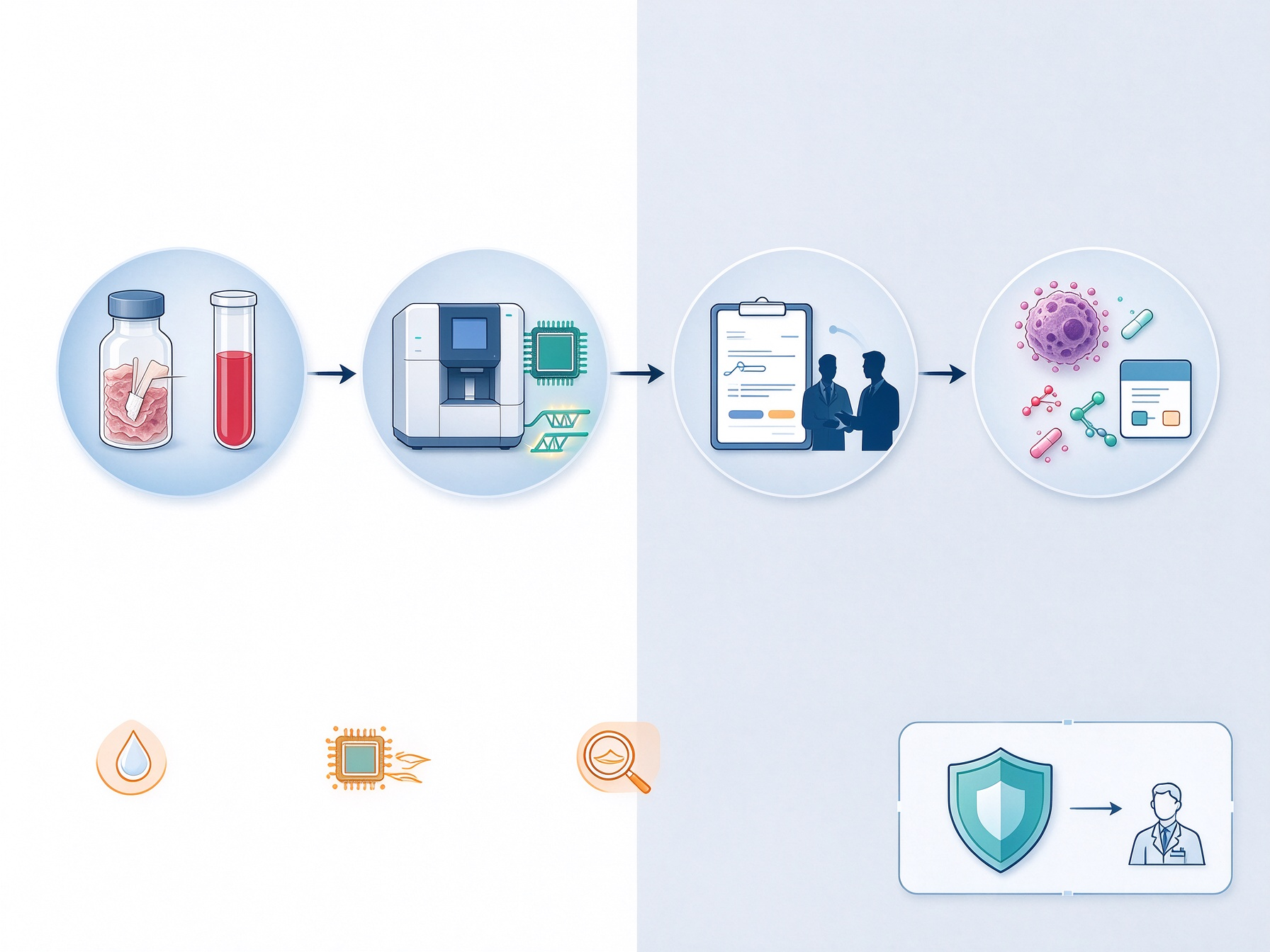
The value of KRAS-targeted therapy extends beyond advances in drug development. It also reflects the growing role of molecular profiling and individualized assessment in cancer treatment. However, precision oncology does not mean that a treatment decision can be made solely on the basis of a single genetic test result. Whether a patient can receive a particular medicine depends on several factors, including tumor type, disease stage, previous treatments, overall health, drug safety, and the formally approved indications.
Molecular testing is an essential foundation for this treatment approach. Depending on the patient’s circumstances, the clinical team may select a validated tissue-based or blood-based testing method to identify the presence and specific type of a mutation. Test results can help assess potential targeted treatment options, but sample quality, testing coverage, and interpretation may all affect the conclusions. Results should therefore be evaluated by qualified healthcare professionals in conjunction with the patient’s clinical information.
Drug resistance remains another challenge in targeted therapy. Tumor cells may acquire additional molecular alterations, activate alternative signaling pathways, or develop other adaptive mechanisms that reduce sensitivity to an existing drug. Researchers are therefore investigating not only new inhibitors but also resistance mechanisms, combination treatment strategies, and the appropriate sequencing of therapies. Treatment decisions should be guided by clinical evidence rather than by an isolated mutation result.
In addition to efficacy and safety, drug accessibility and compliant supply are important considerations as medicines move from development into clinical practice. A drug approved in one country is not automatically available for lawful supply or use in another. Healthcare institutions, pharmacies, and professional procurement organizations need to consider local registration status, supply channels, purchasing eligibility, transportation requirements, and destination-country regulations.
The development of KRAS precision oncology therefore depends on progress across several interconnected areas, including drug discovery, molecular testing, clinical assessment, and compliant pharmaceutical supply. For patients, treatment decisions should be made by qualified healthcare professionals based on individual circumstances. For professional procurement organizations, understanding medicine information and local regulatory requirements is equally important when assessing pharmaceutical accessibility.
Conclusion
KRAS mutations are important molecular abnormalities involved in the development and progression of multiple cancers, making them a continuing focus of precision oncology research. From the clinical use of KRAS G12C inhibitors to investigational drugs targeting other mutation subtypes and next-generation RAS inhibitors such as daraxonrasib, the field continues to expand the possibilities for targeted cancer treatment.
However, KRAS mutation subtypes differ in important ways, and drugs vary in their mechanisms of action, clinical evidence, approved indications, and safety requirements. As molecular testing technologies, drug development, and clinical research continue to advance, KRAS-targeted treatment may become increasingly refined, supporting more precise molecular classification and individualized treatment strategies.
For readers interested in developments in cancer treatment, understanding KRAS mutations and related targeted medicines can provide valuable insight into the evolution of precision oncology. At the same time, medicine-related information should be verified against authoritative regulatory sources, official prescribing information, and reliable clinical research. Potential treatment strategies under investigation should not be confused with therapies that have already received marketing authorization.
For pharmaceutical procurement or supply inquiries, visit dengyuerx.com to explore relevant medicine information and submit an inquiry. Product availability, procurement eligibility, documentation requirements, and transportation arrangements are subject to further confirmation based on the specific circumstances and applicable regulations.