Zongertinib vs. Sevabertinib: Two Major Breakthroughs in HER2-Mutant Lung Cancer Treatment — What Are the Key Differences?

Beginning in 2025, zongertinib became the first oral targeted therapy approved worldwide for HER2-mutant NSCLC. Sevabertinib subsequently received approval as the second oral TKI for this disease.
The emergence of these two major new drugs has introduced additional oral targeted treatment options for advanced HER2-mutant NSCLC and marked further progress in this field.
What are the key characteristics of each drug? How do they differ in mechanism of action, clinical research, and potential clinical applications? Hong Kong DengYue Medicine takes a closer look.
1. Zongertinib: Pioneering a New Era of Oral Targeted Therapy for HER2-Mutant Lung Cancer
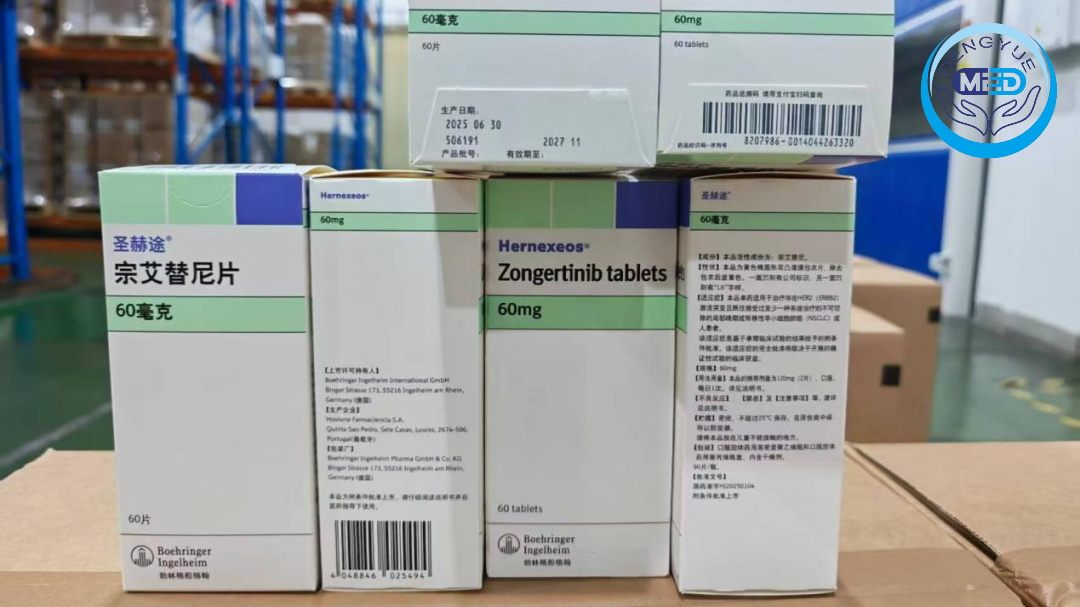
Developed by Boehringer Ingelheim, zongertinib is an oral, irreversible small-molecule HER2 TKI marketed under the brand name Hernexeos.
As the first oral targeted therapy approved worldwide for HER2-mutant NSCLC, zongertinib represents an important milestone. It provides a more targeted treatment option for patients with specific activating HER2 mutations and has helped advance precision medicine for this molecular subtype.
1.1 Mechanism of Action and Clinical Research
HER2 is a receptor protein involved in cellular growth signaling. Certain activating mutations in the ERBB2 gene can cause abnormal signaling that promotes tumor cell proliferation. Zongertinib inhibits HER2 tyrosine kinase activity, thereby blocking the associated signaling pathways.
The pivotal Beamion LUNG-1 study demonstrated antitumor activity in previously treated patients. In a first-line cohort reported in 2026, the objective response rate (ORR) was 76% among 72 patients. The median duration of response (DoR) was 15.2 months, and the median progression-free survival (PFS) was 14.4 months.
These findings provide clinical evidence supporting the use of zongertinib in previously untreated patients.
1.2 Approval Status in China, the United States, and Other Regions
- China: Approved in August 2025 for eligible previously treated patients, with the indication expanded to eligible first-line patients in May 2026.
- United States: The FDA granted accelerated approval in August 2025 for previously treated patients and expanded the indication to eligible first-line patients in February 2026.
- Japan: Approved in September 2025 for a specific patient population whose disease had progressed following prior chemotherapy.
1.3 Key Safety Considerations
Safety monitoring for zongertinib should focus on hepatotoxicity, interstitial lung disease (ILD) or pneumonitis, and left ventricular dysfunction.
During treatment, appropriate monitoring should be conducted in accordance with the prescribing information, with treatment benefits and risks assessed in light of the patient’s underlying conditions and concomitant medications.
2. Sevabertinib: The World’s Second Oral HER2-Targeted TKI for
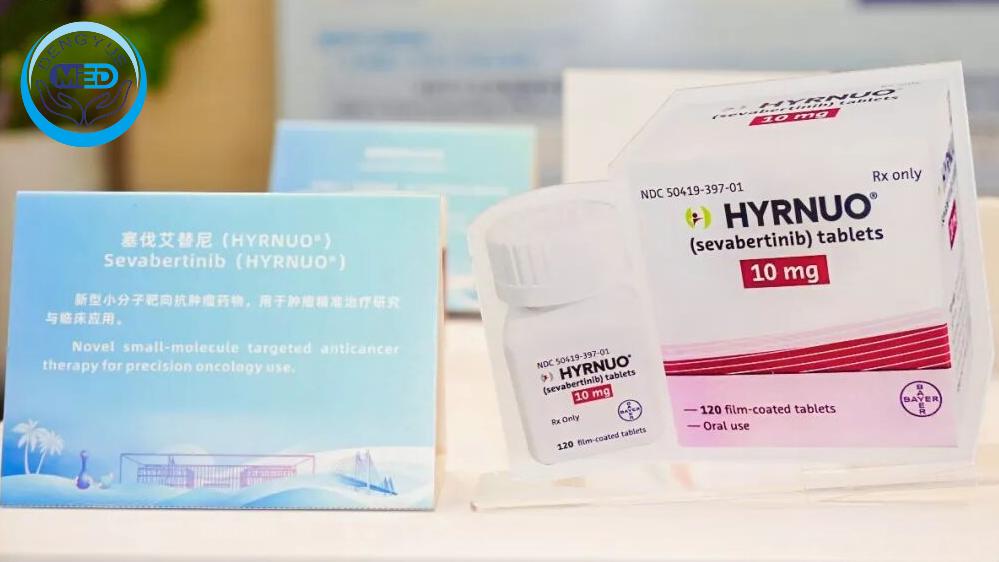
Developed by Bayer, sevabertinib is marketed under the brand name Hyrnuo. It is an oral, reversible small-molecule HER2 TKI and the second oral TKI approved worldwide for advanced HER2-mutant NSCLC.
If zongertinib opened a new chapter in this treatment field, the approval of sevabertinib has further expanded the range of oral targeted treatment options for HER2-mutant lung cancer.
2.1 Mechanism of Action and Clinical Research
Sevabertinib reversibly inhibits HER2 kinase activity, blocking abnormal signaling.
The pivotal SOHO-01 study evaluated sevabertinib in patients with advanced NSCLC harboring activating HER2 mutations across different prior-treatment settings.
When the FDA approved sevabertinib for eligible first-line patients in 2026, the relevant study cohort included 69 patients and demonstrated an ORR of 75%. Among patients who achieved an objective response, 73% had a duration of response of at least six months.
These findings indicate that sevabertinib also demonstrates promising antitumor activity in previously untreated patients.
2.2 Approval Status in China, the United States, and Other Regions
- United States: The FDA granted accelerated approval in November 2025 for eligible previously treated patients and expanded the indication to eligible first-line patients in September 2026.
- China: The National Medical Products Administration (NMPA) approved sevabertinib in April 2026 for eligible patients whose disease had progressed following prior treatment.
- United Kingdom: Approved in April 2026 for eligible patients whose disease had progressed following prior treatment.
- Canada: Granted conditional authorization in February 2026 for eligible patients who had previously received systemic therapy.
- Japan: Approved in August 2026 for eligible patients with HER2-mutant, unresectable advanced or recurrent NSCLC, covering both first-line and subsequent treatment.
2.3 Key Safety Considerations
Safety monitoring for sevabertinib should focus on diarrhea, hepatotoxicity, ILD or pneumonitis, left ventricular dysfunction, ocular toxicity, and elevated pancreatic enzyme levels.
3. Zongertinib vs. Sevabertinib: What Are the Key Differences?
| Comparison | Zongertinib | Sevabertinib |
|---|---|---|
| Mechanism of action | Irreversible covalent binding involving the HER2 C805 residue | Reversible HER2 inhibition; does not rely on covalent binding to C805 |
| Impact of C805 mutations | C805 mutations may reduce or abolish drug activity | Not affected by the same limitations associated with C805-dependent covalent binding |
| EGFR selectivity | High HER2 selectivity, designed to reduce EGFR-related toxicity | Approximately 20-fold selectivity over wild-type EGFR |
| Approved indications | Unresectable or metastatic NSCLC with HER2 tyrosine kinase domain (TKD) mutations | Locally advanced or metastatic non-squamous NSCLC with HER2 TKD mutations |
| ORR in previously treated patients | 71% (n=75) | 64% (Cohort D) |
| Median PFS in previously treated patients | 12.4 months | 8.3 months |
| ORR in treatment-naive patients | 77% | 71% (Cohort F) |
| ORR after prior ADC treatment | 48% (n=31) | 38% (n=55) |
| ORR in non-TKD mutations | 30% (n=20) | Limited activity |
| Incidence of common diarrhea | 54%–56% | 84%–91% |
| Grade 3 or higher treatment-related adverse events (TRAEs) | Approximately 17% | Approximately 31% |
| Discontinuation due to adverse events | Approximately 3% | Approximately 3% |
Note: ORR = objective response rate; mPFS = median progression-free survival; TRAE = treatment-related adverse event; TKD = tyrosine kinase domain; ADC = antibody-drug conjugate.
3.1 Different Mechanisms of Action: Do They Translate into Different Clinical Outcomes?
Zongertinib uses an irreversible inhibition mechanism, whereas sevabertinib acts reversibly. Although their drug designs differ, pharmacological mechanisms alone cannot predict the actual benefit a patient will experience.
More important factors include efficacy across different mutation subtypes, duration of response, disease progression, intracranial activity, long-term follow-up results, and resistance patterns. More mature clinical evidence will help clarify the respective roles of these two drugs in treatment.
3.2 Do Different Dosing Schedules Affect Treatment?
The two drugs have different dosing schedules:
- Zongertinib: The US prescribing information recommends oral administration once daily, with the dose determined by body weight. It can be taken with or without food.
- Sevabertinib: The US prescribing information recommends oral administration twice daily with food.
Dosing frequency and food requirements may affect daily medication routines. However, once-daily versus twice-daily dosing alone does not determine which drug is more suitable for an individual. The prescribed dose and administration instructions should be followed.
4. How Should the Two Drugs Be Considered in Different Clinical Scenarios?
The availability of these two drugs has expanded treatment options for HER2-mutant lung cancer. In practice, treatment decisions should account for molecular diagnosis, treatment stage, patient-specific risks, and local drug availability.
4.1 Brain Metastases and Convenience of Administration
Zongertinib warrants particular attention in HER2-mutant NSCLC with brain metastases. Research data are available for patients with active brain metastases, and its once-daily dosing may simplify routine medication management.
These characteristics may be relevant when considering long-term oral treatment and the convenience of the dosing schedule.
4.2 Classic HER2 Insertion Mutations
For tumors harboring classic HER2 exon 20 insertion mutations, such as HER2 Y772_A775dup, sevabertinib is a treatment option worth considering.
This mutation is an important subtype of HER2-mutant lung cancer. Treatment assessment should focus on the molecular test results, the drug’s approved indications, and the relevant clinical evidence.
4.3 Long-Term Treatment: Balancing Safety and Dosing Convenience
Zongertinib is taken once daily, whereas sevabertinib is taken twice daily. Their dosing schedules therefore differ. In terms of safety, diarrhea and abnormal liver function are important considerations for both drugs.
For patients who have received multiple prior lines of treatment, have underlying conditions, or require long-term medication, treatment planning should account for specific adverse-event risks and monitoring requirements.
Conclusion: From Drug Approvals to Precision Treatment, the Work Continues

The emergence of zongertinib and sevabertinib has opened up new possibilities for targeted treatment of HER2-mutant NSCLC.
Differences in efficacy and safety across patient populations, long-term benefits, resistance mechanisms, and subsequent treatment strategies remain areas for further investigation.
As a global pharmaceutical distributor, DengYueMed will continue to follow developments in Chinese pharmaceutical innovation, pharmaceutical internationalization, and global pharmaceutical supply chains. Through professional industry updates and trend analysis, DengYueMed aims to help global partners better understand the development of China’s pharmaceutical industry, as well as the opportunities and challenges involved in bringing innovative medicines to broader markets.