China’s Innovative Drugs Are Entering the Global Healthcare Supply Chain: New Trends in International Pharmaceutical Distribution
China’s Innovative Drugs Are Entering the Global Healthcare Supply Chain
In recent years, the pace of innovative drug development in China has accelerated significantly.
For industry observers who have long followed developments in China’s pharmaceutical sector—including companies engaged in international pharmaceutical distribution and procurement services such as DengYueMed—the approval of an increasing number of new drugs not only represents new treatment options but also signals that Chinese innovative medicines are gradually becoming part of the global healthcare supply chain.
Between October and November 2025, China’s drug regulatory authorities approved several representative innovative therapies across multiple therapeutic areas, including cell therapy, targeted oncology treatment, antiviral drugs, and chronic disease management.
These newly approved drugs include:
- Pukilun Sai Injection – for patients aged 3–21 with CD19-positive relapsed or refractory acute lymphoblastic leukemia (ALL)
- Ogetvir Sodium Capsules – for mild to moderate COVID-19 infection in adult patients
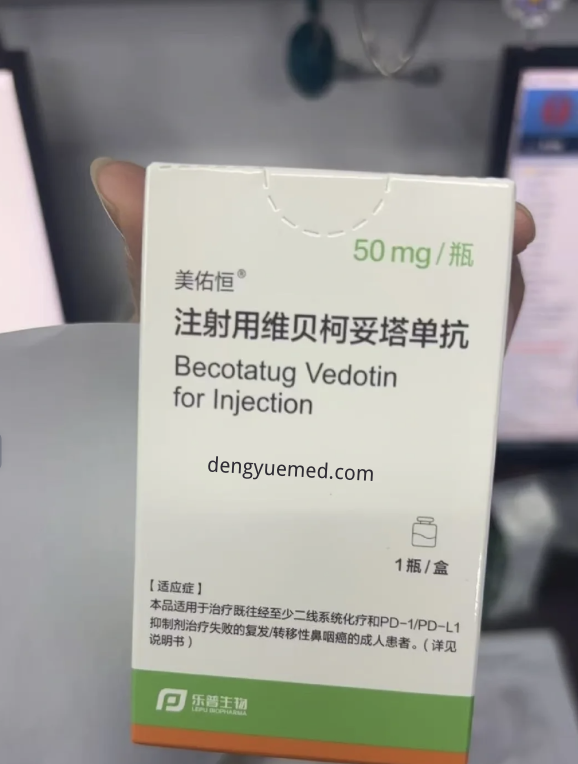
- Vebecotamab – for recurrent or metastatic nasopharyngeal carcinoma after multiple prior lines of therapy
- Namistat Tablets – for idiopathic pulmonary fibrosis (IPF)
- Mefanertinib Maleate Tablets – for first-line treatment of EGFR L858R-mutated non-small cell lung cancer (NSCLC)
From a disease perspective, these medicines span oncology, infectious disease, rare disease, and chronic disease treatment.
However, from the perspective of the global pharmaceutical industry structure, they collectively reflect a deeper shift:
China’s innovative medicines are increasingly entering the global pharmaceutical supply chain.
1. Global Hospital Procurement Systems Are Changing
For decades, international hospital procurement systems were largely dominated by Western pharmaceutical companies.
Large hospital networks and purchasing alliances typically relied on established supplier networks, with drug sourcing concentrated among a limited number of multinational pharmaceutical companies.
In recent years, however, the global R&D landscape has begun to change, leading to the emergence of new sources of pharmaceutical innovation.
This trend is particularly visible in areas such as:
- targeted oncology therapies
- rare disease treatments
- biologic medicines
- novel antiviral drugs
As Chinese pharmaceutical companies continue to strengthen their research and development capabilities, more innovative drugs are gaining the potential to enter international markets.
2. Precision Medicine Is Reshaping Global Drug Distribution
Examples include Mefanertinib Maleate and Vebecotamab, both developed for oncology treatment.
Modern cancer therapy has entered the era of precision medicine.
Drugs are no longer classified solely by the organ where the cancer originates but increasingly by molecular mutations and biomarkers, such as:
- EGFR mutations
- ALK fusions
- KRAS mutations
This means that potential patient populations for a given drug may be distributed across multiple countries and regions worldwide.
As a result, an increasing number of hospitals are turning to cross-border procurement channels to obtain specific targeted therapies needed for personalized treatment.
3. Biologics and Cell Therapies Require More Advanced Supply Chains
Another major shift is being driven by cell therapies and biologic medicines.
For example, Pukilun Sai Injection is a CAR-T cell therapy, whose production and distribution systems differ significantly from those of traditional drugs.
Cell therapies typically involve:
- personalized manufacturing
- strict temperature-controlled transportation
- highly regulated production and logistics processes
Similarly, antibody drugs such as Vebecotamab also require stable biologics manufacturing and cold-chain logistics systems.
The global circulation of such therapies therefore depends not only on scientific innovation but also on mature pharmaceutical supply chain management.
4. Chronic Disease Medicines Remain the Largest Global Market
Beyond high-tech therapies, chronic disease treatments remain the largest segment of global pharmaceutical demand.
Examples include:
- Namistat Tablets (Idiopathic Pulmonary Fibrosis)
- Ogetvir Sodium Capsules (antiviral therapy)
Compared with oncology drugs, these medicines have different market characteristics.
Key requirements typically include:
- long-term supply stability
- large patient populations
- sustainable treatment costs
For this reason, chronic disease medications rely heavily on stable international pharmaceutical distribution networks.
5. Beyond Innovation: The Critical Role of Pharmaceutical Distribution
For overseas healthcare institutions, whether a drug can truly enter clinical practice depends on several practical factors, including:
- reliable supply availability
- compliance with international export and regulatory requirements
- secure cross-border logistics systems
- the ability to support long-term hospital procurement
As Chinese innovative medicines gradually enter global markets, Chinese pharmaceutical suppliers with cross-border trade experience are playing an increasingly important role.
The approval of these innovative drugs in late 2025 not only reflects China’s growing pharmaceutical R&D capabilities, but also illustrates the ongoing transformation of the global pharmaceutical supply chain.
Companies such as DengYueMed, which have long served international markets, continue to participate in China’s pharmaceutical import-export system. With extensive experience in supplying oncology medicines, biologics, and chronic disease treatments, DengYueMed provides overseas healthcare institutions with reliable pharmaceutical procurement channels.