FGFR Inhibitors: Emerging Targeted Therapies for Rare Skeletal Disorders
FGFR Inhibitors: An Emerging Therapeutic Class and R&D Trends in Targeted Treatment for Rare Skeletal Disorders
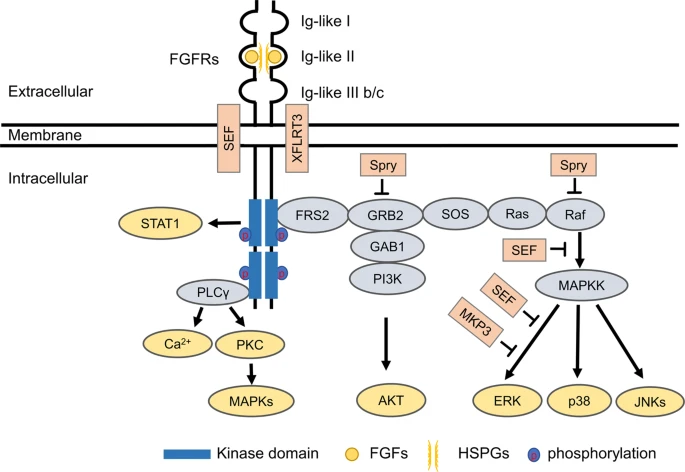
In recent years, with the advancement of precision medicine, targeted therapies aimed at specific signaling pathways have been rapidly expanding. Among them, FGFR (Fibroblast Growth Factor Receptor) inhibitors have become a highly active research area.
The FGFR signaling pathway plays a critical role in cell proliferation, differentiation, and tissue development. Once genetic mutations or abnormal activation occur, it may lead to a variety of diseases, including cancers and rare skeletal developmental disorders.
Against this background, FGFR inhibitors are gradually expanding from traditional oncology indications into rare genetic diseases, showing significant therapeutic potential—particularly in FGFR3-related conditions such as achondroplasia.
From the perspective of global pharmaceutical supply and innovative drug distribution,
DengYueMed is continuously monitoring developments in this target class, as it is becoming an important growth segment in both rare diseases and high-value specialty therapeutics.
1. Biological Basis of the FGFR Signaling Pathway
FGFR3 signaling is one of the most critical pathways within the FGFR family in regulating skeletal development.
Under normal physiological conditions, this pathway is responsible for:
- Chondrocyte proliferation and differentiation
- Growth plate development
- Longitudinal bone growth regulation
Pathological Mechanisms
In cases of gain-of-function FGFR3 mutations:
-
Persistent pathway activation
FGFR3 remains constitutively active independent of ligand binding -
Hyperactivation of downstream signaling
MAPK/ERK and related pathways are continuously activated -
Impaired skeletal development
Reduced chondrocyte proliferation leads to restricted bone growth
This mechanism forms the core pathological basis of diseases such as achondroplasia.
2. What Are FGFR Inhibitors?
FGFR inhibitors are targeted therapies designed to block abnormal FGFR signaling.
1️⃣ Small-Molecule FGFR Inhibitors
- Target intracellular tyrosine kinase domains
- Typically oral administration
- Suitable for long-term treatment
- Scalable and cost-efficient
2️⃣ Biologic Agents (Antibodies)
- Target extracellular receptor domains
- Higher specificity
- Limited tissue penetration
- Primarily used in oncology
Overall, small-molecule inhibitors currently show stronger development momentum.
3. Applications in Rare Skeletal Disorders

Rare skeletal disorders such as achondroplasia are driven by FGFR3 pathway dysregulation.
These conditions involve:
- Impaired chondrocyte proliferation
- Abnormal growth plate function
- Reduced bone growth
FGFR inhibitors provide a mechanism-based therapeutic approach, rather than symptomatic treatment.
Representative Pipeline
ABSK061 – Abbisko Therapeutics
- Selective FGFR2/3 inhibitor
- Focus: Achondroplasia
- FDA Orphan Drug Designation
- Entered pediatric clinical trials
This reflects the transition from mechanistic research → clinical application.
4. FGFR Inhibitor R&D Trends
Global development is concentrated in three key areas:
1️⃣ Rare Skeletal Disorders
- Achondroplasia
- FGFR3-related dysplasia
2️⃣ FGFR-Driven Cancers
- Cholangiocarcinoma
- Bladder cancer
- Solid tumors
3️⃣ Precision Medicine Expansion
- Genetic diseases
- Developmental disorders
Small-molecule FGFR2/3 inhibitors are emerging as the core focus due to:
- Oral availability
- Long-term treatment suitability
- Commercial scalability
Conclusion: A New Era of Precision Therapy
FGFR inhibitors are driving a major shift:
From symptomatic treatment → to mechanism-driven precision therapy
With ongoing clinical progress, these therapies are expected to:
- Expand into rare skeletal diseases
- Strengthen precision medicine strategies
- Reshape the global rare disease treatment landscape
For global pharmaceutical distribution and supply chain companies such as
DengYueMed,
this trend represents continuous opportunities for international collaboration and market expansion.