Ropeginterferon Alfa-2b, a Major Hematology Drug, Expands Its Indications: Essential Thrombocythemia
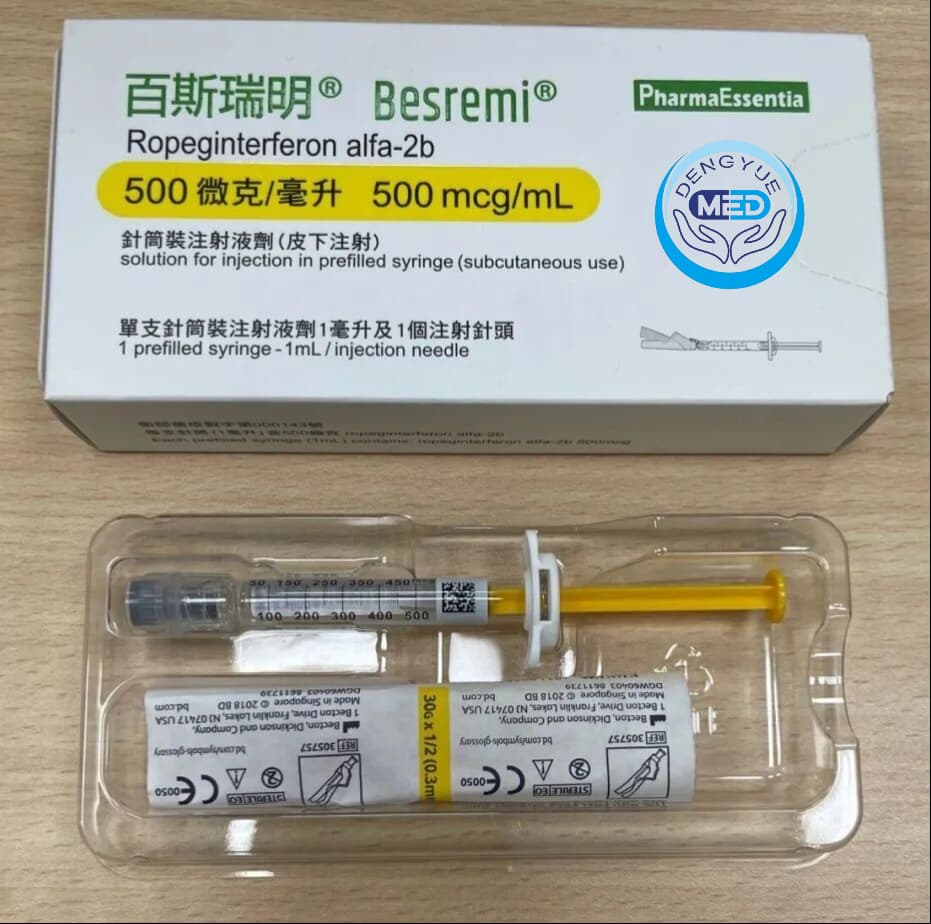
On October 15, 2026, the official website of China’s National Medical Products Administration (NMPA) indicated that ropeginterferon alfa-2b (Besremi®), developed by PharmaEssentia Corp., had received approval for a new indication in mainland China. The approval covers adult patients with essential thrombocythemia (ET) who have had an inadequate response to hydroxyurea, offering a new treatment option for this rare hematologic disease.
Ropeginterferon alfa-2b is a long-acting interferon therapy that was first approved in the European Union in February 2019 for the treatment of polycythemia vera (PV).
In September 2026, it was approved in the United States for the treatment of essential thrombocythemia (ET), becoming the first novel drug approved by the FDA for ET in nearly 30 years.
In this article, Hong Kong DengYueMed explores the characteristics of ET, the challenges associated with current treatment options, and the clinical research progress of ropeginterferon alfa-2b in this disease.
Essential Thrombocythemia: The Risks Behind Elevated Platelet Counts
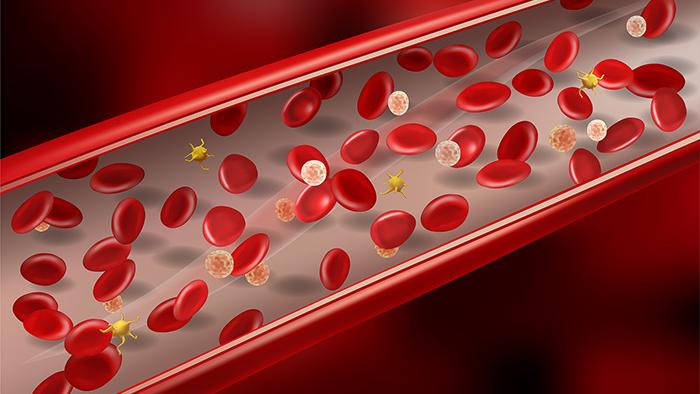
Essential thrombocythemia (ET) is a rare disease and a chronic myeloproliferative neoplasm (MPN) characterized by the persistent overproduction of platelets in the bone marrow.
ET is commonly associated with mutations in genes such as JAK2, CALR, and MPL. These abnormalities can affect the proliferation and differentiation of hematopoietic cells, leading to persistently elevated platelet counts.
The major clinical risks associated with ET include:
- Thrombotic risk: Patients may develop arterial or venous thrombotic events, which can lead to serious complications such as stroke and myocardial infarction.
- Bleeding risk: Some patients may experience abnormal bleeding, including nosebleeds and gum bleeding. Extremely high platelet counts may also be associated with acquired von Willebrand syndrome.
- Disease-related symptoms: Some patients experience headaches, dizziness, visual disturbances, sensory abnormalities in the extremities, or splenomegaly.
- Long-term disease management: ET generally requires long-term follow-up and risk assessment. Treatment goals extend beyond platelet count control to include reducing thrombotic risk, improving symptoms, and monitoring disease progression.
Although some patients with ET have no obvious symptoms at diagnosis, the chronic nature of the disease and the potential for vascular complications make long-term, individualized management an important clinical priority.
Beyond Platelet Control: Unmet Needs in Comprehensive ET Management
Treatment for ET is generally tailored to the patient’s thrombotic risk, symptoms, blood cell counts, and response to previous therapies.
For some low-risk patients, clinical management may involve observation and regular follow-up or low-dose aspirin when appropriate. For patients who require cytoreductive therapy, common options include hydroxyurea, interferon-based therapies, and anagrelide.
Hydroxyurea is a commonly used cytoreductive therapy for high-risk ET. However, some patients may develop resistance or intolerance, resulting in an inadequate treatment response or the need to modify their treatment regimen.
In these circumstances, an important clinical challenge is to maintain control of hematologic parameters while addressing symptoms, treatment tolerability, and long-term disease management.
In addition, ET is a disease involving abnormal hematopoietic clones. Clinical research is exploring whether interventions that more directly affect these abnormal cells can improve disease-related outcomes.
Interferon-based therapies have therefore attracted attention. Beyond their effects on blood cell production, their potential effects on abnormal hematopoietic clones and associated molecular markers are important areas of research in MPNs.
Ropeginterferon Alfa-2b (Besremi): From PV Treatment to ET

Ropeginterferon alfa-2b (Besremi®) is a long-acting, pegylated interferon alfa-2b formulation designed to provide a prolonged duration of action.
The drug first gained recognition in the treatment of polycythemia vera (PV) and has subsequently been investigated in other myeloproliferative neoplasms.
In 2019, ropeginterferon alfa-2b was approved in the European Union for the treatment of PV. In 2021, it received approval in the United States for adults with PV. It subsequently obtained relevant regulatory approvals in Japan, China, and other markets.
PV and ET are both chronic myeloproliferative neoplasms, but they differ in their primary hematologic manifestations: PV is characterized mainly by an increased red blood cell mass, whereas ET is characterized primarily by an elevated platelet count.
Because both diseases involve abnormal hematopoietic clones, the potential applications of interferon-based therapies across different MPN subtypes continue to attract research interest.
In 2026, ropeginterferon alfa-2b made further progress in ET. PharmaEssentia had previously announced approval of the ET indication in Taiwan, followed by regulatory developments for the indication in the United States. On October 15, PharmaEssentia also announced that the drug had received approval in mainland China for adults with ET who had an inadequate response to hydroxyurea.
This development expands the drug’s indication profile beyond PV and reflects ongoing efforts in hematology to extend the clinical application of long-acting interferon therapy to additional MPN patient populations.
The Phase III SURPASS-ET Trial: What Do the Clinical Data Show?
One of the key sources of clinical evidence for ropeginterferon alfa-2b in ET is the global, multicenter, open-label, randomized, controlled Phase III SURPASS-ET trial. The study compared the efficacy and safety of ropeginterferon alfa-2b with anagrelide in patients with ET who were resistant or intolerant to hydroxyurea and also had leukocytosis. The results were published in The Lancet Haematology in 2025.
The trial enrolled 174 patients, of whom 91 received ropeginterferon alfa-2b and 83 received anagrelide. The median follow-up was 12.5 months.
1. Primary Response Endpoint: 42.9% vs. 6.0%
The primary endpoint was the proportion of patients who achieved a response according to the revised European LeukemiaNet (ELN) response criteria at both Month 9 and Month 12.
The results showed that 42.9% of patients in the ropeginterferon alfa-2b group achieved the primary response endpoint, compared with 6.0% in the anagrelide group. The difference between the groups was statistically significant.
These findings indicate that, in the specific ET population enrolled in the trial, ropeginterferon alfa-2b demonstrated a higher sustained response rate than anagrelide, providing important clinical evidence for its potential role as a subsequent treatment option.
2. Improvements in Hematologic Parameters and Disease-Related Manifestations
In addition to the primary endpoint, the study evaluated blood cell counts, spleen-related outcomes, and disease-related symptoms.
- Hematologic parameters: The proportion of patients with a platelet count of no more than 400 × 10⁹/L and a white blood cell count below 9.5 × 10⁹/L was 56.0% in the ropeginterferon alfa-2b group, compared with 6.0% in the anagrelide group.
- Spleen-related outcomes: The proportions of patients whose splenomegaly improved or remained stable were 87.9% and 54.2%, respectively.
- Symptom-related outcomes: The proportions of patients whose symptoms improved or remained stable were 71.4% and 33.7%, respectively.
- Bleeding or thrombotic events: The proportions of patients who remained free of bleeding or thrombotic events during the relevant observation period were 84.6% and 51.8%, respectively.
These findings suggest that the differences between the treatment groups extended beyond the primary response endpoint to several hematologic and disease-related measures.
3. Thrombotic Events and Safety: Interpretation in the Context of the Study Design
In the SURPASS-ET trial, ET-related major thrombotic events occurred in 1 patient (1.1%) in the ropeginterferon alfa-2b group and 7 patients (8.8%) in the anagrelide group. ET-related cardiovascular events occurred in 0 patients in the ropeginterferon alfa-2b group and 6 patients (7.5%) in the anagrelide group.
Regarding safety, the proportions of patients who discontinued treatment because of adverse events were 5.5% and 18.8%, respectively. The incidence of serious treatment-related adverse events was 2.2% in the ropeginterferon alfa-2b group and 10.0% in the anagrelide group.
These findings provide a reference for assessing the clinical performance and safety of ropeginterferon alfa-2b in the specific ET population studied. However, given the limited sample size and follow-up duration, as well as the small number of relevant events, longer-term data are needed to better understand its effects on thrombotic risk and long-term disease outcomes.
The EXCEED-ET Study: Further Evaluation Across Different Treatment Backgrounds
In addition to SURPASS-ET, ropeginterferon alfa-2b has been investigated in the single-arm Phase IIb EXCEED-ET study in North America, which enrolled both treatment-naive patients with ET and patients previously treated with hydroxyurea.
According to preliminary results reported in 2026, approximately 60.2% of patients in the overall study population achieved a response according to the relevant ELN criteria. The study also reported improvements in spleen-related measures and other disease manifestations.
The EXCEED-ET and SURPASS-ET studies differ in their designs, patient populations, and assessment time points. SURPASS-ET was a randomized, controlled Phase III trial focused on patients with hydroxyurea-resistant or -intolerant ET accompanied by leukocytosis, whereas EXCEED-ET was a single-arm Phase IIb study that included both treatment-naive patients and those previously treated with hydroxyurea.
The two studies therefore provide complementary evidence regarding ropeginterferon alfa-2b in ET. However, their response rates should not be compared directly, nor should the findings alone be used to establish a uniform treatment approach for all patients with ET.
Conclusion: Besremi Marks Further Progress in ET Treatment

The approval of ropeginterferon alfa-2b in mainland China for adults with ET who have had an inadequate response to hydroxyurea marks an important expansion of its indications in the field of myeloproliferative neoplasms. It also provides a new treatment option for eligible patients.
As additional long-term follow-up and real-world evidence become available, the long-term efficacy, safety profile, and appropriate patient population for ropeginterferon alfa-2b in ET will remain important areas of interest.
As a pharmaceutical wholesaler in China, DengYueMed continues to follow developments in Chinese pharmaceutical innovation and international pharmaceutical distribution. By connecting pharmaceutical resources in China with global markets, DengYueMed supports international pharmaceutical collaboration and the development of global pharmaceutical supply chains.