China’s First IL-1β Monoclonal Antibody Approved: Firsekibart Brings New Breakthrough to Gout Treatment
Gout, often referred to as the “King of Pain,” has become one of the fastest-growing metabolic diseases in China. During acute attacks, patients frequently experience severe joint pain, swelling, redness, and mobility limitations, significantly affecting daily life and work productivity.
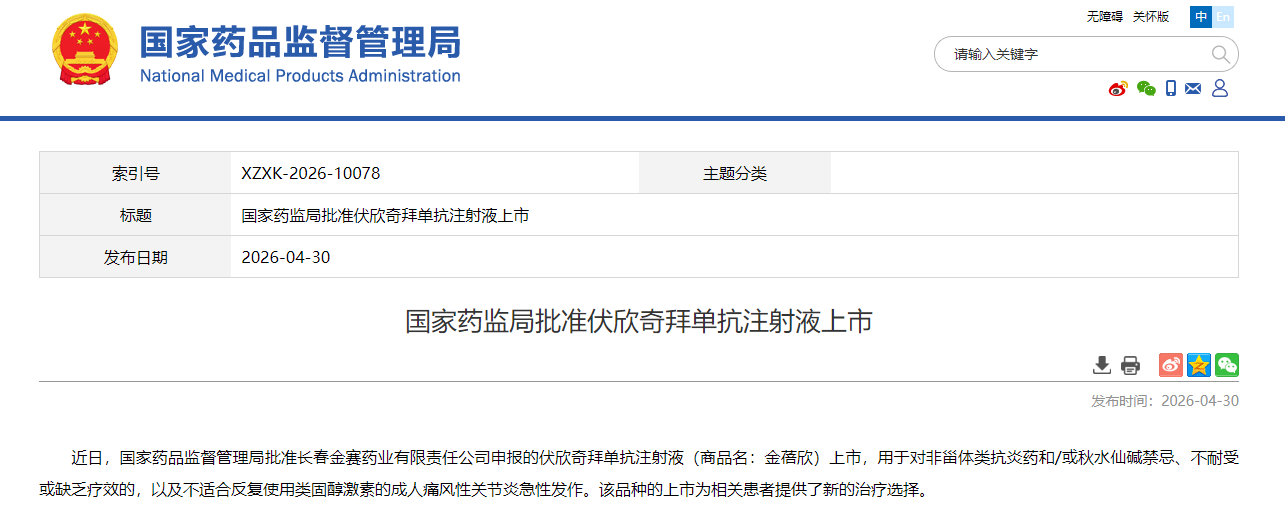
On April 30, 2026, the official website of China’s National Medical Products Administration (NMPA) announced the approval of Firsekibart Injection (brand name: Jinbeixin®), a Class 1 innovative biologic independently developed by Changchun GeneScience Pharmaceuticals. The drug is approved for:
Adult patients with acute gouty arthritis who are contraindicated, intolerant, or inadequately responsive to nonsteroidal anti-inflammatory drugs (NSAIDs) and/or colchicine, and who are not suitable for repeated corticosteroid use.
👉For an overview of the latest major approvals, see China Innovative Drug Approvals April 2026: 6 Approved, 5 by Chinese Companies.
As a China-based pharmaceutical wholesaler focused on global innovative therapies and developments in the Chinese pharmaceutical industry, DengYueMed will introduce the approval background, mechanism of action, clinical data, and potential impact of Firsekibart on China’s gout treatment landscape in this article.
China’s First IL-1β Monoclonal Antibody Opens a New Era of Precision Gout Therapy
This approval marks the official clinical launch of China’s first and currently the only fully human anti-IL-1β monoclonal antibody approved for gout indications, representing a major breakthrough in long-acting targeted anti-inflammatory treatment for gout in China.
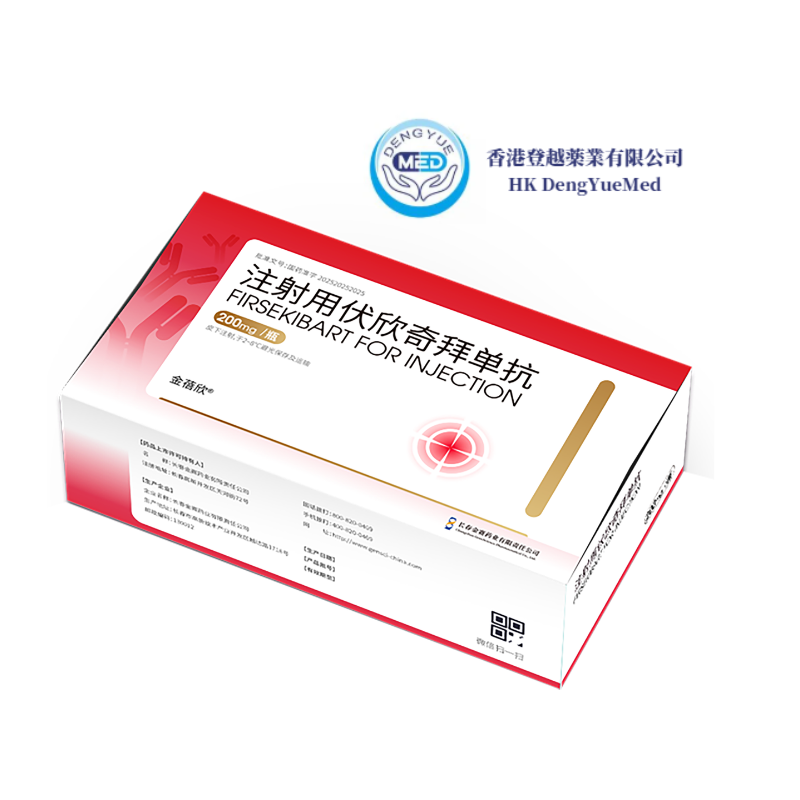
According to publicly available information, Firsekibart is a fully human anti-interleukin-1 beta (IL-1β) monoclonal antibody independently developed by Changchun GeneScience Pharmaceuticals and classified as a Class 1 therapeutic biologic innovative drug in China.
Notably, the product has been developed in two formulations:
- Lyophilized Firsekibart for Injection
- Firsekibart Injection (liquid formulation)
The lyophilized formulation was first approved in July 2025, while the newly approved liquid formulation further simplifies clinical administration and improves patient convenience.
More importantly, the approval of Jinbeixin® liquid formulation fills the long-standing gap in long-acting targeted anti-inflammatory therapy for gout in China.
Why Has IL-1β Become a Key Therapeutic Target in Gout?
In recent years, growing research into gout pathogenesis has identified IL-1β as one of the core inflammatory cytokines driving gout-related inflammation.
When monosodium urate crystals deposit in joints, they activate the NLRP3 inflammasome, which subsequently promotes the maturation and release of IL-1β, ultimately triggering acute inflammatory responses, including:
- Severe pain
- Redness, swelling, and heat
- Impaired joint function
- Recurrent inflammatory attacks
In addition, IL-1β is closely associated with various immune-mediated diseases, metabolic disorders, and chronic inflammatory conditions.
Firsekibart precisely binds to IL-1β and blocks its interaction with IL-1 receptors, intervening at the source of the inflammatory cascade and enabling a deeper and more targeted anti-inflammatory effect.
Unlike traditional pain-relief therapies, its therapeutic strategy is not limited to symptom control, but instead directly targets the underlying inflammatory mechanism of gout.
Clinical Data Show Rapid Onset, Lower Recurrence, and Long-Lasting Control
Across multiple clinical studies, Firsekibart demonstrated promising efficacy and safety outcomes.
Research results showed:
- Pain relief could begin as early as 6 hours after a single dose
- Pain improvement at 72 hours was non-inferior to compound betamethasone
In the pivotal Phase III GUARD-1 clinical trial involving 313 patients with acute gouty arthritis, results showed:
- A reduction of -57.09 mm in pain VAS scores at 72 hours in the Firsekibart group
- Comparable efficacy to corticosteroid therapy
- Median time to first recurrence extended to 45 days
- Significantly reduced recurrence risk
The hazard ratio (HR) was reported at only 0.10, demonstrating substantially superior long-term inflammation control compared with the control group.
Two Injections Per Year: Long-Acting Gout Control
Traditional gout treatment commonly faces two major challenges: insufficient pain control and frequent recurrence.
Multiple studies have shown that:
- Approximately 60% of patients experience recurrence within one year
- The first 3–6 months of urate-lowering therapy represent a high-risk recurrence period
- Recurrent attacks negatively affect treatment adherence
- Patients often fall into a vicious cycle of “pain–treatment interruption–recurrence”
Firsekibart demonstrated clear long-acting advantages.
Clinical studies showed a half-life of 25.5–30.8 days, with:
- An 87%–90% reduction in recurrence risk within 6 months after a single dose
- The potential to achieve stable long-term disease control with only two injections per year
This feature may provide significant clinical value for patients with recurrent gout attacks and inadequate response to conventional therapies.
Favorable Safety Profile With Reduced Hepatic and Renal Burden
Beyond efficacy, long-term safety remains a major concern for gout patients.
Many gout patients also suffer from:
- Hypertension
- Diabetes mellitus
- Chronic kidney disease (CKD)
- Cardiovascular disease
Long-term use of NSAIDs, colchicine, and corticosteroids may increase gastrointestinal, hepatic, renal, and cardiovascular risks.
Firsekibart offers several notable advantages:
- No hepatic or renal metabolism
- No dose adjustment required in patients with mild-to-moderate renal impairment
- Fully human monoclonal antibody design
- No risk of rejection related to animal-derived components
- No severe drug-related adverse events observed in clinical studies
These characteristics make Firsekibart particularly suitable for patients requiring long-term inflammatory management.
Gout Is More Than Just Joint Pain
Increasing evidence suggests that gout is not merely a joint disease, but rather a systemic inflammatory disorder.
Persistent and recurrent inflammation may lead to joint destruction, kidney damage, and increased cardiovascular risk.
Related studies have shown:
- An 89% increased risk of myocardial infarction or stroke within 60 days after a gout flare
- A 131% increased risk of venous thrombosis within 30 days
- A 4.61-fold increased risk of chronic kidney disease in gout patients
- Up to a 10-fold increased risk in patients with recurrent flares
- A further 57% increased risk of progression to end-stage renal disease in gout patients with CKD
As a result, the clinical demand for long-term stable inflammation control continues to grow.
Conclusion: Another Milestone for China’s Innovative Drug Development
The approval of Firsekibart not only signals China’s entry into the era of precision-targeted gout therapy, but also highlights the continued advancement of China’s innovative biologics industry.
As China’s first IL-1β monoclonal antibody, Firsekibart offers key advantages including:
- Precision targeting
- Rapid onset of action
- Long-lasting inflammation control
- Safety and convenience
These strengths provide a new treatment option for patients suffering from recurrent gout and inadequate response to traditional therapies.
For patients struggling with chronic gout attacks, this innovative therapy may reshape the current treatment landscape while further demonstrating China’s growing capabilities in inflammatory and autoimmune disease drug development.
👉Related reading: China Innovative Drug Approvals April 2026: 6 Approved, 5 by Chinese Companies.
China-based pharmaceutical wholesaler DengYueMed will continue to follow the latest developments in oncology, autoimmune diseases, rare diseases, metabolic disorders, and other cutting-edge therapeutic areas, bringing more updates on Chinese innovative medicines and pharmaceutical industry trends to the global market.
Related Posts
- China's First Generic Tiotropium Bromide and Olodaterol Inhalation Spray Approved: Ending an 8-Year Market Exclusivity and Bringing New Options for COPD Treatment
- Next-Generation MS Therapy Competition: BTK Inhibitors Are Reshaping the Landscape
- FDA Officially Approves Saphnelo Auto-Injector: SLE Patients May Soon Say Goodbye to Long Infusion Sessions