Atopic Dermatitis Welcomes an Important New Treatment: China Approves Ruxolitinib Phosphate Cream for Children Aged 2 and Older and Adults
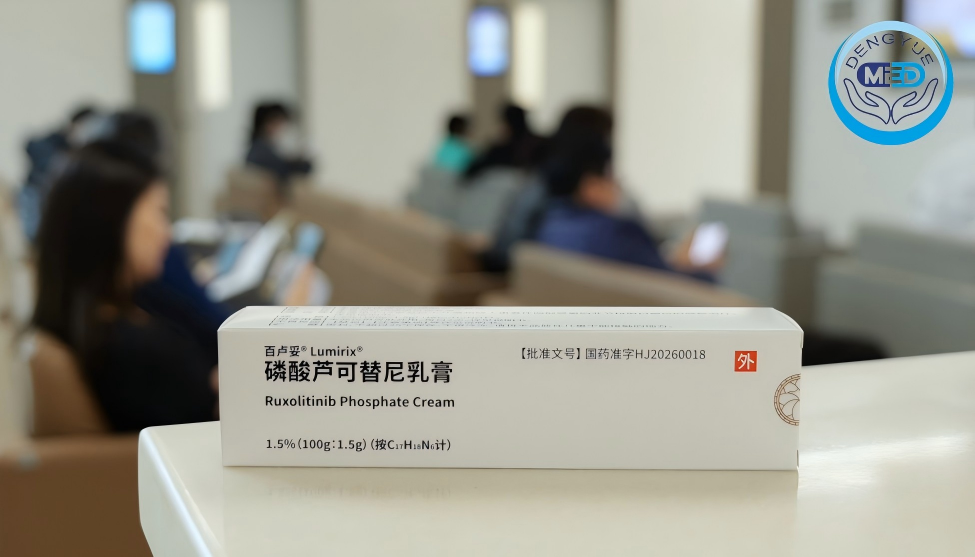
For patients living with atopic dermatitis (AD), the burden of the disease goes beyond redness, dry skin, and rashes. Persistent itching, disrupted sleep, and recurrent skin lesions can all have a lasting impact on quality of life.
For children and adolescents in particular, AD can also affect sleep, learning, and daily activities.
Therefore, finding ways to control inflammation while relieving itching and providing patients with more treatment options has remained an important focus in AD treatment.
On September 3, 2026, according to the latest announcement from China’s National Medical Products Administration (NMPA), Ruxolitinib Phosphate Cream received approval for a new indication in China for the topical short-term and non-continuous chronic treatment of mild-to-moderate atopic dermatitis in children aged 2 years and older and adults.
The expanded indication provides Chinese patients with AD with another topical treatment option and has brought renewed attention to this innovative topical JAK inhibitor.
As a pharmaceutical distributor following developments in innovative medicines from China, DengYueMed also continues to monitor new treatment advances in this field and related developments in global markets.
Atopic Dermatitis: More Than “Itchy Skin,” but a Chronic and Relapsing Disease in Need of New Treatment Options

Atopic dermatitis (AD) is a chronic, recurrent, inflammatory skin disease commonly characterized by dry skin, redness, eczematous lesions, and significant itching.
Among these symptoms, persistent itching is often one of the most difficult symptoms for patients to tolerate, particularly when it becomes worse at night and affects sleep and daily life. Repeated scratching can also damage the skin barrier, further aggravating inflammation and skin lesions and creating a cycle of “itching–scratching–skin damage.”
AD affects large numbers of children and adults worldwide, and China has a similarly large patient population.
According to relevant estimates, more than 54 million people in China had atopic dermatitis in 2024, with mild-to-moderate disease accounting for a large proportion of cases. For these patients, topical therapy remains an important foundation of AD management.
Currently, topical corticosteroids (TCS) and topical calcineurin inhibitors (TCIs) remain commonly used treatment options. However, some patients continue to face unmet needs related to repeated treatment, long-term disease management, and balancing efficacy with safety.
As understanding of the inflammatory mechanisms and itch pathways involved in AD continues to advance, new topical therapies targeting specific inflammatory signaling pathways are also creating more possibilities for patients.
What Is Ruxolitinib Phosphate Cream?
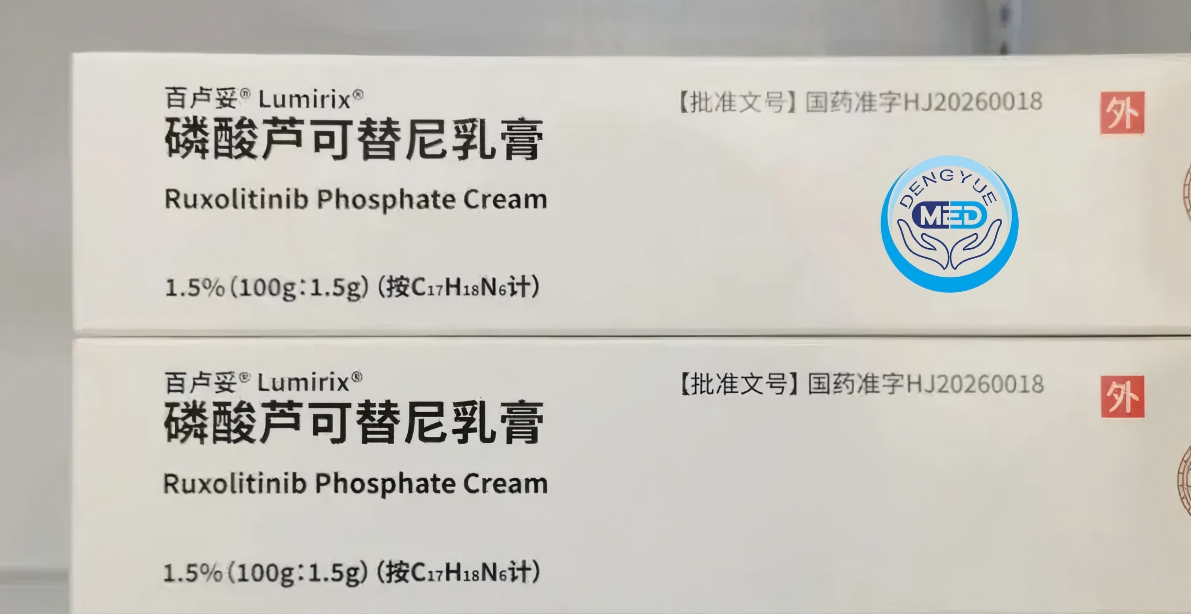
Ruxolitinib Phosphate Cream (brand names: 百卢妥®/Lumirix®) is a topical JAK inhibitor. Its active ingredient, ruxolitinib, selectively inhibits the JAK1 and JAK2 signaling pathways.
The JAK-STAT signaling pathway is involved in a range of immune and inflammatory responses mediated by cytokines. In atopic dermatitis, multiple inflammation-related signaling pathways contribute to the development and progression of the disease.
By inhibiting JAK1/JAK2-related signaling, Ruxolitinib Phosphate Cream works at the level of inflammatory signaling pathways.
Topical ruxolitinib cream has received regulatory approval in multiple markets for different indications.
In China, Ruxolitinib Phosphate Cream was first approved for marketing in January 2026, with vitiligo as its initial approved indication. It became the first topical JAK inhibitor approved in China for the treatment of vitiligo. On the first day of its commercial launch, sales exceeded 5,000 units, highlighting its strong market uptake.
The addition of the atopic dermatitis indication further expands its application in the field of dermatological diseases in China.
Latest Approval in China: Covers Children Aged 2 and Older and Adults
According to the NMPA announcement on September 3, 2026, Ruxolitinib Phosphate Cream was approved for: the topical short-term and non-continuous chronic treatment of mild-to-moderate atopic dermatitis in children aged 2 years and older and adults.
This age range is particularly noteworthy.
Atopic dermatitis often begins during childhood and may persist into adolescence and adulthood.
For children, treatment needs to address not only skin lesions but also the potential impact of the disease on sleep, daily activities, and family life.
Therefore, the expanded indication covering children aged 2 years and older and adults provides a new topical treatment option for patients with mild-to-moderate AD across different age groups.
It is important to note that approved indications, age ranges, and conditions of use may vary between countries and regions. International patients should refer to the information approved by the relevant regulatory authorities in their respective countries or regions and consult healthcare professionals.
Why Does the Speed of Itch Relief Matter to Patients?
For patients with atopic dermatitis, treatment outcomes are not measured only by changes in the extent or severity of skin lesions.
“When will the itching start to get better?” is often a much more immediate question for patients.
Based on pooled analyses from the TRuE-AD program, Ruxolitinib Phosphate Cream demonstrated an early signal of itch improvement.
The analysis showed that approximately 15 minutes after the first application, the modified Peak Pruritus Numerical Rating Scale (mPP-NRS) improved by an average of 2.3 points.
In addition, at 15 minutes, 30 minutes, 4 hours, and 6 hours after the first application, the proportion of patients achieving at least a 4-point improvement in itch NRS showed a statistically significant separation from the vehicle group.
The studies also observed:
- Approximately 12 hours: Reduction in skin pain began to emerge
- Approximately 36 hours: The proportion of patients achieving an itch-free or nearly itch-free state (NRS 0/1) showed a statistically significant difference from the vehicle group
- 2 weeks: Significant improvements were observed in skin lesions across the head and neck, trunk, upper limbs, and lower limbs, while sleep-related problems also improved
For patients who experience persistent itching, such early symptom improvement may be meaningful.
From a mechanistic perspective, JAK1-related signaling is also involved in the signaling of inflammatory mediators associated with itch. Therefore, inhibition of the JAK pathway may affect both inflammatory and itch-related processes.
It is important to emphasize that patient populations, study designs, and assessment criteria may differ across studies. Clinical trial results cannot be directly equated with treatment outcomes for every individual patient.
From Vitiligo to Atopic Dermatitis: Ruxolitinib Phosphate Cream Expands Its Use in China
The introduction of Ruxolitinib Phosphate Cream in China also has a broader commercial and development background.
The product was developed by U.S.-based Incyte. In December 2022, China Medical System Holdings Limited, through an affiliate of Dermavon Holdings Limited, entered into a collaboration and licensing arrangement with Incyte for Ruxolitinib Phosphate Cream. The arrangement granted exclusive rights for the development, registration, and commercialization of the product in Mainland China, Hong Kong SAR, Macao SAR, Taiwan, and 11 Southeast Asian countries and regions, as well as non-exclusive rights to manufacture the product within the territory.
In January 2026, the product received its first approval in China for the treatment of vitiligo.
Now, with the approval of the new atopic dermatitis indication, Ruxolitinib Phosphate Cream has further expanded into the AD treatment field in China.
For China’s dermatology treatment market, this represents a further expansion of the application of topical JAK inhibitors.
China’s Atopic Dermatitis Treatment Market Deserves International Attention
Atopic dermatitis is not unique to China but is a global chronic inflammatory skin disease.
With the continued development of biologics, small-molecule targeted therapies, and novel topical treatments, the global AD treatment landscape is evolving.
For international patients, physicians, healthcare institutions, and pharmaceutical supply-chain companies, the rapid development of China’s innovative pharmaceutical market has also attracted increasing attention.
In recent years, China’s pharmaceutical R&D capabilities have continued to advance, and a growing number of innovative medicines and treatment approaches developed in China have begun to expand into international markets.
For participants in the international pharmaceutical industry, developments in China’s innovative medicines, including clinical research, regulatory approvals, and commercialization, have become an increasingly important window into global pharmaceutical innovation.
The new indication for Ruxolitinib Phosphate Cream in China is another example of this trend.
Conclusion: Continued Progress in Atopic Dermatitis Treatment

Atopic dermatitis is a chronic disease that requires long-term management. For patients, treatment is not only about improving skin lesions but also about controlling itching, improving sleep and overall quality of life, and reducing the long-term burden associated with recurrent disease.
Ruxolitinib Phosphate Cream has been approved in China for the treatment of mild-to-moderate atopic dermatitis in children aged 2 years and older and adults, further expanding the topical treatment options available to Chinese patients with AD.
This development also reflects the continued expansion of treatment approaches for dermatological diseases as innovative medicines advance. For patients worldwide and the international pharmaceutical industry, new developments in China’s dermatology treatment landscape are also worth watching.
Leveraging our Chinese Pharmacy network and pharmaceutical distribution capabilities, DengYueMed continues to follow developments in innovative medicines from China and global treatment advances, supporting pharmaceutical access and connections between China and international markets.