When Patients Can’t Find Their Medicine: What Is Changing in China’s Pharmaceutical Supply Chain?
When Patients Can’t Find Their Medicine
What Is Changing in China’s Pharmaceutical Supply Chain?
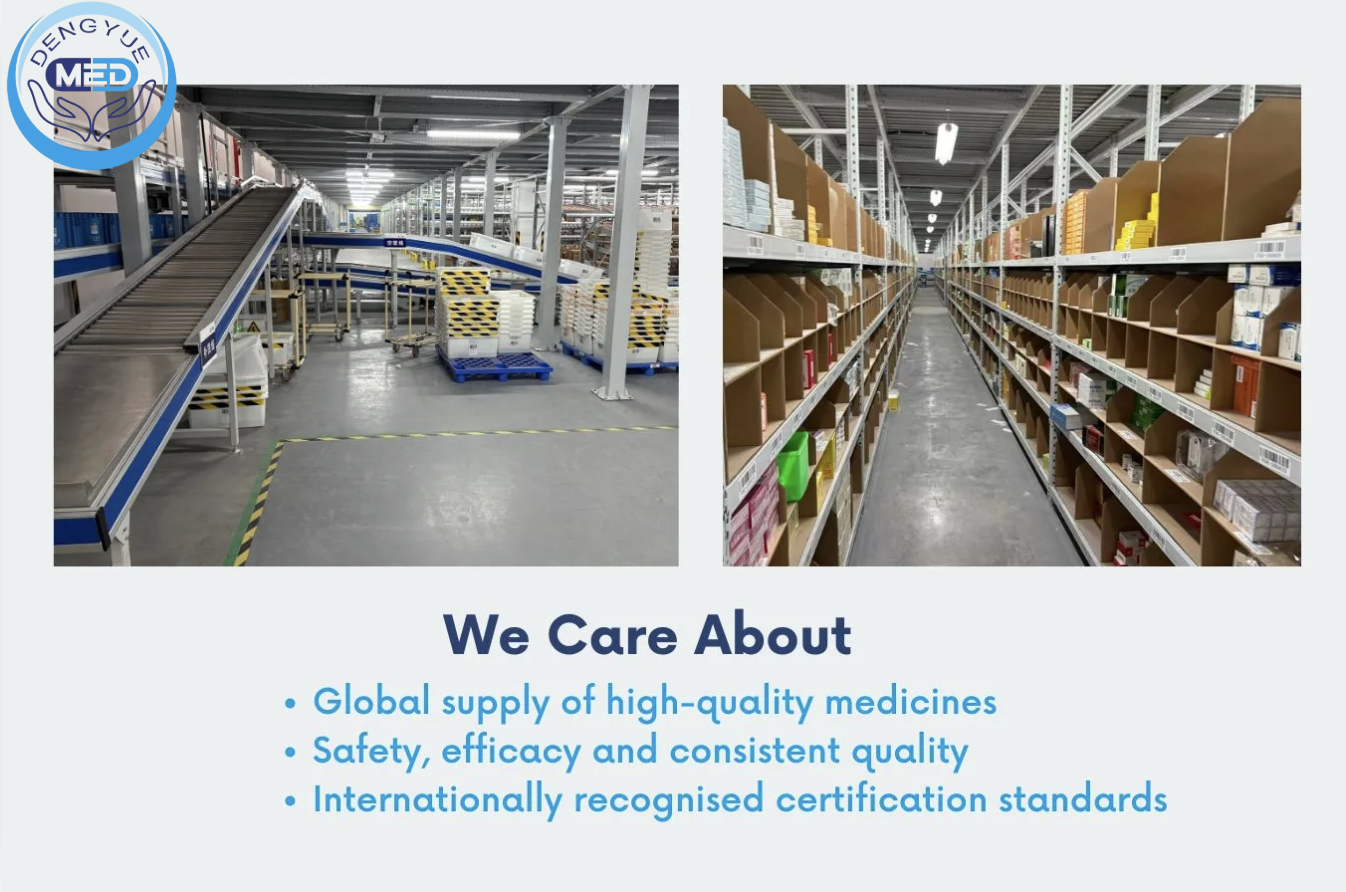
To many people, medicine is simply a box dispensed at a hospital pharmacy.
But for some patients, medicine represents time, opportunity — even life itself.
Especially in oncology, rare diseases, and biologics, three questions often create more anxiety than the treatment plan itself:
- Is the drug available?
- When can it arrive?
- Is the price manageable?
Behind these concerns lies a critical yet often overlooked factor:
pharmaceutical supply chains and international distribution systems.
Why Are Some Drugs “Available Globally” — Yet Still Out of Reach?
In recent years, the global specialty pharmaceutical market has expanded rapidly:
- Targeted therapies are increasingly segmented
- Rare disease treatment options continue to evolve
- Biologics are becoming mainstream
At the same time, real-world structural challenges have emerged:
- Significant differences in drug launch timelines across countries
- Large price gaps between markets
- Complex hospital procurement procedures
- Increasing cold-chain and compliance requirements
The real issue is no longer whether a drug exists —
but whether it can be obtained legally, steadily, and sustainably.
China Is Becoming a Strategic Hub
Over the past decade, China’s pharmaceutical industry has undergone substantial transformation:
- Manufacturing standards have steadily improved
- International registration pathways have become clearer
- Biologics R&D capabilities have strengthened
- Supply chain efficiency has significantly advanced
Today, international buyers are turning their attention to Chinese pharmaceutical channels — not merely because of pricing advantages, but because of:
- Reliable and sustainable supply capacity
- More mature export documentation systems
- Professional cold-chain logistics experience
- Adaptability to emerging market regulatory environments
During this structural shift, a number of companies specializing in high-end and specialty pharmaceuticals have stepped forward.
One of them is DengYueMed.
As a pharmaceutical export enterprise from China, DengYueMed does not rely on scale alone. Instead, it places professional capability at the core of its growth strategy — investing in quality control, compliance management, and supply stability to build a global cooperation network rooted in innovation and sustainability.
Sustainable Supply Over One-Time Transactions
Patients do not care how large a company is.
They care about:
- Whether treatment can continue
- Whether the medicine is safe
- Whether it will arrive on time
- Whether long-term planning is possible
In oncology and rare disease treatment, procurement is never a one-time event. Patients require:
- Continuous therapy
- Batch consistency
- Cold-chain protection
- Compliant customs clearance
- Long-term traceability
For procurement professionals, the key questions are equally practical:
- Is the supply sustainable?
- Are documentation and certifications complete?
- Does the supplier understand target-country registration requirements?
- Can issues be resolved quickly if they arise?
In real-world partnerships, DengYueMed emphasizes:
✔ Stable bulk supply
✔ Professional cold-chain management
✔ Export documentation compliance support
✔ Multilingual communication
✔ Regulatory understanding across diverse markets
This is not simple trade intermediation —
it is systematic pharmaceutical supply management.
Why Specialty Drugs Demand Higher Supply Standards
Oncology drugs and biologics present unique logistical demands:
- Temperature sensitivity
- Shorter shelf lives
- Strict batch traceability
- Controlled storage and transport conditions
If the supply chain becomes unstable, the impact extends beyond inventory — it disrupts treatment schedules.
Increasingly, procurement professionals are asking:
Does the supplier truly understand the medical nature of the product — or do they only understand it as a commodity?
This shift is driving the replacement of general trading intermediaries by specialized pharmaceutical supply partners.
Entering an Era of Refined Supply Management
Looking ahead, several structural trends are clear:
- The rare disease market will continue expanding
- Biologics will capture a larger share of global markets
- Regulatory standards will tighten worldwide
- Procurement professionals will become more specialized
In this environment, price competition alone cannot sustain long-term partnerships.
What matters now is:
- Compliance capability
- Supply stability
- Market understanding
- Long-term cooperation capacity
Beyond Business
The pharmaceutical industry has never been solely about commerce.
Behind every shipment of medicine is a family waiting for treatment.
Every on-time delivery means the continuation of a therapy cycle.
As a company focused on specialty pharmaceutical supply, DengYueMed prefers to be understood as:
A bridge connecting high-quality Chinese pharmaceutical resources with real global medical needs.
As the global pharmaceutical landscape evolves, Chinese pharmaceutical exporters are shifting from a cost-driven model to one centered on professionalism and responsibility.
Built on quality, compliance, and integrity, DengYueMed is steadily participating in this transformation — providing reliable supply to international markets while contributing to the sustainable development of global healthcare systems.