Global Pharmaceutical Supply Chain Risk: Why On-Time Delivery and Compliance Are Replacing Price as Core Procurement Metrics
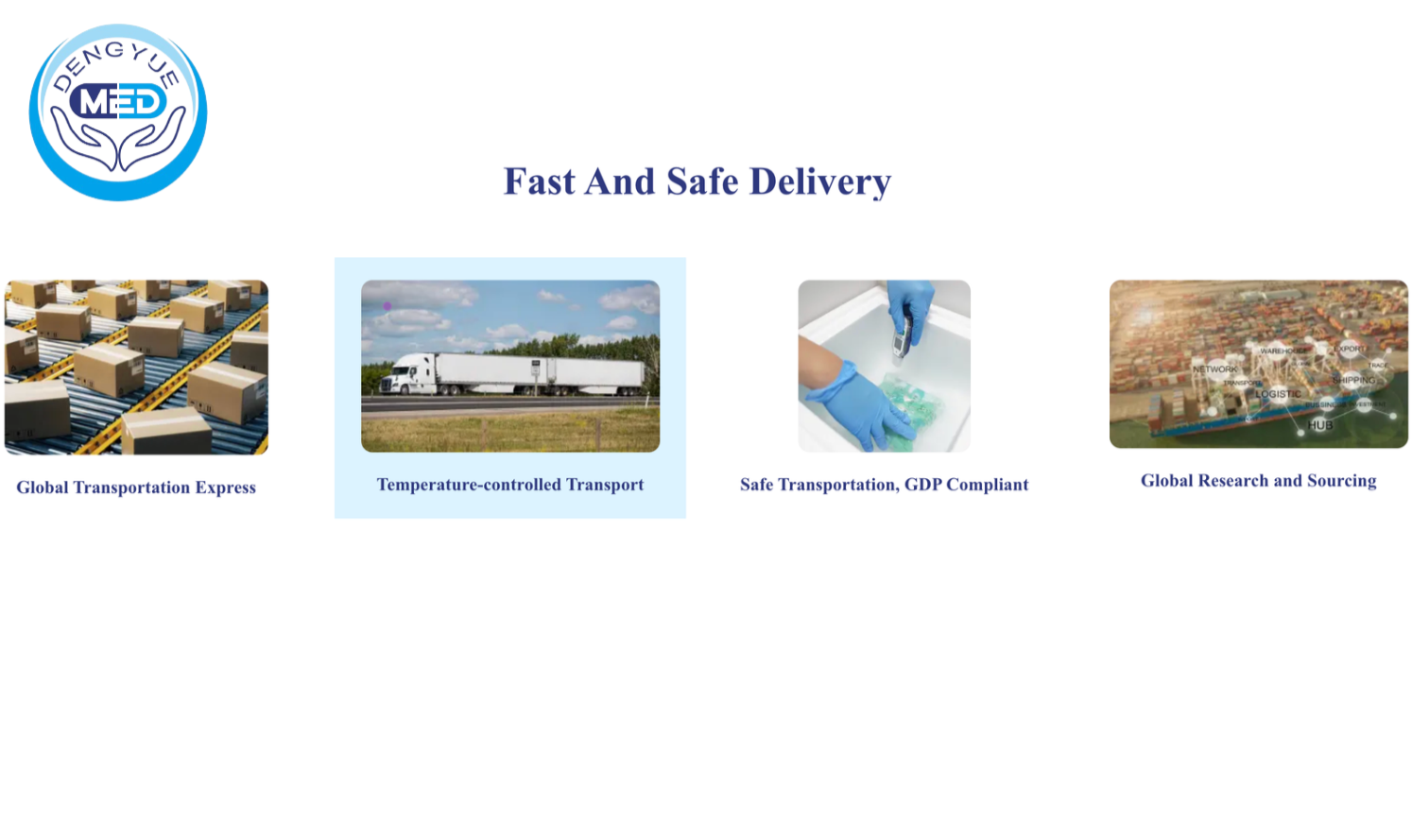
Global Pharmaceutical Supply Chain Risk
Why On-Time Delivery and Compliance Are Replacing Price as Core Procurement Metrics
Within the broader context of global pharmaceutical development discussed across the DengYueMed platform, supply chain reliability is becoming as strategically important as innovation itself.
In the pharmaceutical industry, what truly shapes long-term partnerships is often not a single successful delivery — but many deliveries in which nothing goes wrong.
This is a statement we at DengYue repeatedly hear from pharmaceutical procurement professionals through years of collaboration.
Some Problems Are Not “Unexpected” — They Have Been There All Along
When reviewing past transactions with partners across different markets — particularly in oncology and complex therapeutic areas — a consistent pattern becomes clear.
Many supply chain issues do not arise suddenly.
They appear repeatedly as early warning signs — but are never systematically analyzed.
For example:
- Import clearance requirements change frequently, while documentation continues to follow outdated templates
- Cold chain solutions remain fixed and are not adjusted for specific routes or transshipment points
- Minor discrepancies exist between batch information on documents and external packaging
- Documentation is compiled shortly before shipment, with no structured pre-shipment review mechanism
These risks are especially critical for high-value targeted therapies such as those discussed in our
Oncology Insights section.
In a single transaction, these issues may “barely pass.”
But in continuous supply scenarios, they gradually accumulate into tangible operational risk.
A Scenario That Appears Again and Again
The Final 48 Hours Before Customs Clearance
Across multiple transactions, partners encountered similar situations:
- Customs authorities requesting clarification or revision of document wording
- Cold-chain products facing temperature-control pressure while awaiting clearance
- Procurement teams needing to adjust hospital or warehouse planning at the last minute
These challenges are particularly sensitive in rare or life-threatening disease treatments, where continuity of therapy is critical — a topic we further explore in our Rare Disease Insights analysis.
These situations do not always result in failure.
But they inevitably trigger a chain reaction:
- Increased cost
- Timeline uncertainty
- Disruption to subsequent supply schedules
It is precisely these “non-fatal yet highly consuming” experiences that have led more procurement teams to reassess their sourcing models.
From Experience-Driven to Process-Driven
After reviewing multiple transactions, a clear consensus has emerged:
Pharmaceutical supply can no longer rely on experience-based judgment alone.
It must transition toward process-driven, front-loaded risk management.
This aligns closely with evolving international compliance standards discussed in our
Regulatory & Compliance Insights.
DengYue places particular emphasis on:
- Pre-Shipment Compliance Review
- Batch Consistency and Traceability Verification
- Route-Based Cold Chain Planning
- Supply Continuity–Oriented Delivery Rhythm Management
These are not add-ons to individual transactions.
They are system mechanisms refined through repeated real-world cross-border trading experience.
Why Procurement Teams Care More About the Process Than the Outcome
One practical concern is frequently expressed:
“We are not afraid of being slightly late once.
What worries us is not knowing whether something will go wrong next time.”
For procurement departments, uncertainty itself is risk.
Compared with one-time low pricing, predictable delivery outcomes carry far greater long-term value.
This shift is especially evident in procurement models for innovative oncology products such as
Donafenib Tosylate, where supply interruption can directly impact treatment continuity.
This is why partners now proactively ask:
- How far in advance are documents reviewed before shipment?
- Is full cold-chain temperature data traceable end to end?
- How does the supplier respond when regulatory requirements change suddenly?
These questions are not about price.
They are about system capability.
DengYue Perspective: The Pharmaceutical Industry Is Redefining “Reliability”
In many industries, reliability equals efficiency.
In pharmaceuticals, reliability means:
- Not creating additional risk
- Not pushing problems to the last moment
- Not allowing treatment schedules to bear avoidable uncertainty
This type of reliability is rarely written explicitly into contracts,
yet it is validated repeatedly through real collaboration.
Conclusion: True Professionalism Comes From Long-Term Review
The maturity of DengYue’s pharmaceutical supply chain is not proven by a single successful delivery.
It is built upon:
- Continuous review of past transactions
- Systematic analysis of near-failure cases
- Long-term iterative refinement of operational processes
When experience is embedded into the system,
“nothing happens” is no longer accidental — it becomes stable and repeatable.
Across oncology, rare disease, and cross-border pharmaceutical collaboration, more global procurement professionals are prioritizing systematic capability and reliability over short-term cost considerations.
DengYue Medical
Global Oncology Intelligence | Regulatory Insight | Compliance-Driven Pharmaceutical Supply