Bone Marrow Protection Throughout Chemotherapy: Trilaciclib Approved for a New Indication, Extending from First-Line to Post-Relapse Treatment
For patients with extensive-stage small cell lung cancer (ES-SCLC), treatment challenges extend beyond the cancer itself.
Small cell lung cancer is characterized by rapid growth and aggressive progression. Once the disease reaches the extensive stage, patients typically require systemic anticancer therapy. Chemotherapy remains an important treatment option and may be used across both first-line treatment and subsequent therapy after disease relapse.
However, while chemotherapy targets rapidly dividing tumor cells, it can also damage normal hematopoietic cells.
Chemotherapy-induced myelosuppression, including neutropenia, anemia, and thrombocytopenia, may increase the risks of infection and bleeding. It can also lead to chemotherapy dose reductions, treatment delays, and even disruption of subsequent anticancer therapy.
For patients with ES-SCLC who require multiple cycles of treatment, an important question therefore remains: How can bone marrow be protected while maintaining effective tumor control, helping patients complete their planned treatment?

Trilaciclib Approved for a New Indication, Extending Bone Marrow Protection to Post-Relapse Chemotherapy
On August 24, Simcere Pharmaceutical Group Limited announced that Cosela® (Trilaciclib Hydrochloride for Injection) had received approval from China’s National Medical Products Administration (NMPA) for a new indication.
The new indication is for patients with relapsed extensive-stage small cell lung cancer, with administration prior to a Topotecan-containing regimen to reduce the incidence of chemotherapy-induced myelosuppression.
With this approval, Cosela® now covers bone marrow protection across the full chemotherapy treatment course for ES-SCLC. According to Simcere, it is currently the only bone marrow protective drug approved in China to cover the full treatment cycle of first-, second-, and third-line chemotherapy for ES-SCLC.
Previously, Trilaciclib had been approved for bone marrow protection prior to first-line chemotherapy in ES-SCLC. With the expanded indication, its use now extends to bone marrow protection before Topotecan-containing regimens in patients with relapsed disease.
This means that bone marrow protection is no longer limited to a single stage of treatment but can extend across different treatment settings, from first-line therapy to chemotherapy after relapse.
As innovative drugs from China continue to expand their clinical applications, treatment approaches addressing patients’ needs throughout the treatment journey are also gaining broader attention in the global pharmaceutical market. As a Chinese pharmaceutical wholesaler participating in the global pharmaceutical supply chain, DengYueMed is also following this development.
Why Is Bone Marrow Protection Important in Extensive-Stage Small Cell Lung Cancer?
Patients with ES-SCLC generally require systemic treatment.
Chemotherapy works by targeting rapidly dividing cells, but hematopoietic stem and progenitor cells in the bone marrow also have high proliferative activity and can therefore be affected by chemotherapy.
When bone marrow function is suppressed, patients may develop:
- Neutropenia, increasing the risk of infection;
- Anemia, which may cause fatigue and reduced exercise tolerance;
- Thrombocytopenia, increasing the risk of bleeding.
The impact of myelosuppression goes beyond changes in blood cell counts. When hematologic toxicity becomes significant, clinicians may need to delay the next cycle of chemotherapy, adjust drug doses, or provide appropriate supportive care.
For patients with rapidly progressing ES-SCLC, maintaining treatment continuity is particularly important.
Therefore, the goal of myelosuppression management is not only to treat hematologic abnormalities after they occur, but also to reduce their incidence and severity as much as possible and create better conditions for patients to continue anticancer treatment.
Post-Relapse Chemotherapy: A New Challenge for Bone Marrow Protection
After first-line treatment for ES-SCLC, some patients may experience disease relapse and require subsequent-line therapy.
At this stage, patients have already undergone previous anticancer treatment, which may have affected their overall condition and bone marrow reserve. As they receive chemotherapy again, treatment tolerability becomes an even greater consideration.
Topotecan is an important chemotherapy option for relapsed small cell lung cancer, but myelosuppression is also an important hematologic toxicity associated with the treatment.
This raises a practical question for patients with relapsed disease:
How can chemotherapy-related damage to the bone marrow be reduced while continuing anticancer treatment?
The approval of Trilaciclib for relapsed ES-SCLC further extends bone marrow protection into this treatment setting.
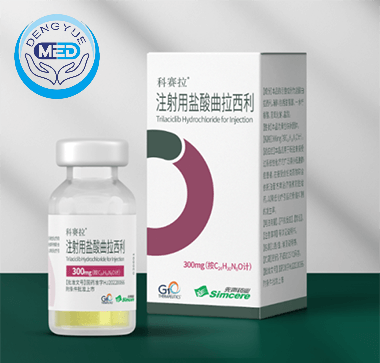
What Is Trilaciclib? A CDK4/6 Inhibitor Used Before Chemotherapy
Trilaciclib is a cyclin-dependent kinase 4/6 (CDK4/6) inhibitor.
Unlike CDK4/6 inhibitors primarily used to directly inhibit tumor cell proliferation, Trilaciclib has an important clinical role in ES-SCLC as a bone marrow protective therapy administered before chemotherapy.
Its key mechanism is to temporarily and reversibly arrest certain hematopoietic stem and progenitor cells in the G1 phase of the cell cycle.
In simple terms, Trilaciclib temporarily places bone marrow hematopoietic cells into a relatively quiescent state before chemotherapy, reducing their vulnerability to chemotherapy-induced damage while they are actively dividing.
The therapeutic logic of Trilaciclib can therefore be summarized as:
Administration before chemotherapy → temporary protection of hematopoietic stem and progenitor cells → reduced chemotherapy-related bone marrow damage → reduced risk of myelosuppression.
This also represents an important difference between Trilaciclib and traditional approaches to managing chemotherapy-induced myelosuppression.
Traditional supportive care generally intervenes after toxicity occurs, based on the patient’s condition. Trilaciclib moves the intervention window forward to before chemotherapy, providing proactive protection before bone marrow damage occurs.
It is important to note that pre-chemotherapy bone marrow protection does not replace other supportive treatments. The appropriate use of Trilaciclib should be determined by healthcare professionals based on the patient’s condition and chemotherapy regimen.
From First-Line to Post-Relapse Treatment: Bone Marrow Protection Across the Full Treatment Course
Trilaciclib was approved in China in July 2022 and received regular full approval in October 2023. It subsequently completed the localization of its manufacturing technology and began domestic production in China.
With the approval of the new indication, its clinical application in ES-SCLC has expanded further:
Bone marrow protection before first-line chemotherapy → disease relapse → bone marrow protection before subsequent-line chemotherapy.
This change reflects a broader shift in the approach to supportive care in oncology—from treating problems after they occur toward proactive prevention before treatment.
For patients, the value of bone marrow protection goes beyond improving hematologic parameters. By reducing the risk of severe chemotherapy-induced myelosuppression, it may help reduce treatment delays, dose reductions, or interruptions caused by hematologic toxicity, allowing patients to better tolerate their planned anticancer treatment.
Conclusion: Cancer Control Is Only Part of the Treatment Journey
The treatment of extensive-stage small cell lung cancer is a race against a rapidly progressing disease.
Chemotherapy needs to target rapidly proliferating tumor cells, but it can also affect the normal hematopoietic system. How to reduce treatment-related damage while controlling the disease is therefore an important consideration throughout the treatment journey.
The pre-chemotherapy bone marrow protection strategy represented by Trilaciclib provides another approach to this challenge. With the approval of the new indication, this strategy now extends further to subsequent-line chemotherapy for patients with relapsed ES-SCLC.
From a single treatment stage to a more comprehensive chemotherapy course, bone marrow protection is becoming an increasingly important component of ES-SCLC treatment.
For the global pharmaceutical industry, the value of innovative drugs from China is also expanding beyond breakthroughs in individual drugs or indications toward addressing a broader range of clinical treatment needs.
As a Chinese pharmaceutical wholesaler, DengYueMed actively participates in the global pharmaceutical supply chain, providing global pharmaceutical industry stakeholders with information on innovative oncology drugs, the Chinese pharmaceutical market, and related treatment developments.