Why Have Bispecific Antibodies Become a Global Hotspot in Cancer Drug Development?
In recent years, bispecific antibodies (BsAbs) have rapidly emerged as one of the most closely watched innovations in the global biopharmaceutical industry. From multinational pharmaceutical companies to emerging biotechnology firms, significant research investments and capital continue to flow into this field. With multiple products successfully reaching the market and clinical studies achieving encouraging breakthroughs, bispecific antibodies are becoming a key direction in the future of cancer treatment.
Many industry experts believe that bispecific antibodies have the potential to become the next major oncology technology platform following monoclonal antibodies, immune checkpoint inhibitors, and CAR-T cell therapies. What exactly are bispecific antibodies, and why have they stood out among numerous innovative cancer treatment approaches?
What Are Bispecific Antibodies?
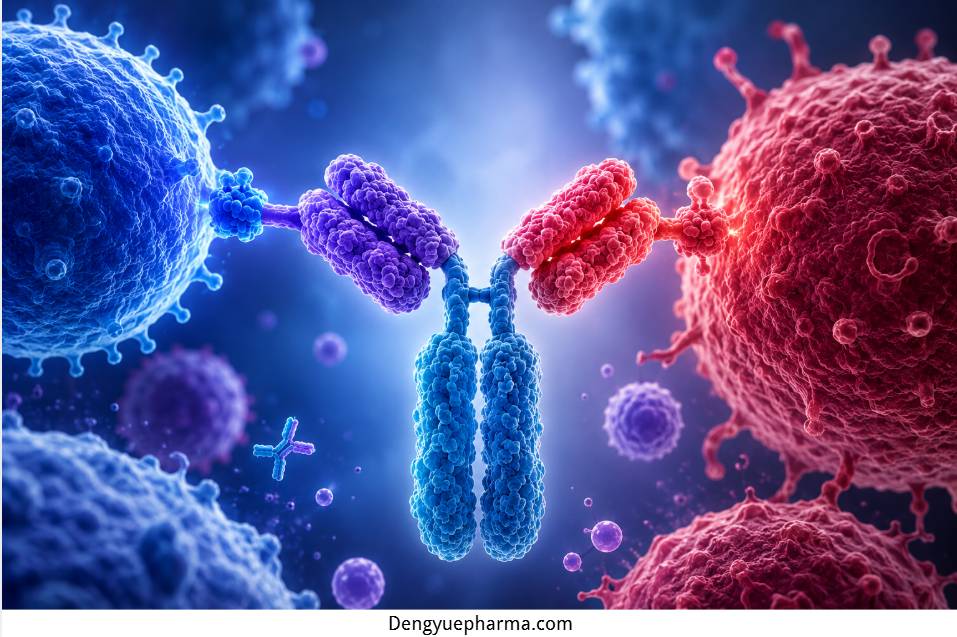
Antibodies are essential tools used by the immune system to recognize and eliminate abnormal cells. Traditional monoclonal antibodies are designed to target a single antigen, whereas bispecific antibodies are engineered to recognize two different targets simultaneously.
This unique structure enables a single molecule to perform multiple functions. For example, one arm can bind to an antigen on a tumor cell, while the other arm binds to an immune cell, helping the immune system locate and eliminate cancer cells more effectively.
Compared with conventional monoclonal antibodies, bispecific antibodies not only improve treatment precision but also offer new strategies for overcoming drug resistance and enhancing therapeutic efficacy.
Why Are Bispecific Antibodies Driving a Global R&D Boom?
Cancer treatment has entered the era of precision medicine, where therapies based on a single mechanism are often insufficient to address the complexity of many malignancies. Bispecific antibodies offer new possibilities through their ability to engage multiple targets simultaneously.
By modulating two critical targets at the same time, these therapies can enhance anti-tumor activity while reducing the likelihood of certain tumor escape mechanisms. For cancers that frequently develop resistance, multi-target approaches may provide a more comprehensive therapeutic strategy.
Bispecific antibodies can also directly recruit immune cells to the tumor microenvironment, improving the immune system’s ability to identify and attack cancer cells. Treatment goals that previously required combinations of multiple drugs may potentially be achieved with a single therapeutic agent, simplifying treatment regimens.
An increasing number of studies have demonstrated promising clinical activity for bispecific antibodies in hematologic malignancies as well as several solid tumors, further fueling global enthusiasm for this technology.
How Do Bispecific Antibodies Help the Immune System Precisely Target Cancer Cells?
One of the most successful categories of bispecific antibodies is the T-cell engager (TCE).
These therapies are often described as a “bridge” between immune cells and cancer cells.
One end of the molecule binds to a specific antigen expressed on the tumor cell surface, while the other end binds to the CD3 receptor on T cells. Once both targets are engaged, the distance between T cells and cancer cells is dramatically reduced.
In this close-contact state, T cells become activated and release cytotoxic molecules such as perforin and granzymes, which directly destroy cancer cells.
This mechanism helps the immune system overcome certain tumor immune-evasion strategies, making cancer cells easier to detect and eliminate. As a result, T-cell engagers have become one of the most successful and actively pursued approaches in bispecific antibody development.
What Advantages Do Bispecific Antibodies Offer Compared with Other Cancer Therapies?
| Treatment Modality | Key Characteristics |
|---|---|
| Chemotherapy | Broadly kills rapidly dividing cells and may affect healthy tissues |
| Monoclonal Antibodies | Target a single antigen or pathway |
| CAR-T Therapy | Personalized cell therapy with strong efficacy but complex manufacturing |
| Bispecific Antibodies | Simultaneously target two molecules and precisely activate immune responses |
Bispecific antibodies are standardized biologic drugs that can be manufactured and stored in advance. Unlike CAR-T therapies, they do not require patient-specific cell collection and engineering, making them more accessible in clinical practice.
Their design flexibility also provides researchers with greater opportunities to tailor therapies based on specific tumor characteristics, enabling the development of more precise treatment strategies.
Which Cancers May Benefit from Bispecific Antibodies?
Bispecific antibodies have already demonstrated promising potential across multiple cancer types.
Major areas of development include:
- Multiple myeloma
- Non-Hodgkin lymphoma
- Acute lymphoblastic leukemia (ALL)
- Small cell lung cancer (SCLC)
- Breast cancer
- Gastric cancer
- Prostate cancer
- Colorectal cancer
Hematologic malignancies currently represent the most mature area for commercial application, with several bispecific antibody therapies already receiving regulatory approval.
Development in solid tumors is also progressing rapidly. As research advances on targets such as HER2, DLL3, PSMA, and Claudin18.2, next-generation bispecific antibodies are moving through clinical development at an accelerating pace.
What Challenges Do Bispecific Antibody Developers Face?
Despite their enormous potential, bispecific antibodies still face several important challenges.
Key areas of focus include:
- Managing immune-related toxicities such as cytokine release syndrome (CRS)
- Identifying and validating highly selective tumor targets
- Overcoming barriers created by the complex solid tumor microenvironment
- Improving molecular stability and manufacturing processes
- Investigating long-term efficacy and resistance mechanisms
These challenges remain major priorities for pharmaceutical companies and research institutions worldwide.
How Could Bispecific Antibodies Transform the Future of Cancer Treatment?
Cancer therapy is evolving from single-mechanism treatments toward multi-mechanism, integrated approaches. Bispecific antibodies are uniquely positioned to connect different therapeutic strategies within a single platform.
Future bispecific antibody therapies may combine tumor targeting, immune activation, and microenvironment modulation to deliver more precise and durable anti-cancer responses.
Researchers are increasingly exploring combinations of bispecific antibodies with PD-1 inhibitors, antibody-drug conjugates (ADCs), CAR-T therapies, and cancer vaccines. As technologies continue to advance, bispecific antibodies are expected to expand into additional cancer types and further improve long-term patient outcomes.
Conclusion
The emergence of bispecific antibodies has opened new possibilities for cancer treatment. By simultaneously recognizing two targets, these therapies enable more precise tumor intervention and more efficient immune activation, expanding the boundaries of innovative oncology care while enhancing treatment effectiveness.
As global research efforts accelerate, clinical evidence continues to grow, and more innovative products enter the market, bispecific antibodies are steadily moving from cutting-edge science into everyday clinical practice. They are poised to become an important pillar of future precision oncology and a key driver of the next generation of cancer therapies.
For companies focused on innovative medicines and global pharmaceutical accessibility, the rapid development of bispecific antibodies also highlights the growing importance of international drug distribution, regulatory collaboration, and patient access initiatives. As more next-generation oncology therapies reach the market, ensuring that patients can benefit from these innovations will remain a critical priority for the global healthcare ecosystem.