ADC Enters the 3.0 Era: What Are the New Highlights of Next-Generation Cancer Therapies?
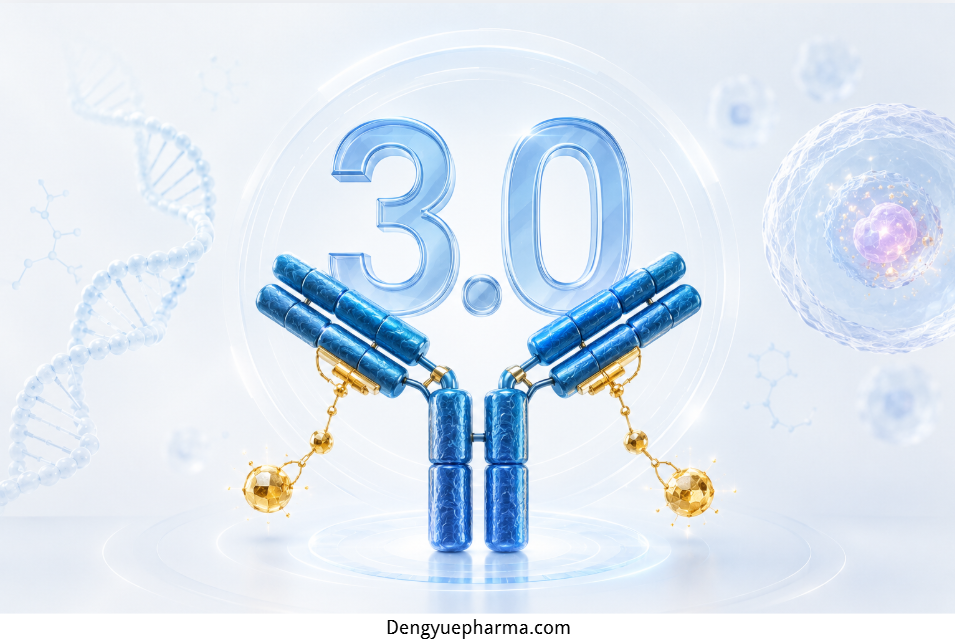
In recent years, ADCs (Antibody-Drug Conjugates) have become one of the most closely watched areas in global oncology drug innovation. From breast cancer and lung cancer to gastric cancer and genitourinary tumors, an increasing number of ADC therapies have demonstrated impressive clinical efficacy. As the technology continues to evolve, ADCs have gradually progressed from an early exploratory stage into the new era of ADC 3.0.
Industry experts generally believe that third-generation ADC technologies not only improve precision and safety but also significantly expand the therapeutic landscape. In the coming years, ADCs are expected to become a major force driving transformation in cancer treatment, alongside immunotherapy and targeted therapy. So, what breakthroughs define the ADC 3.0 era, and what new opportunities could they bring to cancer patients?
What Are ADC Drugs?
ADCs are often referred to as “precision-guided cancer missiles.” Their core concept is to retain the powerful tumor-killing effects of chemotherapy while improving the selectivity of treatment toward cancer cells.
A complete ADC consists of three key components:
- Antibody: Precisely recognizes specific targets on the surface of tumor cells.
- Linker: Connects the antibody to the drug payload and ensures stable transport within the body.
- Payload: A highly potent cytotoxic agent responsible for destroying cancer cells.
Through this design, ADCs can deliver therapeutic agents directly into tumor cells, minimizing damage to healthy tissues while enhancing treatment effectiveness.
From ADC 1.0 to ADC 3.0: How Has the Technology Evolved?
The development of ADCs has been a gradual process marked by several technological upgrades.
First-generation ADCs demonstrated the feasibility of targeted drug delivery. However, limitations such as unstable linkers and inefficient payload release restricted both efficacy and safety.
Second-generation ADCs achieved major advances through improved antibody selection and linker design, paving the way for commercial success. Several blockbuster ADCs approved in recent years have become important treatment options across multiple cancer types.
Today, with the arrival of the ADC 3.0 era, innovation is no longer focused on a single technological improvement. Instead, researchers are optimizing antibodies, linkers, payloads, and tumor microenvironment interactions simultaneously, driving ADC development toward greater precision, efficacy, and safety.
As next-generation ADCs advance rapidly through clinical development, the pace of global approvals is accelerating. This trend is also creating new demands for international pharmaceutical distribution and supply capabilities. DengyueMed closely follows the evolution of ADC 3.0 technologies, continuously expanding its global portfolio of innovative oncology therapies, including both investigational and approved third-generation ADCs, helping connect pharmaceutical companies, clinical institutions, and healthcare markets worldwide while accelerating the commercialization of cutting-edge cancer treatments.
New Highlight 1: Expanding Tumor Targets
Early ADC development focused primarily on HER2-positive cancers. However, advances in tumor biology have led to the discovery of numerous new therapeutic targets.
Some of the most promising ADC targets today include:
- HER3
- TROP2
- CLDN18.2
- B7-H3
- Nectin-4
- LIV-1
The emergence of these targets means ADC therapies are no longer limited to a small number of cancer types. They are increasingly being developed for lung cancer, gastric cancer, esophageal cancer, ovarian cancer, pancreatic cancer, and many other solid tumors.
For patients who previously lacked effective targeted treatment options, this development represents a significant source of hope.
New Highlight 2: Major Advances in Linker Technology
Although linkers may appear to be merely the “bridge” within an ADC, they are widely regarded as one of the most critical determinants of a drug’s success.
An ideal linker must fulfill two requirements:
- Remain stable while circulating in the bloodstream.
- Release the payload efficiently after reaching tumor cells.
Third-generation ADCs utilize more sophisticated cleavable linker technologies that can respond to specific characteristics of the tumor microenvironment.
Examples include release mechanisms triggered by:
- Acidic conditions
- Tumor-associated enzymes
- Reductive environments
These innovations improve payload utilization while helping reduce systemic toxicity.
New Highlight 3: More Diverse Payload Technologies
Traditional ADCs primarily employed microtubule inhibitors as their cytotoxic payloads. However, research has shown that different tumor types respond differently to various therapeutic mechanisms.
As a result, next-generation ADCs are exploring a broader range of payload classes, including:
- Topoisomerase I inhibitors
- DNA-damaging agents
- RNA polymerase inhibitors
- Immune-activating payloads
- Protein-degradation payloads
These novel payloads not only offer enhanced antitumor activity but may also help overcome resistance mechanisms, providing new options for patients with difficult-to-treat cancers.
New Highlight 4: Enhanced Bystander Effect
Tumors are highly heterogeneous, meaning not all cancer cells express the same targets at identical levels.
If an ADC can eliminate only target-high cells, residual tumor cells may survive and eventually drive disease recurrence.
One of the key advances of ADC 3.0 is the enhancement of the bystander effect, which works through the following process:
- The ADC enters target-positive tumor cells.
- The payload is released intracellularly.
- The released drug diffuses into surrounding tissues.
- Neighboring tumor cells with low or absent target expression are also destroyed.
This capability significantly improves the treatment of complex solid tumors and has become a major contributor to the success of several next-generation ADC therapies.
New Highlight 5: Combination Therapy Is Becoming the Future
As ADC efficacy continues to improve, researchers are increasingly exploring combination treatment strategies.
The most promising approaches include:
- ADCs combined with PD-1/PD-L1 immunotherapy
- ADCs combined with targeted therapies
- ADCs combined with chemotherapy
- ADCs combined with bispecific antibodies
- ADCs combined with radiotherapy
Studies suggest that ADCs may not only kill tumor cells directly but also alter the tumor microenvironment, enhancing immune recognition of cancer cells.
This creates a natural synergy between ADCs and immunotherapy, potentially leading to higher response rates and longer-term survival benefits.
Global ADC Development Continues to Accelerate
The global ADC market has experienced explosive growth in recent years.
Leading pharmaceutical companies around the world are rapidly expanding their ADC pipelines, with hundreds of innovative programs advancing through clinical development.
At the same time, Chinese biotechnology companies have become increasingly active in ADC research. Many domestically developed ADC candidates have entered international multicenter clinical trials and secured global partnership opportunities.
Industry data indicate that there are now hundreds of ADC development programs worldwide, spanning dozens of tumor types. In terms of pipeline volume, investment scale, and market potential, ADCs have become one of the most dynamic areas of innovation in the global biopharmaceutical industry.
Conclusion
From the proof-of-concept achievements of first-generation ADCs, to the commercial success of second-generation products, and now the emergence of ADC 3.0, antibody-drug conjugates continue to redefine the possibilities of precision oncology.
The discovery of new targets, smarter linker technologies, more potent payloads, and increasingly sophisticated combination strategies are transforming ADCs from simple targeted delivery systems into comprehensive anticancer treatment platforms.
For patients with breast cancer, lung cancer, gastric cancer, and many other solid tumors, these innovations may provide more precise, durable, and effective treatment outcomes.
As additional clinical trial results become available and more next-generation ADCs reach the market, the true value of the ADC 3.0 era is beginning to emerge. Over the next several years, ADC development is expected to remain one of the most important and closely watched frontiers in global oncology drug innovation.
DengyueMed will continue to monitor global advances in innovative oncology drug development, bringing together cutting-edge clinical research findings and industry insights while supporting the global accessibility and commercialization of breakthrough cancer therapies.
Related Posts
- Chinese HER2 Bispecific Antibody + PD-1 Combination Approved in the U.S. for Gastroesophageal Adenocarcinoma, Advancing to the Forefront of Global Oncology
- Sevabertinib for HER2-Mutant NSCLC in China: A New Targeted Treatment Option
- From Health Checkups to Cancer Treatment: China’s Medical Travel Market Is Rapidly Expanding