New Progress in First-Line Treatment of HER2-Positive Breast Cancer: Trastuzumab Deruxtecan Plus Pertuzumab Approved

On August 12, 2026, Daiichi Sankyo announced that trastuzumab deruxtecan (T-DXd, brand name: Enhertu), a HER2-targeted antibody-drug conjugate (ADC) developed in collaboration with AstraZeneca, received approval in China for a new indication. In combination with pertuzumab, trastuzumab deruxtecan is approved for the first-line treatment of adults with unresectable or metastatic HER2-positive breast cancer.
The significance of this approval goes beyond simply expanding the breast cancer indications for trastuzumab deruxtecan. More importantly, its treatment line has moved further forward, from use in patients who have previously received anti-HER2 therapy to first-line treatment for patients with HER2-positive advanced or metastatic breast cancer.
This change also means that ADC-based treatment regimens are beginning to compete more directly with long-established standard treatment approaches in the first-line setting.
DengYueMed, a global pharmaceutical distributor, will examine the clinical and industry significance of this new indication for trastuzumab deruxtecan from the perspectives of the disease background, drug mechanism, clinical data, and the competitive landscape of HER2 ADCs.
What Is HER2-Positive Breast Cancer?
Breast cancer is a highly heterogeneous malignancy. Based on biomarkers such as hormone receptors and HER2, breast cancer can be further classified into different molecular subtypes.
HER2-positive breast cancer refers to a type of breast cancer characterized by HER2 protein overexpression and/or HER2 gene amplification in tumor cells. HER2 is an important cell-surface receptor that plays a role in tumor cell growth, proliferation, and survival.
Historically, HER2-positive breast cancer has generally been associated with more aggressive tumor biology. However, with the development of targeted therapies such as trastuzumab, pertuzumab, and HER2-directed ADCs, treatment options for patients have expanded significantly.
For patients with unresectable or metastatic HER2-positive breast cancer, the goals of first-line treatment include not only controlling tumor progression but also prolonging progression-free survival and overall survival as much as possible.
Therefore, optimizing first-line treatment strategies remains an important area of clinical research.
What Is Trastuzumab Deruxtecan?
Trastuzumab deruxtecan (T-DXd) is a HER2-targeted antibody-drug conjugate (ADC) developed by Daiichi Sankyo in collaboration with AstraZeneca for global development and commercialization.
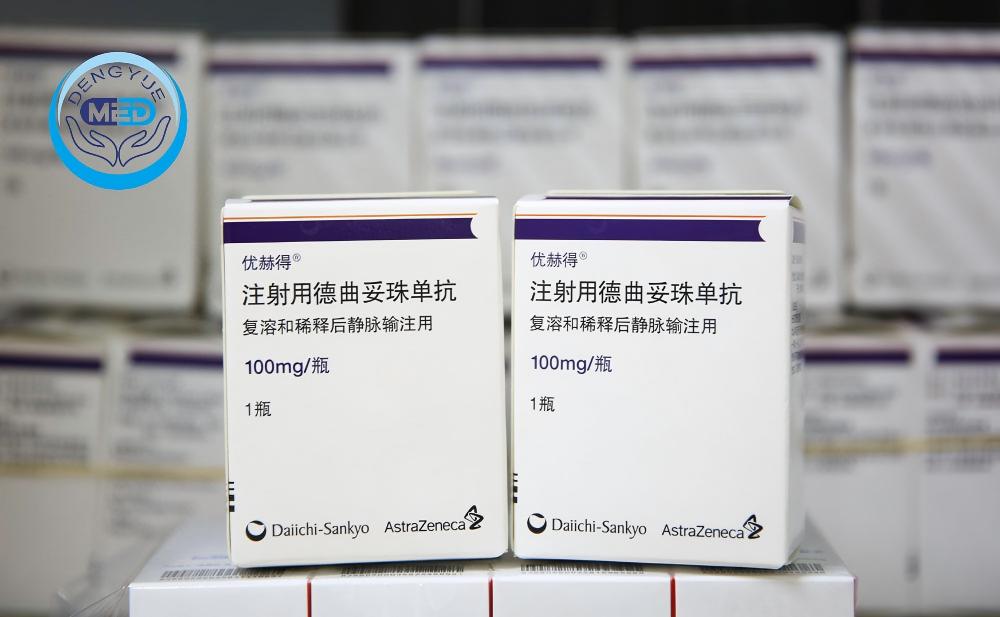
Trastuzumab deruxtecan consists primarily of three components:
- A HER2-targeting antibody
- A cleavable tetrapeptide linker
- DXd, a topoisomerase I inhibitor payload
After binding to HER2 on the surface of tumor cells, the drug is internalized through receptor-mediated endocytosis and releases the DXd payload inside the cell. DXd inhibits topoisomerase I, interfering with DNA replication and repair and ultimately inducing tumor cell death.
Trastuzumab deruxtecan has a drug-to-antibody ratio (DAR) of approximately 8 and is one of the leading HER2 ADCs currently available.
Since its initial approval, the clinical application of trastuzumab deruxtecan has gradually expanded from patients who have received prior treatment toward earlier lines of therapy. Its entry into first-line treatment for HER2-positive advanced breast cancer represents another important step in this development.
What Is Different About This Approval? Trastuzumab Deruxtecan Moves Further into Earlier Lines of Treatment
Trastuzumab deruxtecan had previously been approved for certain patients with HER2-positive breast cancer. Therefore, this approval is not simply another expansion into the breast cancer treatment area. The key change lies in the treatment line.
Previously, certain indications primarily targeted patients who had already received anti-HER2 therapy, with trastuzumab deruxtecan playing a greater role in later-line treatment.
With this new approval, trastuzumab deruxtecan in combination with pertuzumab can be used for:
First-line treatment of adults with unresectable or metastatic HER2-positive breast cancer.
In other words, patients entering first-line treatment for advanced or metastatic disease may now receive a treatment regimen centered on trastuzumab deruxtecan.
This change means that trastuzumab deruxtecan is moving from a later-line treatment option toward first-line therapy.
More importantly, the combination regimen is not entering an entirely new treatment field. It is directly competing with the long-established first-line standard regimen known as THP, which consists of a taxane, trastuzumab, and pertuzumab.
Therefore, the core significance of this approval can be summarized as follows:
Trastuzumab deruxtecan has not only entered first-line treatment but is also beginning to directly challenge the long-established first-line treatment paradigm for HER2-positive breast cancer with an ADC-based regimen.
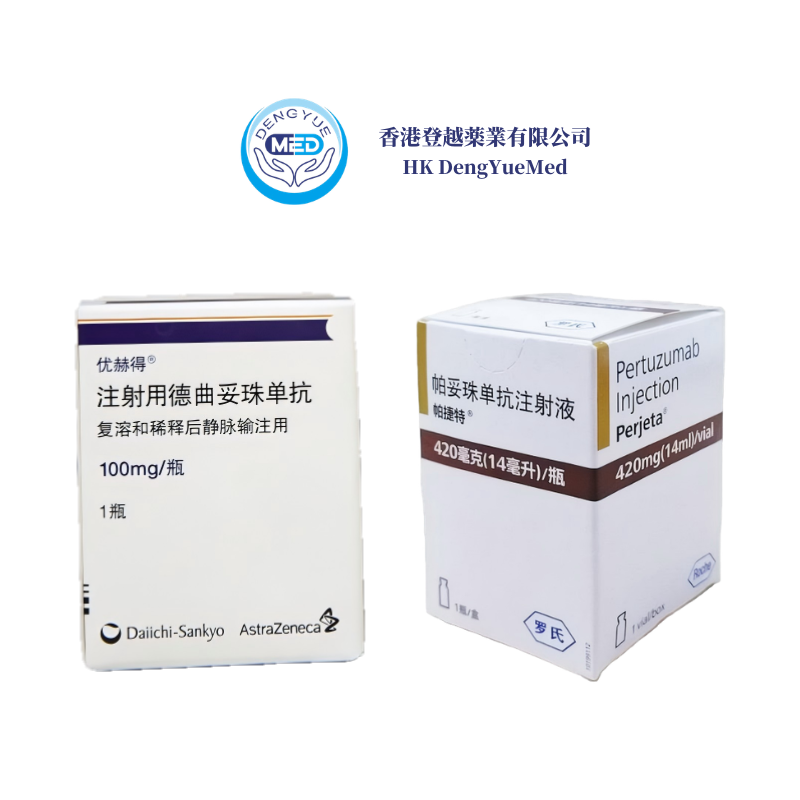
DESTINY-Breast09: Trastuzumab Deruxtecan Plus Pertuzumab Shows Significant PFS Benefit
One of the key clinical bases for the new indication is the DESTINY-Breast09 Phase III clinical trial.
This was a global, multicenter, randomized, open-label study comparing trastuzumab deruxtecan plus pertuzumab with the THP regimen for the first-line treatment of patients with HER2-positive advanced or metastatic breast cancer, evaluating both efficacy and safety.
In the prespecified interim analysis, the median progression-free survival (PFS) was 40.7 months in the trastuzumab deruxtecan plus pertuzumab group, compared with 26.9 months in the THP group.
Compared with THP, trastuzumab deruxtecan plus pertuzumab reduced the risk of disease progression or death by 44% (HR 0.56).
In addition, the confirmed objective response rate (ORR) was 85.1% in the combination group, compared with 78.6% in the THP group.
At the time of the interim analysis, overall survival (OS) data were not yet mature, and further follow-up is needed to confirm the long-term survival benefit.
Overall, the most important value of DESTINY-Breast09 is that trastuzumab deruxtecan plus pertuzumab demonstrated superior PFS compared with the THP regimen when used as first-line treatment, providing important clinical evidence supporting the use of an ADC-based regimen in first-line treatment for HER2-positive advanced breast cancer.
Safety: Interstitial Lung Disease Remains an Important Concern
While the efficacy of trastuzumab deruxtecan is important, its associated safety considerations also require attention.
In DESTINY-Breast09, according to assessment by an independent adjudication committee, 12.1% of patients in the trastuzumab deruxtecan plus pertuzumab group developed interstitial lung disease (ILD)/pneumonitis.
Most ILD events were low grade, and no Grade 3 or Grade 4 ILD events were reported in the study. However, two Grade 5 ILD events were reported in the combination group.
Therefore, during treatment with trastuzumab deruxtecan, appropriate monitoring of clinical symptoms and pulmonary imaging, together with timely identification and management of suspected ILD/pneumonitis, is important for treatment safety.
From Later-Line to First-Line Treatment: ADCs Are Changing the Treatment Strategy for HER2-Positive Breast Cancer
The approval of trastuzumab deruxtecan also reflects a broader trend in oncology: the treatment lines for ADCs are progressively moving earlier.
Historically, ADCs were more commonly used in later-line settings after patients had received and progressed on standard therapies. However, as ADC design, payload technology, and clinical development strategies continue to advance, an increasing number of ADCs are being evaluated for their potential in earlier lines of treatment.
The development of trastuzumab deruxtecan in HER2-positive breast cancer illustrates this trend.
From patients who had previously received anti-HER2 therapy, to earlier lines of treatment, and now to first-line treatment for patients with unresectable or metastatic HER2-positive breast cancer, the clinical positioning of trastuzumab deruxtecan continues to move earlier in the treatment sequence.
DESTINY-Breast09 provides further Phase III clinical evidence, increasing attention on the role of ADCs in first-line treatment for HER2-positive breast cancer.
Therefore, this approval in China represents more than an expansion of a single drug’s indications. It also indicates that HER2 ADCs are moving beyond later-line treatment and into direct competition in the first-line setting.
Competition in China’s HER2 ADC Market Is Intensifying
As ADC development continues to accelerate, competition in China’s HER2 ADC market is also becoming increasingly intense.
Several HER2 ADCs have already been approved or entered the commercialization stage in China, including trastuzumab deruxtecan, trastuzumab emtansine, and multiple domestically developed HER2 ADCs.
At the same time, several other domestic HER2 ADC candidates remain in late-stage clinical development or under regulatory review.
In the future, competition among HER2 ADCs is expected to extend beyond the number of products and time to market, with increasing emphasis on the following areas:
- Indication development in first-line and earlier treatment settings
- Phase III clinical evidence and head-to-head data
- Coverage of patients across different levels of HER2 expression
- The overall balance between efficacy and safety
- Indication expansion and long-term R&D capabilities
- Commercialization and pharmaceutical supply capabilities
As trastuzumab deruxtecan enters first-line treatment for HER2-positive advanced breast cancer, competition in China’s HER2 ADC market is also expected to increasingly focus on clinical value and overall commercialization capabilities.

Conclusion
The treatment landscape for HER2-positive breast cancer has evolved from a relatively focused HER2-targeted treatment approach into a broader therapeutic landscape that includes monoclonal antibodies, small-molecule targeted therapies, and ADCs.
Trastuzumab deruxtecan has already made significant progress across multiple treatment settings for HER2-positive breast cancer and other HER2-related cancers. Its new approval in combination with pertuzumab for the first-line treatment of adults with unresectable or metastatic HER2-positive breast cancer further moves its clinical positioning toward an earlier stage of treatment.
In DESTINY-Breast09, trastuzumab deruxtecan plus pertuzumab achieved a median PFS of 40.7 months, compared with 26.9 months for the THP regimen.
These results provide important clinical evidence supporting the use of ADCs in first-line treatment for HER2-positive advanced breast cancer and further contribute to the evolution of first-line treatment strategies in this setting.
DengYueMed, based in Hong Kong, continues to follow developments in innovative medicines, oncology drugs, and specialty pharmaceuticals, providing international pharmaceutical supply and related procurement support for healthcare institutions, pharmacies, pharmaceutical wholesalers, and other compliant partners.
If you would like to learn more about the breast cancer drug list, please read our related article: Breast Cancer Drug List in China: Common Endocrine, Targeted, ADC, and Chemotherapy Drugs
Related Posts
- Chinese HER2 Bispecific Antibody + PD-1 Combination Approved in the U.S. for Gastroesophageal Adenocarcinoma, Advancing to the Forefront of Global Oncology
- Sevabertinib for HER2-Mutant NSCLC in China: A New Targeted Treatment Option
- A New Breakthrough in Colorectal Cancer ADC Therapy: Trastuzumab Rezetecan Approved for HER2-Positive Colorectal Cancer in China