Sevabertinib for HER2-Mutant NSCLC in China: A New Targeted Treatment Option

From EGFR and ALK to ROS1, RET, MET, and HER2, advances in genetic testing and targeted therapies are enabling more patients with lung cancer to receive treatment based on the specific molecular characteristics of their tumors.
In the field of HER2-mutant non-small cell lung cancer (NSCLC), treatment options are also continuing to expand.
Sevabertinib (Hyrnuo®), developed by Bayer, was approved in China in April 2026 for the treatment of adult patients with advanced or metastatic non-squamous NSCLC harboring activating HER2 (ERBB2) mutations who have previously received one systemic therapy.
So, which patients may benefit from Sevabertinib? How does it differ from traditional HER2-targeted therapies? More importantly, why does its availability matter for lung cancer treatment in China?
China pharmaceutical wholesaler DengYueMed takes a closer look.
HER2-Mutant NSCLC: Precision Treatment for a Specific Patient Population
Let’s start with a key question: Which patients may benefit from Sevabertinib?
The answer is patients with advanced or metastatic non-squamous NSCLC harboring activating HER2 (ERBB2) mutations.
HER2 is an important molecular target in precision lung cancer treatment. Approximately 2%–4% of patients with advanced NSCLC have activating HER2 mutations.
Although this represents a relatively uncommon molecular subtype, China’s large lung cancer patient population means that HER2-mutant NSCLC still represents a clinically meaningful patient population.
Importantly, HER2 mutations are not simply the same as being “HER2-positive.”
HER2 protein expression, HER2 amplification, and activating HER2 mutations have distinct biological characteristics. Therefore, identifying the specific molecular alteration is important when selecting targeted treatment.
The approved indication for Sevabertinib is specifically focused on this patient population: adults with advanced or metastatic non-squamous NSCLC harboring activating HER2 mutations who have previously received one systemic therapy.
For patients with HER2-mutant NSCLC who have historically had relatively limited treatment options, this represents an additional targeted treatment choice.
What Is Sevabertinib? What Makes It Different?
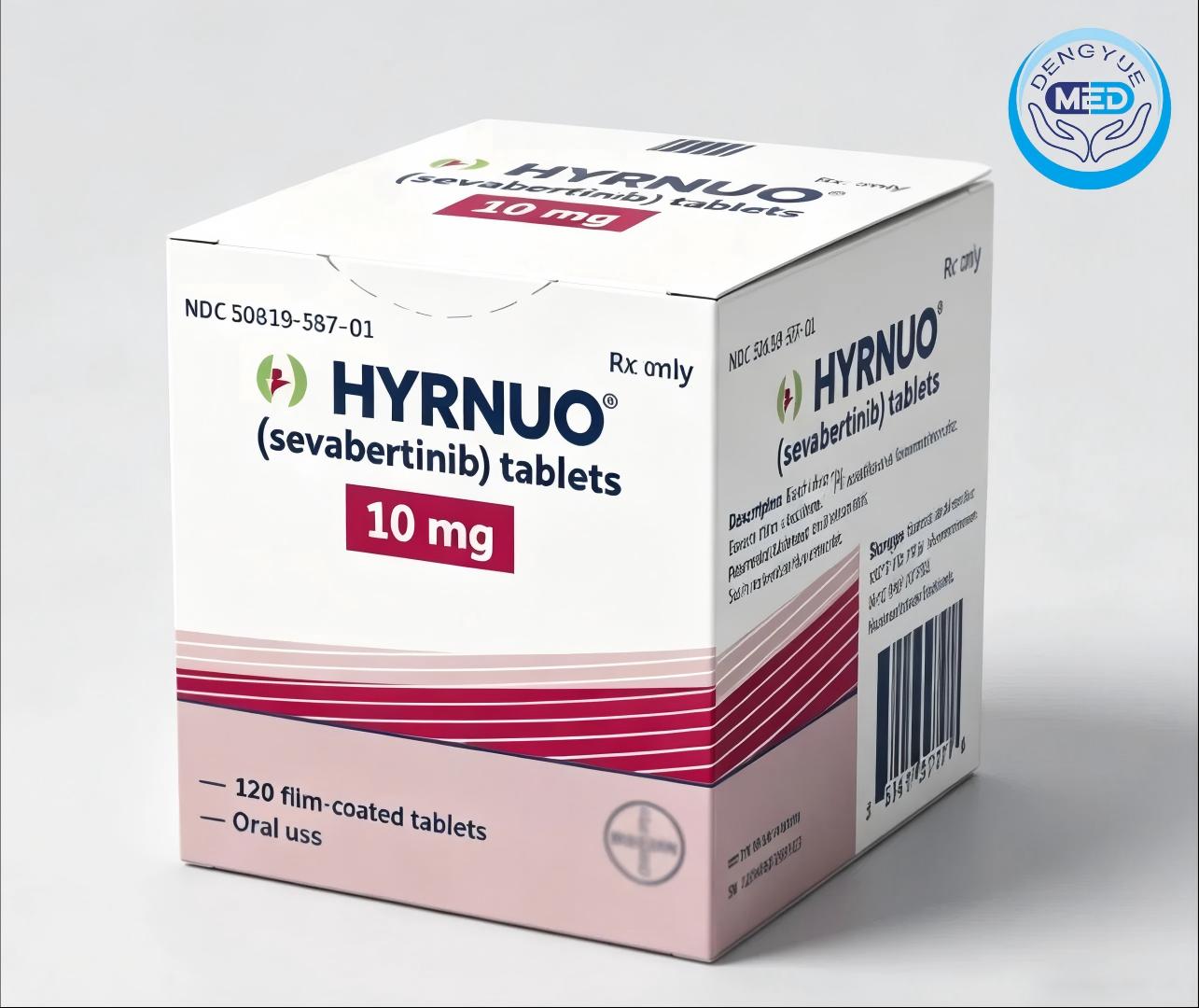
Sevabertinib is a Class 1 innovative drug developed by Bayer and an oral, reversible tyrosine kinase inhibitor (TKI).
It inhibits mutant HER2, including HER2 exon 20 insertion mutations (HER2 ex20ins) and HER2 point mutations. It also acts on EGFR and demonstrates greater selectivity for mutant EGFR than wild-type EGFR.
One of the key features of Sevabertinib is its reversible mechanism of action.
Unlike some irreversible HER2-targeted TKIs, Sevabertinib uses a reversible mechanism, providing a different small-molecule targeted treatment approach for HER2-mutant NSCLC.
It is also administered orally, twice daily with food, and treatment continues until disease progression or unacceptable toxicity.
For patients with advanced NSCLC who may require long-term systemic treatment, oral administration provides an additional treatment modality.
SOHO-01 Study Demonstrates Antitumor Activity
The clinical efficacy of Sevabertinib is primarily supported by the SOHO-01 study.
Data presented at the 2025 ESMO Congress showed that, as of June 27, 2025, a total of 209 patients with advanced NSCLC harboring activating HER2 mutations had been enrolled.
Among patients who had previously received systemic therapy but had not received HER2 ex20ins-targeted therapy, Sevabertinib achieved:
- Objective response rate (ORR): 64%
- Median duration of response (DoR): 9.2 months
- Median progression-free survival (PFS): 8.3 months
Among patients who had previously received a HER2-targeted antibody-drug conjugate (ADC), Sevabertinib also demonstrated antitumor activity, with:
- ORR: 38%
- Median DoR: 8.5 months
- Median PFS: 5.5 months
These results indicate that Sevabertinib demonstrated antitumor activity across different treatment settings and provide clinical support for further exploration of treatment options following HER2-targeted therapy.
It is important to note that the patient characteristics and prior treatment backgrounds differed across the study cohorts, so these data should not be used for direct efficacy comparisons.
Why Is Sevabertinib Important for Lung Cancer Treatment in China?
The value of Sevabertinib goes beyond adding another HER2-targeted drug. It further addresses the treatment needs of patients with HER2-mutant lung cancer in China.
1. Expanding Treatment Options for HER2-Mutant Lung Cancer
Compared with established targets such as EGFR and ALK, HER2-mutant NSCLC has historically had relatively limited precision treatment options.
Sevabertinib is the fourth targeted therapy approved in China for HER2-mutant NSCLC and the second oral targeted therapy, further expanding the role of oral small-molecule TKIs in this setting.
From ADCs to TKIs, treatment for HER2-mutant lung cancer is moving from relatively limited options toward a more diverse therapeutic landscape.
2. Addressing a Significant Clinical Need in China
Lung cancer remains one of the major contributors to the cancer burden in China, with more than one million new cases reported annually.
Although activating HER2 mutations account for only a small proportion of advanced NSCLC cases, China’s large patient population still translates into a considerable number of potentially affected patients.
For patients with activating HER2 mutations, targeted therapies designed specifically around this molecular alteration therefore have clear clinical relevance.
3. Bringing Treatment Options in China Closer to Global Advances
Sevabertinib received FDA accelerated approval in November 2025, followed by approval in China.
The relatively rapid transition from U.S. approval to availability within China’s treatment system means that Chinese patients with HER2-mutant NSCLC can gain access to an international innovative treatment option within a relatively short timeframe.
It also reflects the increasing alignment between precision lung cancer treatment in China and global therapeutic developments.
HER2 Mutations and HER2-Positive Cancer Are Not the Same
One important issue in precision oncology is the distinction between different HER2-related biomarkers.
The term HER2-positive is commonly associated with HER2 protein overexpression or gene amplification, particularly in breast and gastric cancers.
By contrast, HER2-mutant NSCLC is defined by activating mutations in the ERBB2 gene.
These biological differences are clinically important because a treatment designed for HER2 protein overexpression or amplification may not necessarily be interchangeable with a therapy specifically developed to inhibit activating HER2 mutations.
Therefore, molecular testing plays an increasingly important role in identifying patients who may benefit from HER2-directed treatment.
For patients with advanced NSCLC, comprehensive biomarker testing can help identify actionable alterations and support more individualized treatment planning.
From a Single Mutation to a More Defined Precision Treatment Pathway
The addition of Sevabertinib provides patients with HER2-mutant NSCLC in China with another oral targeted treatment option and further expands the precision treatment pathway for this relatively uncommon lung cancer subtype.
As more TKIs, ADCs, and other innovative treatment strategies enter clinical practice, treatment options for HER2-mutant lung cancer are expected to continue expanding.
The development of HER2-directed therapies also demonstrates how modern oncology is increasingly moving away from treating all patients with the same cancer diagnosis in the same way.
Instead, treatment is becoming increasingly dependent on:
- The specific molecular alteration
- Disease stage
- Previous treatment history
- Tumor response
- Patient health status
- Available targeted therapies
- The balance between efficacy and safety
For patients with HER2-mutant NSCLC, this approach may help establish a more clearly defined precision treatment pathway.
What Does Sevabertinib Mean for China’s Innovative Drug Landscape?
The approval of Sevabertinib also reflects the continued development of China’s innovative medicine market.
China has become an increasingly important market for oncology drug development, regulatory approvals, clinical research, and pharmaceutical commercialization.
For relatively uncommon molecular subtypes such as HER2-mutant NSCLC, access to innovative targeted therapies is particularly important because the eligible patient population is smaller and treatment options have historically been more limited.
The availability of Sevabertinib in China therefore represents not only a new treatment option for eligible patients, but also another example of the growing number of precision oncology medicines entering the Chinese market.
As China’s oncology landscape continues to evolve, targeted therapies, ADCs, immunotherapies, and other innovative treatment platforms are expected to play an increasingly important role.
Conclusion
The addition of Sevabertinib provides patients with HER2-mutant NSCLC in China with another oral targeted treatment option and further expands the precision treatment pathway for this relatively uncommon lung cancer subtype.
Its approved use focuses specifically on adults with advanced or metastatic non-squamous NSCLC harboring activating HER2 (ERBB2) mutations who have previously received one systemic therapy.
Clinical data from the SOHO-01 study demonstrated antitumor activity across different treatment settings, including patients who had previously received systemic therapy and those who had previously received HER2-targeted ADC treatment.
As more TKIs, ADCs, and other innovative treatment strategies enter clinical practice, treatment options for HER2-mutant lung cancer are expected to continue expanding.
The development of Sevabertinib also illustrates the broader evolution of precision oncology: identifying a specific molecular alteration can increasingly help define a more targeted treatment pathway.
As a China-based pharmaceutical wholesaler, DengYueMed continues to follow developments in Chinese innovative medicines, oncology therapies, and the global pharmaceutical market.
The company is committed to connecting Chinese medicines with global pharmaceutical markets and providing international industry participants with information and insights into China’s innovative drug landscape.
Related Posts
- Chinese HER2 Bispecific Antibody + PD-1 Combination Approved in the U.S. for Gastroesophageal Adenocarcinoma, Advancing to the Forefront of Global Oncology
- From Health Checkups to Cancer Treatment: China’s Medical Travel Market Is Rapidly Expanding
- New Progress in First-Line Treatment of HER2-Positive Breast Cancer: Trastuzumab Deruxtecan Plus Pertuzumab Approved