Chinese HER2 Bispecific Antibody + PD-1 Combination Approved in the U.S. for Gastroesophageal Adenocarcinoma, Advancing to the Forefront of Global Oncology

For patients with advanced gastroesophageal adenocarcinoma (GEA), treatment is entering a new phase.
HER2-targeted therapy has transformed the treatment landscape for HER2-positive gastric cancer, but drug resistance and limited treatment benefit remain clinical challenges. Now, a new approach is emerging: combining a HER2 bispecific antibody with PD-1 immunotherapy and chemotherapy to target tumors through multiple mechanisms, including targeted therapy, immune activation, and direct tumor cell killing.
On August 26, Chinese pharmaceutical company BeiGene (BeOne) announced that the U.S. FDA had approved a new indication for Tislelizumab (Tevimbra) in combination with Zanidatamab (Ziihera) and chemotherapy as first-line treatment for patients with unresectable locally advanced or metastatic HER2-positive gastric cancer, gastroesophageal junction adenocarcinoma, or esophageal adenocarcinoma.
This marks the first approved treatment regimen combining a HER2 bispecific antibody with a PD-1 inhibitor.
The approval not only provides a new treatment option for patients with HER2-positive gastroesophageal adenocarcinoma, but also signals that the combination of HER2-targeted therapy and immunotherapy is moving from clinical research into clinical practice.
Gastroesophageal Adenocarcinoma: HER2-Positive Patients Still Face Treatment Challenges
Gastric cancer, gastroesophageal junction adenocarcinoma, and esophageal adenocarcinoma are major gastrointestinal malignancies worldwide. For patients with unresectable locally advanced or metastatic disease, systemic therapy is generally a cornerstone of disease management.
Among the various therapeutic targets, HER2 is an important target in gastric and gastroesophageal junction adenocarcinoma.
HER2 is a receptor protein located on the cell membrane. In some tumors, HER2 is overexpressed or amplified, leading to persistent activation of signaling pathways that promote cancer cell growth and survival. As a result, HER2-positive tumors have long been an important focus of precision-targeted therapy.
The emergence of trastuzumab changed the treatment paradigm for HER2-positive advanced gastric cancer, establishing HER2-targeted therapy combined with chemotherapy as an important first-line treatment strategy.
However, precision targeting does not mean that treatment challenges have been overcome.
As treatment continues, some patients still experience disease progression. In addition, differences in HER2 expression, the tumor immune microenvironment, and individual responses to treatment remain important considerations. How to further improve the depth and durability of first-line treatment remains a major focus of clinical research.
These challenges are driving the shift from single-target inhibition toward multi-mechanism combination therapy.
From HER2 Monoclonal Antibodies to HER2 Bispecific Antibodies: Expanding Targeted Therapy
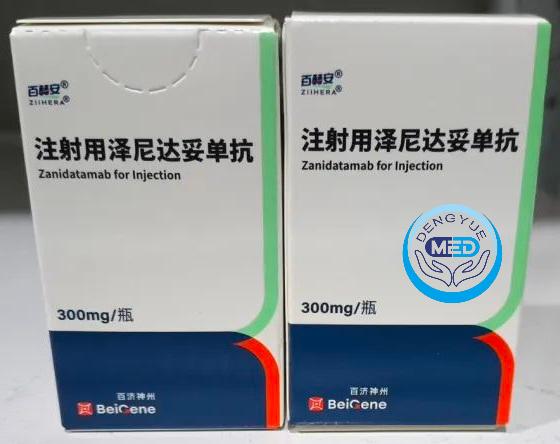
Zanidatamab is a key component of the newly approved regimen.
Unlike conventional antibodies that target a single HER2 epitope, zanidatamab is a HER2 bispecific antibody that can simultaneously bind to two different, non-overlapping extracellular sites on the HER2 protein.
Simply put, while conventional HER2-targeted therapy can be viewed as blocking HER2 at one site, a HER2 bispecific antibody attempts to interfere with the receptor from two different sites at the same time.
This dual-site binding can promote HER2 receptor clustering and internalization, reduce HER2 receptors on the surface of tumor cells, and enhance antibody-mediated immune activity, allowing HER2 signaling to be targeted through multiple mechanisms.
Zanidatamab was originally developed by Zymeworks. BeiGene and Jazz Pharmaceuticals subsequently obtained development and commercialization rights in different regions through licensing agreements.
In November 2024, zanidatamab received its first FDA approval in the United States for patients with previously treated, unresectable locally advanced or metastatic biliary tract cancer with HER2 overexpression (IHC 3+). The drug was approved in China in May 2025.
The latest FDA approval further expands zanidatamab’s use into first-line treatment of HER2-positive gastroesophageal adenocarcinoma.
As more innovative medicines developed in China enter global markets, DengYueMed continues to follow their international development and commercialization.
Why Add PD-1 Immunotherapy?
If the HER2 bispecific antibody targets the tumor cell itself, a PD-1 inhibitor targets the interaction between the tumor and the immune system.
PD-1 is an immune checkpoint protein expressed on immune cells. Tumor cells can exploit the PD-1 pathway to suppress T-cell activity and evade immune attack.
PD-1 inhibitors are designed to release this immune suppression, helping restore the ability of T cells to attack tumor cells.
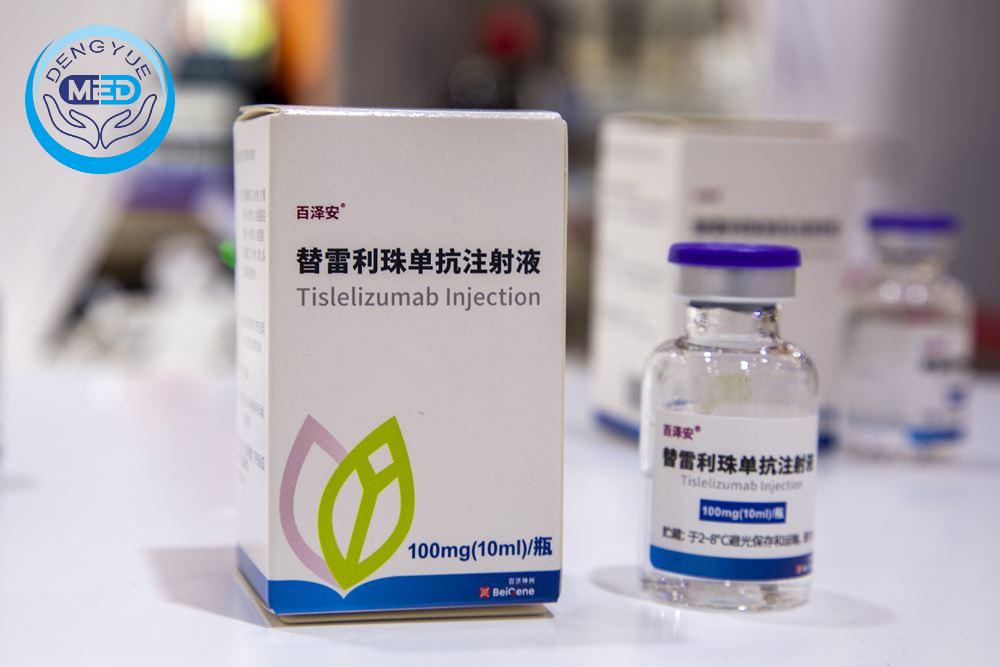
Tislelizumab is a PD-1 monoclonal antibody and an innovative drug independently developed by BeiGene. It has previously been approved in the United States for multiple treatment settings, including second-line treatment of esophageal squamous cell carcinoma and first-line combination treatment with chemotherapy for gastric cancer and esophageal squamous cell carcinoma.
Its combination with zanidatamab creates a treatment regimen with complementary mechanisms of action:
- The HER2 bispecific antibody provides targeted HER2 inhibition.
- The PD-1 inhibitor activates anti-tumor immunity.
- Chemotherapy directly kills rapidly proliferating tumor cells.
Together, these three mechanisms move treatment beyond HER2 targeting alone toward an integrated “targeted therapy + immunotherapy + chemotherapy” approach.
HERIZON-GEA-01: A 914-Patient Trial Validates the Triple Combination
The FDA approval was primarily based on positive results from the Phase III HERIZON-GEA-01 study.
This global, randomized, open-label Phase III trial was jointly conducted by BeiGene and Jazz Pharmaceuticals. It covered more than 30 countries and regions and approximately 300 research centers, enrolling a total of 914 patients with HER2-positive gastroesophageal adenocarcinoma.
The study compared zanidatamab-based regimens with the standard trastuzumab + chemotherapy regimen. The dual primary endpoints were progression-free survival (PFS) and overall survival (OS).
| Key Metric | Zanidatamab + Tislelizumab + Chemotherapy | Trastuzumab + Chemotherapy | Result |
|---|---|---|---|
| Median PFS | 12.4 months | 8.1 months | Extended by 4.3 months |
| PFS HR | 0.63 | — | 37% reduction in risk of disease progression or death |
| Median OS | 26.4 months | 19.2 months | Extended by 7.2 months |
| OS HR | 0.72 | — | 28% reduction in risk of death |
| ORR | 70.7% | — | — |
| Median DOR | 20.70 months | — | — |
Benefit Also Observed in Patients With Low PD-L1 Expression
Notably, the treatment benefit was not limited to patients with high PD-L1 expression. Among patients with TAP <1%, the median OS was 29.7 months with the triple combination, compared with 15.8 months with standard treatment. Treatment benefit was also observed in patients with HER2 IHC 2+ and IHC 3+ disease.
These findings suggest that combining HER2-targeted therapy with PD-1 immunotherapy may provide treatment opportunities for a broader range of patients with different biomarker profiles.
Safety: Overall Manageable
The overall safety profile of the triple combination was generally consistent with the known safety profiles of its individual components, with no new safety signals identified.
Grade ≥3 diarrhea occurred in 24.5% of patients and was concentrated mainly in the early treatment period, with most cases resolving within three weeks. Early preventive antidiarrheal measures were also incorporated into the study protocol, and the rate of treatment discontinuation due to diarrhea was relatively low.
In short, HERIZON-GEA-01 demonstrated that the triple combination could extend both PFS and OS, with treatment benefit also observed in patients with low PD-L1 expression, while maintaining an overall manageable safety profile.
What Does the FDA Approval Mean for the Global Treatment Landscape of Gastroesophageal Adenocarcinoma?
The significance of this FDA approval extends beyond granting new indications to two individual drugs.
More importantly, it represents a shift in treatment strategy.
Historically, one of the key challenges in HER2-positive gastroesophageal adenocarcinoma has been how to achieve more effective HER2 blockade. With the development of HER2 bispecific antibodies, treatment has evolved from targeting a single epitope toward engaging two distinct sites on HER2.
The combination of zanidatamab and tislelizumab takes this approach one step further by incorporating immunotherapy into the HER2-targeted treatment strategy.
From a therapeutic perspective, the approach creates three layers of attack:
First, the HER2 bispecific antibody provides targeted inhibition of the tumor target.
Second, the PD-1 inhibitor reactivates the anti-tumor immune response.
Third, chemotherapy directly kills tumor cells.
This moves first-line treatment for HER2-positive gastroesophageal adenocarcinoma beyond “HER2-targeted therapy + chemotherapy” toward a combination of dual-site HER2 targeting, immunotherapy, and chemotherapy.
The Next Step for Chinese Innovative Drugs: From Domestic Innovation to Global Clinical Impact
For China’s innovative pharmaceutical industry, the FDA approval carries another layer of significance.
Tislelizumab is a PD-1 inhibitor independently developed by BeiGene, while zanidatamab originated from the global innovative drug development platform of Zymeworks. Through international collaboration, the two therapies entered global clinical development and ultimately formed a new treatment combination.
Tislelizumab has already received multiple approvals in the United States, while zanidatamab has also been approved in the U.S. for HER2-overexpressing biliary tract cancer.
The FDA approval of the combination for gastroesophageal adenocarcinoma demonstrates that innovative drugs from China are increasingly participating in global multicenter clinical trials and undergoing validation through international regulatory systems.
For China’s pharmaceutical industry, true globalization is not simply about bringing medicines beyond the Chinese market. It also means enabling Chinese R&D, clinical research, and innovative therapies to contribute to the development of global treatment standards.
Conclusion
The treatment of HER2-positive gastroesophageal adenocarcinoma has not reached its endpoint with this FDA approval.
Instead, it may mark the beginning of the next stage of exploration.
From HER2 bispecific antibodies to PD-1 immunotherapy, the FDA approval not only provides a new treatment option for HER2-positive gastroesophageal adenocarcinoma, but also highlights the broader shift in global oncology from single-target treatment toward multi-mechanism combinations.
At the same time, innovative medicines from China are increasingly reaching global markets through international clinical development and regulatory pathways.
As a Hong Kong-licensed pharmaceutical import and export wholesaler, DengYueMed follows developments in Chinese innovative medicines, oncology therapies, and the global pharmaceutical supply chain, providing pharmaceutical procurement, import and export, and professional supply chain services for hospitals, pharmacies, pharmaceutical distributors, and research institutions.

Educational and industry information only. This article is not medical advice or a treatment recommendation.