The 30-Year Chemotherapy Standard Faces a New Challenge: China's PD-1 Serplulimab Breaks New Ground in Gastric Cancer Treatment
The 30-Year Chemotherapy Standard Faces a New Challenge: China’s PD-1 Serplulimab Breaks New Ground in Gastric Cancer Treatment
For 30 years, chemotherapy has remained a cornerstone of perioperative gastric cancer treatment. Now, China’s PD-1 inhibitor serplulimab is exploring a new approach that reduces postoperative chemotherapy, with positive results from the ASTRUM-006 trial bringing this China-developed innovative drug into the global spotlight in gastric cancer treatment.
For years, perioperative gastric cancer treatment has focused on intensifying therapy: systemic treatment before surgery, followed by surgery and additional adjuvant chemotherapy to reduce the risk of recurrence.
Serplulimab is now testing a different approach.
Developed independently by Chinese biopharmaceutical company Shanghai Henlius Biotech, this PD-1 inhibitor has already made its mark in extensive-stage small-cell lung cancer. Based on the ASTRUM-005 trial, it became the world’s first anti-PD-1 monoclonal antibody approved for first-line treatment of extensive-stage small-cell lung cancer.
In June 2026, the drug made another advance in gastric cancer.
China’s National Medical Products Administration (NMPA) approved serplulimab for perioperative treatment of resectable gastric or gastro-oesophageal junction adenocarcinoma in patients with PD-L1 CPS ≥5. Around the same time, results from the ASTRUM-006 trial were published in The Lancet.
The key feature of the study is its treatment strategy: immunotherapy combined with chemotherapy before surgery, followed by less chemotherapy after surgery.
For a cancer in which chemotherapy has long been a central component of perioperative treatment, this approach deserves attention from the global oncology community.
Why Does Gastric Cancer Need New Treatment Options?
Gastric cancer remains a major global cancer, with a particularly high burden in East Asia.
For patients with locally advanced, resectable disease, surgery is only one part of the treatment journey. Preoperative systemic therapy can help control the tumor and address potential microscopic disease, while postoperative treatment is used to further reduce the risk of recurrence.
This perioperative approach has been supported by years of clinical experience.
However, it also comes with a considerable treatment burden.
Chemotherapy can cause myelosuppression, nausea, vomiting, fatigue and loss of appetite. For patients recovering from major gastric surgery, continuing chemotherapy can be particularly challenging.
This leaves clinicians with a practical question:
How can treatment maintain effective disease control while reducing the burden placed on patients?
Immunotherapy has opened a new avenue for exploring that balance.
ASTRUM-006: Extending Immunotherapy From the Preoperative Setting to Postoperative Treatment
ASTRUM-006 was a randomized, double-blind, phase 3 clinical trial involving patients with PD-L1 CPS ≥5 locally advanced, resectable gastric or gastro-oesophageal junction adenocarcinoma.
The study used a clear perioperative treatment design.
Before surgery, patients received serplulimab plus SOX chemotherapy. After surgery, the treatment strategies diverged:
- Serplulimab group: continued serplulimab as adjuvant monotherapy.
- Control group: continued SOX chemotherapy as adjuvant treatment.
The study therefore focused on reducing chemotherapy exposure during the postoperative treatment phase.
This design addresses an important clinical question.
If preoperative immunotherapy combined with chemotherapy has already generated a strong antitumor response, is continued full-course postoperative chemotherapy still necessary for every patient?
That is the question ASTRUM-006 was designed to explore.
EFS and pCR: What Did the Study Show?
The first important endpoint is event-free survival, or EFS.
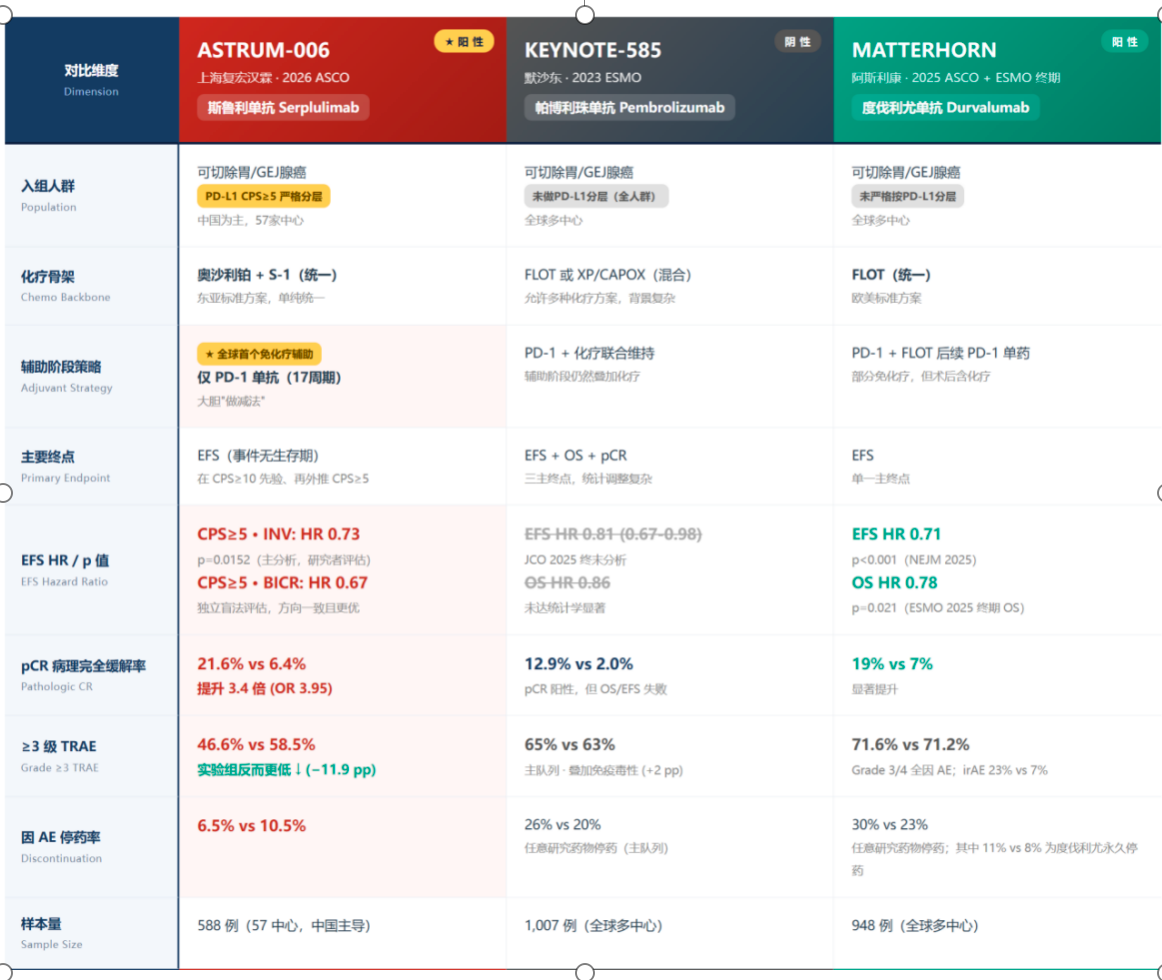
In the PD-L1 CPS ≥5 population, median EFS had not yet been reached in the serplulimab group, compared with 35.9 months in the control group, with a hazard ratio of 0.73.
Among patients with PD-L1 CPS ≥10, median EFS also had not been reached in the serplulimab group, compared with 42.0 months in the control group, with a hazard ratio of 0.65.
These findings indicate fewer events such as recurrence, disease progression or death during the study follow-up.
EFS, however, is only part of the picture.
Another important measure is pathological complete response, or pCR.
The pCR rate was 21.6% with serplulimab compared with 6.4% in the control group.
A pCR means that no viable residual tumor cells are detected in the surgical specimen following preoperative treatment. Although pCR does not directly translate into long-term overall survival, it provides an important indication of the depth of tumor response to neoadjuvant therapy.
The combination of a higher pCR rate and improved EFS provides a strong clinical signal supporting the value of preoperative immunotherapy.
At the same time, longer follow-up of overall survival remains important to determine whether the strategy ultimately translates into a survival advantage. The Lancet report specifically notes that extended follow-up is warranted.
What Could Less Postoperative Chemotherapy Mean for Patients?
The clinical significance of ASTRUM-006 goes beyond efficacy.
Patients ultimately experience the entire treatment journey, not just an individual endpoint.
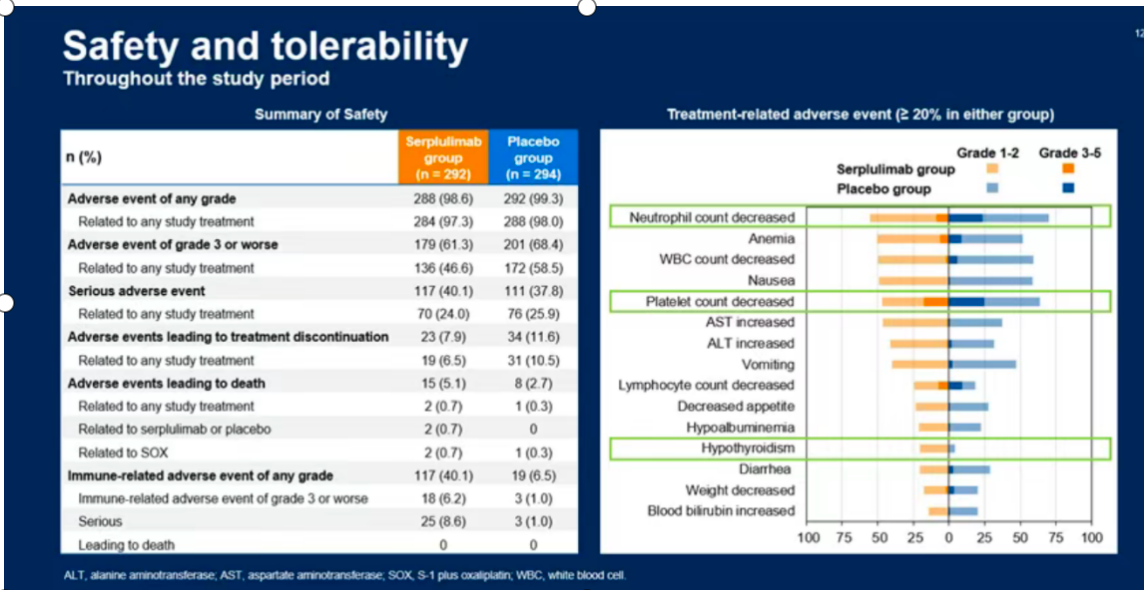
Across the study, grade 3 or higher treatment-related adverse events occurred in 46.6% of patients in the serplulimab group and 58.5% in the control group. Treatment discontinuation due to treatment-related adverse events occurred in 6.5% and 10.5% of patients, respectively.
The difference became more pronounced during the postoperative adjuvant phase.
Grade 3 or higher adverse events occurred in approximately 16% of patients receiving serplulimab monotherapy, compared with about 34% of those receiving SOX chemotherapy.
This does not mean immunotherapy is risk-free. PD-1 inhibitors can cause immune-related adverse events and require appropriate monitoring and management.
However, replacing postoperative cytotoxic chemotherapy with single-agent immunotherapy reduces chemotherapy exposure.
For patients recovering from gastric surgery, that could translate into a lower treatment burden and potentially make the postoperative treatment period easier to manage.
This is one of the key clinical attractions of a chemotherapy-sparing strategy.
Serplulimab: A PD-1 Inhibitor Developed in China
ASTRUM-006 has brought renewed attention to serplulimab in gastric cancer, but the drug already has a substantial clinical development history.
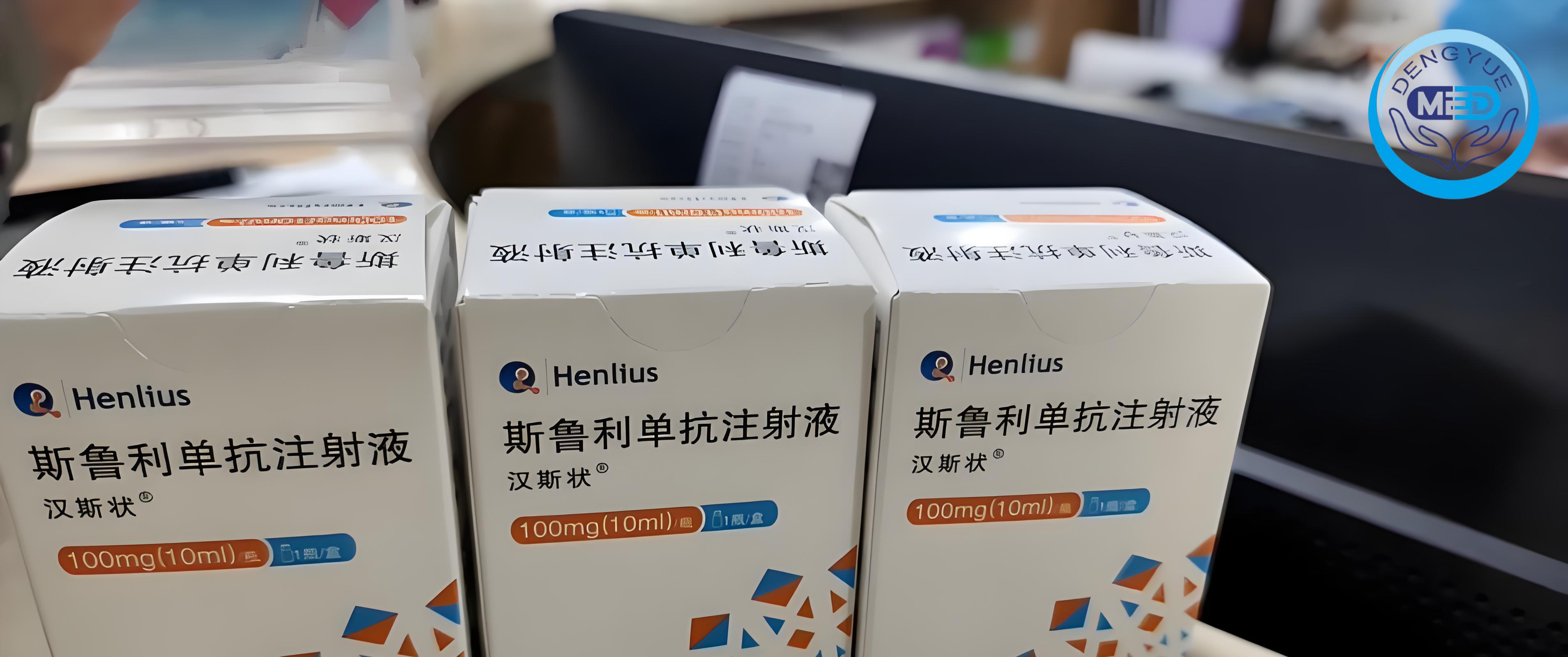
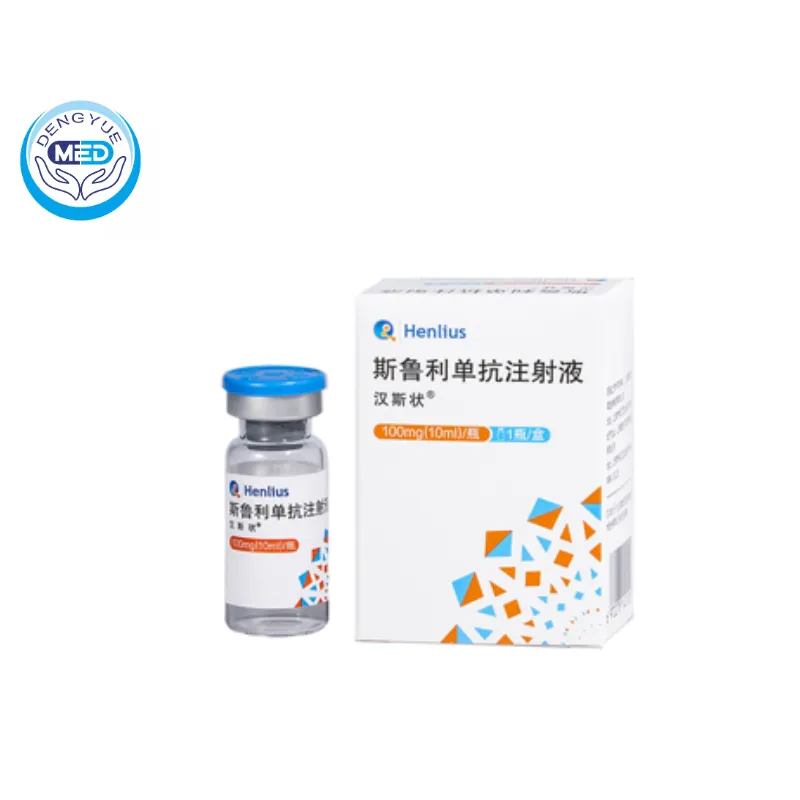
Serplulimab (Hansizhuang) is a fully humanized IgG4 monoclonal antibody targeting PD-1, independently developed by Shanghai Henlius Biotech.
The drug was first approved in China in 2022 for patients with unresectable or metastatic microsatellite instability-high (MSI-H) solid tumors who had progressed following standard treatment.
Its development subsequently expanded into several cancer types, including small-cell lung cancer.
In the phase 3 ASTRUM-005 trial, serplulimab combined with chemotherapy significantly improved overall survival in previously untreated patients with extensive-stage small-cell lung cancer. In an updated analysis, median OS was 15.8 months with serplulimab versus 11.1 months with chemotherapy alone.
The ASTRUM-005 results established serplulimab as the first anti-PD-1 monoclonal antibody approved for first-line treatment of extensive-stage small-cell lung cancer.
Today, from small-cell lung cancer to gastric cancer, this China-developed PD-1 inhibitor is being evaluated across different oncology settings and continues to expand its clinical positioning.
From a China-Developed Drug to a Global Clinical Competitor
Serplulimab also reflects a broader transformation within China’s innovative pharmaceutical industry.
Historically, China’s strengths in the global pharmaceutical market were concentrated in APIs, generic medicines and large-scale manufacturing.
Today, Chinese companies are increasingly developing innovative therapies across areas such as PD-1 inhibitors, ADCs, bispecific antibodies and cell therapies.
Serplulimab is part of this broader shift.
From its first approval in China to international clinical research and overseas regulatory and commercialization efforts, the drug illustrates how Chinese-developed medicines are moving through a more complete globalization process.
Entering overseas markets, however, involves more than regulatory approval. Drug procurement, cross-border transportation, cold-chain management and access to healthcare systems all become important considerations.
For DengYueMed, a Hong Kong-based pharmaceutical wholesaler, this is an important part of China’s innovative drug globalization story. Developing an innovative medicine is only one step; ensuring stable, compliant pharmaceutical supply across different markets is also essential to connecting Chinese drug innovation with international healthcare systems.
From this perspective, the story of serplulimab extends beyond a single PD-1 drug.
It also provides an example of how China’s pharmaceutical industry is gradually building capabilities across the full pathway from drug development and clinical research to international market access and supply.
Perioperative Immunotherapy in Gastric Cancer Is Entering a New Phase
Serplulimab is not the only product being studied in perioperative gastric cancer immunotherapy.
AstraZeneca’s MATTERHORN study has also reported positive results, adding further evidence that perioperative immunotherapy is becoming an important area of gastric cancer research.
However, the two studies use different treatment approaches.
MATTERHORN emphasizes continued immunotherapy combined with chemotherapy throughout the perioperative period.
ASTRUM-006, by contrast, explores preoperative immunotherapy plus chemotherapy followed by single-agent immunotherapy without postoperative chemotherapy.
Which strategy will ultimately become more widely adopted remains an open question.
Long-term overall survival, quality of life, treatment completion, drug costs, reimbursement and differences in clinical practice across regions could all influence the future treatment pathway.
The competitive landscape in gastric cancer may therefore expand beyond efficacy alone.
Treatment burden, tolerability and patient access are likely to become increasingly important factors in determining the real-world value of a treatment.
Conclusion
Perioperative treatment for gastric cancer has evolved over several decades, with chemotherapy playing a central role throughout much of that history.
ASTRUM-006 introduces a treatment strategy that deserves further evaluation: for selected patients with PD-L1-positive, resectable gastric cancer, preoperative immunotherapy combined with chemotherapy may allow less chemotherapy exposure after surgery while delivering encouraging EFS and pCR results.
Longer-term OS data are still needed, and broader clinical adoption will depend on further evidence from follow-up and real-world practice.
But the study has already raised an important possibility:
Innovation in gastric cancer treatment may not always mean adding more treatment. It may also mean finding a more precise approach that can maintain clinical benefit while reducing the burden on patients.
Serplulimab is now emerging as a China-developed innovative drug worth watching in the global oncology landscape.
China pharmaceutical wholesaler DengYueMed will continue to follow China’s innovative medicines, advances in oncology treatment and developments across the global pharmaceutical supply chain, providing international healthcare and pharmaceutical professionals with insights into China’s pharmaceutical market and innovative drug sector.

Related Posts
- A New Option in Targeted Biologic Therapy: Clinical Insights into Guselkumab Injection
- Chinese HER2 Bispecific Antibody + PD-1 Combination Approved in the U.S. for Gastroesophageal Adenocarcinoma, Advancing to the Forefront of Global Oncology
- Current Status of Immunotherapy for Bladder Cancer: From BCG to Precision Combination Therapy