Current Status of Immunotherapy for Bladder Cancer: From BCG to Precision Combination Therapy
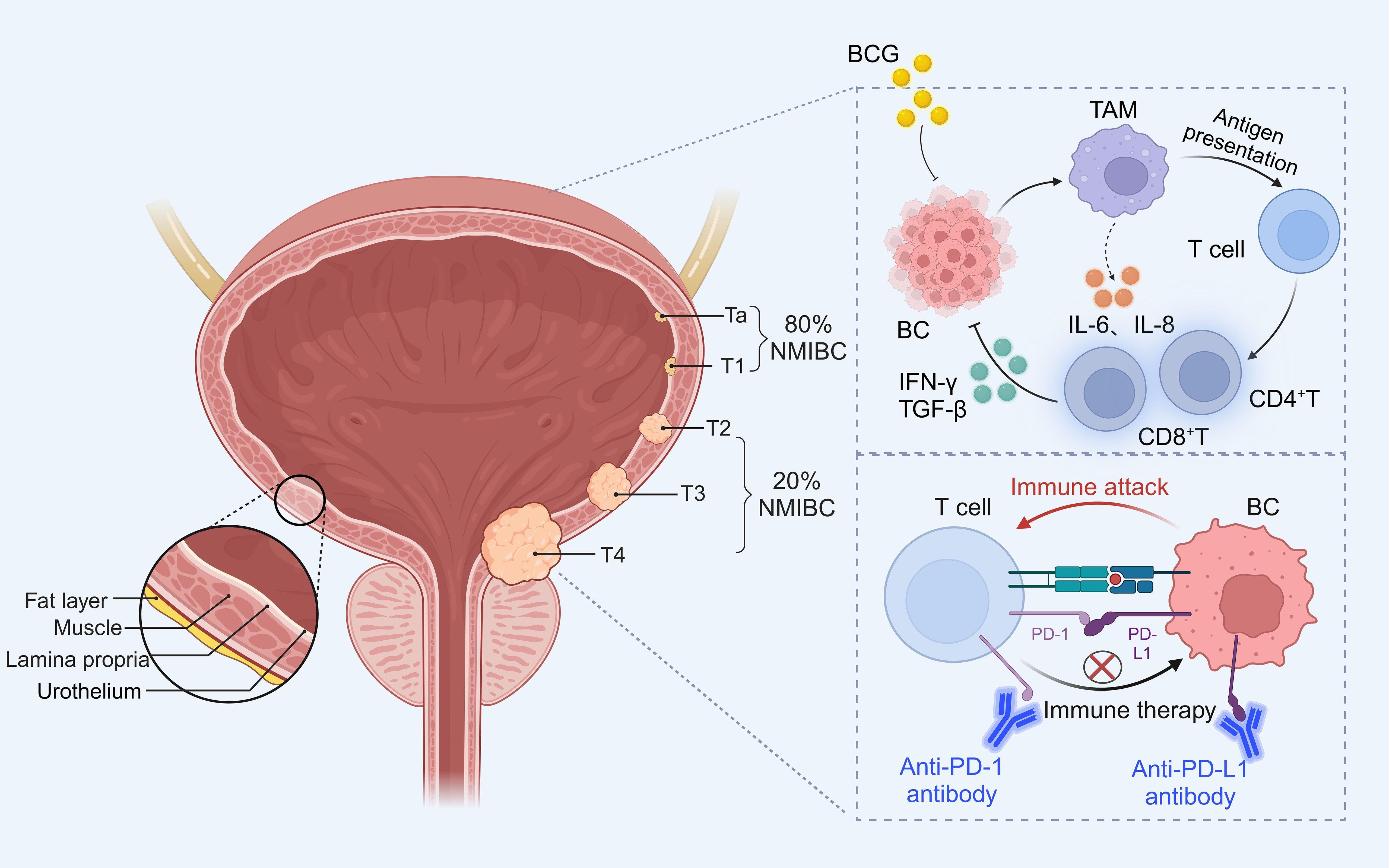
Bladder cancer is one of the most common malignancies of the urinary system. A substantial proportion of patients are initially diagnosed with non-muscle-invasive bladder cancer (NMIBC). Although the tumor has not invaded the bladder muscle, the risk of recurrence can remain significant. Therefore, reducing recurrence and delaying disease progression are important goals after tumor resection.
In recent years, immunotherapy has continued to reshape the treatment landscape for bladder cancer. From traditional BCG intravesical therapy to PD-1/PD-L1 immune checkpoint inhibitors and increasingly sophisticated combination approaches, bladder cancer immunotherapy is entering a new stage.
1. BCG: An Important Immunotherapy for High-Risk NMIBC
BCG (Bacillus Calmette-Guérin) is one of the longest-established immunotherapy approaches for bladder cancer and remains an important treatment option for patients with appropriate high-risk NMIBC.
For suitable patients, BCG is generally administered intravesically after transurethral resection of bladder tumor (TURBT).
Rather than directly destroying tumor cells through a conventional cytotoxic mechanism, BCG stimulates a local immune response within the bladder. This immune activation can help the body recognize and attack residual tumor cells.
Treatment may include both an induction phase and maintenance therapy. Maintenance BCG can play an important role in reducing recurrence and maintaining treatment benefit in appropriate patients.
However, not all patients respond adequately to BCG.
Some patients experience persistent or recurrent high-risk disease despite adequate BCG treatment. This clinical situation is commonly described as BCG-unresponsive disease and has become an important area of unmet medical need.
The limitations of BCG have therefore encouraged the development of additional bladder cancer immunotherapy strategies, including immune checkpoint inhibitors and other bladder-preserving approaches.
2. PD-1/PD-L1 Inhibitors: Expanding the Role of Immunotherapy
Unlike BCG, PD-1/PD-L1 inhibitors are systemic immune checkpoint inhibitors.
The PD-1/PD-L1 pathway plays an important role in regulating immune activity. Tumor cells can exploit this pathway to suppress T-cell activity and evade immune surveillance.
By blocking PD-1 or PD-L1 signaling, immune checkpoint inhibitors can help restore T-cell activity against tumor cells.
Representative immune checkpoint inhibitors used in urothelial cancer include:
Immune checkpoint inhibitors have become an important component of treatment for selected patients with advanced or metastatic urothelial carcinoma.
Pembrolizumab, for example, has an established role in certain advanced bladder cancer settings, while nivolumab and durvalumab have also been incorporated into treatment strategies for selected patients in different stages of bladder cancer.
Importantly, clinical development is increasingly moving beyond advanced disease toward earlier stages of bladder cancer.
This shift is particularly important for NMIBC, where preserving the bladder while reducing recurrence and progression remains a major therapeutic objective.
3. After BCG Failure: What Treatment Options Are Available?
One of the most important questions in bladder cancer immunotherapy is what to do when high-risk disease persists or recurs after BCG.
When evaluating a patient with suspected BCG-unresponsive disease, physicians need to consider several factors, including:
- Tumor pathology and grade
- Disease stage
- Presence of carcinoma in situ (CIS)
- Timing and pattern of recurrence
- Adequacy of previous BCG treatment
- Overall health and comorbidities
- Patient preferences
- Availability of bladder-preserving treatment options
For some patients with high-risk BCG-unresponsive disease, radical cystectomy remains an important treatment option because of the risk of progression to muscle-invasive or metastatic disease.
For selected patients who are not suitable candidates for surgery or who wish to consider bladder-preserving approaches, other treatments may be evaluated.
These may include immune checkpoint inhibitors, intravesical therapies, gene-based approaches, and other emerging treatments depending on the patient’s specific disease characteristics and regulatory availability.
Therefore, PD-1/PD-L1 therapy should not simply be viewed as a replacement for BCG.
Instead, different immunotherapies may have different roles at different stages of bladder cancer and in different patient populations.
4. A Major Development in 2026: Combining BCG With PD-L1 Inhibition
One of the most notable recent developments in bladder cancer immunotherapy came in May 2026.
On May 28, 2026, the U.S. Food and Drug Administration approved durvalumab (Imfinzi) in combination with Bacillus Calmette-Guérin (BCG) for adults with BCG-naïve, high-risk non-muscle-invasive bladder cancer (NMIBC). :contentReference[oaicite:1]{index=1}
The approval was supported by the Phase III POTOMAC study, which evaluated durvalumab combined with BCG against BCG alone.
According to the FDA, the study enrolled 1,018 patients with high-risk NMIBC following transurethral resection of bladder tumor.
The major efficacy endpoint was disease-free survival (DFS).
Durvalumab plus BCG demonstrated a statistically significant improvement in DFS compared with BCG alone, with a hazard ratio of 0.68 (95% CI: 0.50–0.93; two-sided p=0.0154). Median DFS had not been reached in either treatment group at the analysis reported by the FDA. :contentReference[oaicite:2]{index=2}
This approval is particularly significant because it introduces an immune checkpoint inhibitor into a treatment strategy that already relies on local immune activation through BCG.
The two approaches work through complementary mechanisms:
BCG → activates the local immune response
PD-L1 inhibition → helps reduce immune checkpoint-mediated suppression
The combination therefore aims to create a stronger and more sustained anti-tumor immune response.
This represents an important evolution from single-mechanism immunotherapy toward combination immunotherapy.
5. Why Is the BCG + Durvalumab Combination Important?
The development of BCG plus durvalumab illustrates a broader trend in modern oncology.
Rather than relying on a single immune mechanism, researchers are increasingly attempting to manipulate different components of the tumor-immune environment simultaneously.
BCG has long been used to stimulate immune activity inside the bladder.
However, tumors can develop mechanisms that suppress or evade the immune response. The PD-L1 pathway is one such mechanism.
By adding a PD-L1 inhibitor, treatment may potentially enhance the effectiveness of the immune response initiated by BCG.
This concept is particularly relevant to NMIBC because the bladder provides a unique setting for combining local immune stimulation with systemic immune modulation.
The 2026 FDA approval therefore represents more than another new indication for durvalumab.
It also provides clinical validation for a broader treatment concept:
Combining established immune activation with immune checkpoint inhibition may improve disease control in earlier-stage bladder cancer.
6. Immunotherapy Is Moving Earlier in the Bladder Cancer Treatment Pathway
Historically, immune checkpoint inhibitors were mainly associated with advanced or metastatic urothelial carcinoma.
The treatment landscape is now becoming more complicated.
Immunotherapy is increasingly being investigated and incorporated into treatment strategies for patients with:
- Non-muscle-invasive bladder cancer
- Muscle-invasive bladder cancer
- Locally advanced disease
- Metastatic urothelial carcinoma
For example, durvalumab has already moved into earlier-stage muscle-invasive bladder cancer treatment.
In March 2025, the FDA approved durvalumab with gemcitabine and cisplatin as neoadjuvant treatment followed by adjuvant durvalumab after radical cystectomy for eligible adults with muscle-invasive bladder cancer. :contentReference[oaicite:3]{index=3}
The subsequent 2026 approval of durvalumab plus BCG in BCG-naïve high-risk NMIBC further demonstrates the movement of immunotherapy toward earlier disease stages.
This creates a broader development trajectory:
Advanced disease → muscle-invasive disease → high-risk non-muscle-invasive disease
As clinical evidence continues to accumulate, immunotherapy is becoming increasingly integrated into treatment strategies across different stages of bladder cancer.
7. Beyond BCG and Checkpoint Inhibitors: A Broader Treatment Landscape
Bladder cancer immunotherapy is no longer limited to the simple question of “BCG or PD-1/PD-L1?”
The treatment landscape now includes multiple therapeutic approaches.
BCG-Based Immunotherapy
BCG remains a foundational treatment for appropriate high-risk NMIBC.
Its long clinical history and established role make it an important component of bladder-preserving treatment.
Immune Checkpoint Inhibitors
PD-1 and PD-L1 inhibitors can restore anti-tumor immune activity by interfering with immune checkpoint signaling.
Their role is expanding across different stages and treatment settings.
Intravesical Therapies
Intravesical treatment remains particularly important for NMIBC because therapy can be delivered directly into the bladder.
In addition to BCG, several newer intravesical approaches are being developed or have received regulatory approvals for specific patient populations.
Gene-Based and Novel Immunotherapies
Gene-based approaches and other immune-modulating treatments are also expanding the range of bladder-preserving strategies.
For example, nadofaragene firadenovec has been developed for BCG-unresponsive NMIBC, while other novel approaches continue to be evaluated in clinical trials. :contentReference[oaicite:4]{index=4}
Combination Therapy
The emergence of combinations such as BCG plus durvalumab reflects the increasing emphasis on using complementary mechanisms to improve treatment effectiveness.
The future treatment landscape is therefore likely to contain a growing number of combination strategies rather than relying on a single dominant therapeutic approach.
8. The Importance of Patient Selection
Although immunotherapy has expanded treatment options, not every patient with bladder cancer is an appropriate candidate for every immunotherapy regimen.
Treatment decisions depend on factors such as:
Disease stage → pathological characteristics → recurrence risk → previous BCG exposure → biomarker status → overall health → treatment goals
For example, BCG-naïve high-risk NMIBC is different from BCG-unresponsive NMIBC.
Similarly, muscle-invasive bladder cancer is clinically different from metastatic urothelial carcinoma.
Therefore, the same immunotherapy cannot simply be applied across all patients.
Accurate pathological assessment, staging, imaging, treatment history, and multidisciplinary evaluation remain important components of treatment planning.
9. Safety and Monitoring Remain Important
The expansion of immunotherapy does not eliminate the need for careful safety monitoring.
BCG can cause local urinary symptoms and, in rare cases, more serious complications.
Immune checkpoint inhibitors can cause immune-mediated adverse reactions affecting different organs, including the skin, gastrointestinal tract, liver, endocrine system, lungs, kidneys, and other organs.
The risk-benefit profile therefore needs to be assessed individually.
Patients receiving immunotherapy should be monitored for new or persistent symptoms, and suspected treatment-related adverse events should be evaluated promptly by qualified healthcare professionals.
The goal of modern immunotherapy is not simply to increase immune activity but to achieve an appropriate balance between anti-tumor efficacy and treatment safety.
10. The Future of Bladder Cancer Immunotherapy
The current development trajectory suggests that bladder cancer treatment is moving toward increasingly personalized and combination-based strategies.
Future research is likely to focus on several major areas:
- Identifying which patients are most likely to benefit from specific immunotherapies
- Developing biomarkers for treatment selection
- Improving the durability of response
- Combining BCG with immune checkpoint inhibitors
- Combining immunotherapy with targeted or intravesical therapies
- Developing bladder-preserving strategies for selected high-risk patients
- Moving effective treatments into earlier stages of disease
- Reducing treatment-related toxicity
Another important research direction is understanding the tumor microenvironment.
The interaction between tumor cells, immune cells, cytokines, checkpoint pathways, and other components of the bladder cancer microenvironment may help researchers identify new therapeutic targets.
As these mechanisms become better understood, treatment may increasingly shift from a generalized approach toward biomarker-informed and mechanism-based combination therapy.
11. What Does This Mean for Patients?
For patients, the rapid development of bladder cancer immunotherapy means that treatment options are expanding.
However, more treatment options also make treatment decisions more complex.
A diagnosis of bladder cancer does not automatically mean that a patient needs immunotherapy.
Similarly, the availability of a new immunotherapy does not mean that it should replace established treatments for every patient.
The appropriate treatment depends on the specific disease setting.
For NMIBC, factors such as tumor grade, stage, CIS status, recurrence risk, and previous BCG treatment are particularly important.
For muscle-invasive or metastatic disease, treatment decisions may involve surgery, chemotherapy, immunotherapy, antibody-drug conjugates, targeted therapies, or combinations of these approaches.
Patients should therefore discuss treatment options with qualified urologists, oncologists, and multidisciplinary teams rather than making treatment decisions based solely on individual drug announcements.
12. DengYue Pharmacy: Supporting Access to Innovative Oncology Medicines
As PD-1/PD-L1 inhibitors and other innovative bladder cancer therapies continue to develop, drug availability, procurement channels, and international access are becoming increasingly important.
DengYue Pharmacy follows developments in oncology immunotherapy, targeted therapies, and other innovative medicines, supporting qualified international customers with pharmaceutical procurement and supply-chain services.
For complex diseases such as bladder cancer, access to appropriate medicines is only one part of the treatment process. Product selection, regulatory status, clinical suitability, prescribing requirements, storage conditions, and professional medical supervision must also be considered.
DengYue Pharmacy continues to monitor developments in bladder cancer and other oncology fields, with a focus on innovative medicines and specialty pharmaceutical supply.
Conclusion
The treatment landscape of bladder cancer immunotherapy is undergoing a major transformation.
BCG remains an important foundation for appropriate high-risk NMIBC, while PD-1/PD-L1 immune checkpoint inhibitors have established roles in selected bladder cancer settings.
The next stage of development is increasingly focused on combination immunotherapy.
The FDA’s May 28, 2026 approval of durvalumab in combination with BCG for BCG-naïve, high-risk NMIBC represents an important milestone in this evolution. The POTOMAC study demonstrated a statistically significant improvement in disease-free survival compared with BCG alone. :contentReference[oaicite:5]{index=5}
At the same time, the development of immunotherapy in muscle-invasive and advanced bladder cancer demonstrates that immune-based treatment is moving across different stages of disease.
The future of bladder cancer treatment is therefore unlikely to depend on a single therapy.
Instead, it is increasingly moving toward:
Earlier intervention + better patient selection + biomarker-guided treatment + combination strategies + long-term disease control
From BCG to immune checkpoint inhibitors and emerging combination therapies, bladder cancer immunotherapy is entering a more personalized treatment era.
As clinical research continues to advance, these developments may provide additional treatment options for patients across different stages of bladder cancer.
Related Posts
- The 30-Year Chemotherapy Standard Faces a New Challenge: China's PD-1 Serplulimab Breaks New Ground in Gastric Cancer Treatment
- Are Women More Prone to Thyroid Cancer? Causes and Prevention Explained
- Which Pancreatic Cancer Patients May Benefit from Immunotherapy? An Analysis of Biomarkers and Treatment Options