A New Option in Targeted Biologic Therapy: Clinical Insights into Guselkumab Injection
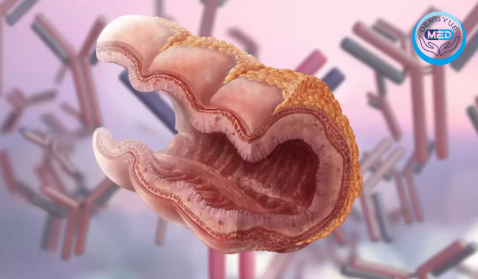
A New Option in Targeted Biologic Therapy: Clinical Insights into Guselkumab Injection
As a targeted biologic therapy, Guselkumab (Tremfya) offers a treatment option for patients with several chronic inflammatory diseases. Supported by its selective mechanism of action and extensive clinical data, guselkumab has become an important therapy in areas including psoriasis, psoriatic arthritis, and inflammatory bowel disease (IBD).
With the advancement of precision medicine and biologic therapies, targeted immune pathway modulation is reshaping the treatment landscape for multiple chronic inflammatory diseases. As a monoclonal antibody targeting interleukin-23 (IL-23), guselkumab has attracted significant attention across dermatology and gastroenterology.
1. What Is Guselkumab?
Guselkumab is a fully human IgG1λ monoclonal antibody that selectively binds to the p19 subunit of interleukin-23 (IL-23), thereby inhibiting IL-23-mediated inflammatory signaling pathways.
IL-23 is considered an important cytokine involved in several chronic inflammatory and immune-mediated diseases, including:
- Psoriasis
- Psoriatic arthritis
- Crohn’s disease
- Ulcerative colitis
Compared with traditional broad-spectrum immunosuppressive therapies, IL-23-targeted treatment provides a more selective approach to immune modulation.
This selectivity is one of the reasons why the IL-23 pathway has become an important focus of therapeutic development in immune-mediated diseases.
2. Mechanism of Action: Targeted Regulation of the IL-23 Pathway
Guselkumab selectively binds to the p19 subunit of IL-23 and blocks its interaction with the IL-23 receptor.
This prevents IL-23-mediated signaling and reduces downstream inflammatory activity.
Highly Selective Targeting
Guselkumab directly targets the p19 subunit of IL-23.
By interfering with this signaling pathway, the treatment aims to reduce the inflammatory processes associated with diseases in which IL-23 plays an important pathogenic role.
CD64 Receptor Binding
Guselkumab also has the ability to bind to CD64, a receptor expressed on certain IL-23-producing cells.
This characteristic provides an additional aspect of its mechanism by allowing guselkumab to localize to cells involved in IL-23 production.
The overall therapeutic concept can therefore be summarized as:
IL-23 targeting → inhibition of inflammatory signaling → reduction of immune-mediated inflammation
Because IL-23 is involved in multiple chronic inflammatory diseases, this mechanism has supported the development of guselkumab across several therapeutic indications.
3. Overview of Approved Indications
Guselkumab has been developed across multiple therapeutic areas, particularly dermatology and gastroenterology.
Dermatology
Guselkumab is used for adults with moderate-to-severe plaque psoriasis who are candidates for systemic therapy.
The treatment targets the IL-23 pathway that plays an important role in the inflammatory processes underlying psoriasis.
Guselkumab has also been developed for psoriatic arthritis, providing another targeted biologic option for patients with inflammatory joint and skin manifestations.
Gastroenterology: Inflammatory Bowel Disease
Guselkumab has expanded beyond dermatological diseases into inflammatory bowel disease.
In February 2025, guselkumab received its first global approval in China for the treatment of adults with moderately to severely active Crohn’s disease.
It was subsequently approved in China for adults with moderately to severely active ulcerative colitis.
These developments reflect the increasing recognition of the IL-23 pathway as an important therapeutic target in IBD.
Treatment may be considered for patients whose disease remains inadequately controlled despite conventional therapies or other advanced treatments, depending on the specific indication and local prescribing information.
Conventional and advanced therapies used in IBD may include:
- Corticosteroids
- Immunomodulators
- Tumor necrosis factor (TNF) inhibitors
- Other biologic therapies
- Targeted small-molecule therapies
The appropriate treatment strategy depends on disease severity, previous treatment exposure, response, safety considerations, and individual patient characteristics.
4. Key Clinical Efficacy Data
Multiple Phase III clinical programs, including GALAXI, GRAVITI, QUASAR, and ASTRO, have generated clinical evidence for guselkumab across Crohn’s disease, ulcerative colitis, and psoriasis.
Crohn’s Disease
GALAXI 2 & 3
In GALAXI 2 and 3, guselkumab was evaluated in patients with moderately to severely active Crohn’s disease.
At Week 48, endoscopic response rates were:
| Treatment Group | Endoscopic Response at Week 48 |
|---|---|
| Guselkumab high-dose group | 52.7% |
| Guselkumab low-dose group | 47.9% |
| Ustekinumab group | 37.1% |
The study demonstrated significantly higher endoscopic response rates with guselkumab compared with the active comparator ustekinumab.
These findings provide evidence for guselkumab as an IL-23-targeted treatment option in Crohn’s disease.
GRAVITI
GRAVITI evaluated a fully subcutaneous guselkumab treatment regimen in Crohn’s disease.
At Week 12, the clinical remission rate in the 400 mg subcutaneous induction group was:
- Guselkumab: 56.1%
- Placebo: 21.4%
The results demonstrated a substantial difference between guselkumab and placebo during the induction phase.
Long-Term Crohn’s Disease Data
Long-term data from GRAVITI and GALAXI have also evaluated maintenance treatment.
At Week 96, clinical remission rates exceeded 85% across the evaluated subcutaneous and intravenous induction strategies followed by maintenance treatment.
Long-term follow-up is particularly important in chronic inflammatory diseases because treatment goals extend beyond initial symptom control to sustained disease management.
5. Clinical Evidence in Ulcerative Colitis
Guselkumab has also generated clinical evidence in patients with moderately to severely active ulcerative colitis.
QUASAR Long-Term Extension
Long-term results from the QUASAR program evaluated clinical remission after approximately two years of treatment.
At Week 92:
| Maintenance Regimen | Clinical Remission |
|---|---|
| 100 mg every 8 weeks | 71% |
| 200 mg every 4 weeks | 74% |
Among patients who completed treatment and had evaluable data, remission rates were as high as:
- 75% in the 100 mg every-8-week group
- 83% in the 200 mg every-4-week group
These data provide additional evidence regarding the durability of guselkumab treatment in ulcerative colitis.
ASTRO
ASTRO evaluated a fully subcutaneous guselkumab treatment regimen in ulcerative colitis.
At Week 48:
| Endpoint | 100 mg Maintenance | 200 mg Maintenance | Placebo |
|---|---|---|---|
| Clinical remission | 36.7% | 42.9% | 7.2% |
| Endoscopic remission | 25.9% | 26.4% | 5.0% |
The results demonstrated higher clinical and endoscopic remission rates with guselkumab compared with placebo.
The inclusion of endoscopic endpoints is particularly relevant in IBD because treatment assessment increasingly focuses not only on symptom improvement but also on objective control of intestinal inflammation.
6. Clinical Evidence in Moderate-to-Severe Plaque Psoriasis
Guselkumab has also demonstrated substantial clinical activity in plaque psoriasis.
China Phase IV Study
In a Phase IV study involving Chinese patients with moderate-to-severe plaque psoriasis, the Week 16 results included:
- 82.4% achieved PASI 90
- 88.8% achieved IGA 0/1
PASI 90 represents at least a 90% improvement from baseline in the Psoriasis Area and Severity Index.
IGA 0/1 represents clear or almost clear skin according to the Investigator’s Global Assessment.
These endpoints are widely used to evaluate the depth of response in psoriasis clinical trials.
VISIBLE Cohort B
Guselkumab has also been studied in patients with diverse skin tones.
At Week 16 in VISIBLE Cohort B:
- 57.9% achieved scalp-specific IGA 0
- 59.2% achieved PSSI 100
Scalp involvement can be particularly difficult to manage in psoriasis, making disease-specific response measures clinically relevant.
7. Why Is IL-23 an Important Therapeutic Target?
The IL-23 pathway has become one of the major areas of interest in modern immunology.
IL-23 contributes to the maintenance and expansion of inflammatory immune responses, particularly those involving the Th17-related pathway.
Abnormal activation of this pathway has been associated with several immune-mediated diseases.
This has led to the development of therapies targeting different components of the pathway, including:
- IL-12/23 inhibitors
- Selective IL-23p19 inhibitors
- Other therapies affecting downstream inflammatory pathways
The increasing clinical use of IL-23 inhibitors reflects a broader shift from broad immune suppression toward more selective pathway-based treatment.
8. From Dermatology to Gastroenterology: Expansion of Biologic Therapies
One notable feature of guselkumab is the expansion of its clinical development across different therapeutic areas.
Initially associated primarily with psoriasis, IL-23-targeted therapy has increasingly moved into other immune-mediated diseases.
The development of guselkumab in Crohn’s disease and ulcerative colitis illustrates how understanding a common inflammatory pathway can support therapeutic development across multiple disease areas.
This also demonstrates an important trend in modern drug development:
One biological pathway → multiple disease indications → broader precision-medicine applications
As evidence continues to accumulate, biologic therapies are increasingly being evaluated not only for short-term symptom control but also for deeper disease control and long-term treatment outcomes.
9. Future Trends in IL-23-Targeted Therapy
In recent years, IL-23 inhibitors have become an important therapeutic direction in autoimmune and immune-mediated diseases.
As longer-term follow-up data and real-world evidence continue to emerge, research is increasingly focusing on:
- Durability of therapeutic efficacy
- Long-term safety
- Sustained clinical remission
- Endoscopic disease control
- Expansion into additional indications
- Optimization of subcutaneous treatment strategies
- Comparative effectiveness among advanced therapies
Another important development is the movement toward more individualized treatment selection.
Rather than relying on a single treatment pathway for all patients, future strategies may increasingly consider disease phenotype, biomarker characteristics, previous treatment response, comorbidities, and patient preferences.
10. What Does Guselkumab Mean for Precision Immunotherapy?
The development of guselkumab reflects the broader evolution of biologic medicine.
Earlier approaches to immune-mediated diseases often relied on relatively broad immunosuppression.
Modern biologic therapies increasingly focus on specific cytokines, receptors, and signaling pathways.
Guselkumab represents this transition by selectively targeting IL-23.
Its clinical development across psoriasis, psoriatic arthritis, Crohn’s disease, and ulcerative colitis also demonstrates how a single biological target can become relevant across multiple disease areas.
For patients with chronic inflammatory diseases, the development of targeted therapies may provide additional treatment options when conventional approaches are insufficient or poorly tolerated.
However, the choice of therapy should always be based on the specific disease, treatment history, clinical characteristics, safety considerations, and applicable treatment guidelines.
Conclusion
Guselkumab (Tremfya) represents an important development in targeted biologic therapy for chronic inflammatory and immune-mediated diseases.
By selectively targeting the p19 subunit of IL-23, guselkumab provides a mechanism-based approach to regulating inflammatory pathways involved in diseases such as psoriasis, psoriatic arthritis, Crohn’s disease, and ulcerative colitis.
Clinical programs including GALAXI, GRAVITI, QUASAR, and ASTRO have generated evidence across different disease settings, including clinical remission, endoscopic response, endoscopic remission, and skin clearance.
The broader development of IL-23 inhibitors also highlights an important trend in modern medicine: the transition from broad immune suppression toward increasingly selective and mechanism-based treatment.
As biologics and precision medicine continue to evolve globally, IL-23-targeted therapies are likely to remain an important area of clinical research and pharmaceutical innovation.
DengYueMed continues to monitor developments in biologics, autoimmune and inflammatory diseases, innovative medicines, and emerging therapeutic technologies as part of its focus on global pharmaceutical information and medicine supply.
Medical Disclaimer: This article is intended for medical education and pharmaceutical industry information purposes only. It does not constitute medical advice, diagnosis, or a treatment recommendation. Drug indications, dosing, administration, safety information, and regulatory status may vary by country and may change over time. Treatment decisions should be made by qualified healthcare professionals based on the applicable prescribing information and individual patient circumstances.
Related Posts
- Chinese HER2 Bispecific Antibody + PD-1 Combination Approved in the U.S. for Gastroesophageal Adenocarcinoma, Advancing to the Forefront of Global Oncology
- The 30-Year Chemotherapy Standard Faces a New Challenge: China's PD-1 Serplulimab Breaks New Ground in Gastric Cancer Treatment
- Gastric Cancer Treatment Is No Longer Just About Chemotherapy: How Precision Medicine Is Shaping the Future | A Comprehensive Guide to HER2, CLDN18.2, and FGFR2b