How Do ADCs Treat Lung Cancer? Which Patients May Benefit?

Lung cancer is one of the leading causes of cancer-related deaths worldwide. In recent years, advances in targeted therapy and immunotherapy have provided new treatment opportunities for many patients. Among these innovations, Antibody-Drug Conjugates (ADCs) have emerged as a promising treatment approach that is transforming the management of certain types of lung cancer.
So, how do ADCs treat lung cancer, and which patients may be eligible for ADC therapy?
Global pharmaceutical distributor DengYueMed takes you through this innovative treatment approach.
What Are ADCs?
Antibody-Drug Conjugates (ADCs) are a type of targeted therapy that combines a monoclonal antibody with a highly potent cytotoxic drug (payload) through a specialized linker.
ADCs can be thought of as a “precision delivery system.”
The treatment process generally includes four steps:
- The monoclonal antibody recognizes and binds to a specific target on the surface of cancer cells.
- The ADC is internalized into the cancer cell.
- Inside the cell, the linker is broken down.
- The cytotoxic payload is released to destroy the cancer cell while minimizing damage to healthy tissues whenever possible.
Because ADCs combine the precision of targeted therapy with the cancer-killing effects of chemotherapy, they are often referred to as “precision chemotherapy.”
How Do ADCs Treat Lung Cancer?
Many lung cancer cells express specific proteins that can serve as targets for ADC therapy.
Some of the most important biomarkers currently being explored include:
- HER2
- HER3
- TROP2
- DLL3 (primarily in Small Cell Lung Cancer)
- CEACAM5 (currently under investigation)
Each ADC targets a different biomarker, meaning not every patient is suitable for the same ADC therapy.
Which ADC Drugs Are Currently Used for Lung Cancer?
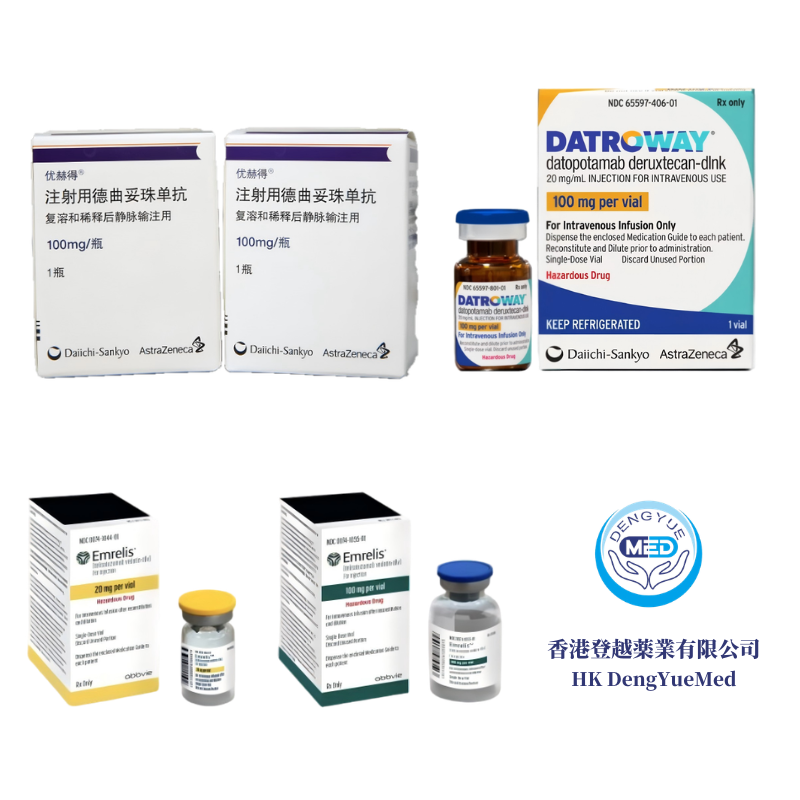
Several ADC therapies have demonstrated significant progress in lung cancer treatment.
| Drug | Target | Primary Patient Population |
|---|---|---|
| Trastuzumab Deruxtecan | HER2 | Advanced HER2-mutant NSCLC |
| Datopotamab Deruxtecan | TROP2 | Previously treated advanced NSCLC (approved indications vary by region) |
| Telisotuzumab Vedotin | c-MET | Advanced NSCLC with high c-MET expression (approved in selected regions) |
As research into HER2, HER3, TROP2, c-MET, and other molecular targets continues, additional ADC therapies are expected to become available.
Whether a patient is suitable for ADC treatment depends on:
- Tumor pathology
- Biomarker testing
- Previous treatments
- Approved indications in the local region
Treatment decisions should always be made by qualified healthcare professionals.
Which Lung Cancer Patients May Benefit from ADC Therapy?
Eligibility depends on several factors, including lung cancer subtype, biomarker testing, previous treatment history, and approved indications.
1. HER2-Altered NSCLC
HER2 mutations occur in approximately 2%–4% of patients with Non-Small Cell Lung Cancer.
HER2-targeted ADCs have created new treatment opportunities for patients whose disease progresses after conventional therapies.
Patients generally require genetic testing to confirm HER2 alterations before treatment eligibility can be assessed.
2. HER3-Related NSCLC
HER3 has become an increasingly important research target.
Several HER3-targeted ADCs are being developed for patients with EGFR-mutant NSCLC whose disease has progressed after EGFR-TKI therapy.
Multiple agents are currently undergoing clinical development or regulatory review.
3. TROP2-Positive NSCLC
TROP2 is highly expressed in various solid tumors.
TROP2-targeted ADCs have demonstrated encouraging anti-tumor activity in clinical studies involving lung cancer.
Treatment suitability depends on approved indications and each patient’s clinical condition.
4. Small Cell Lung Cancer (SCLC)
Small Cell Lung Cancer remains an aggressive disease with limited treatment options.
ADCs targeting DLL3 have become an important area of clinical research and may provide additional treatment opportunities for patients with relapsed or refractory SCLC.
Advantages of ADC Therapy
Compared with conventional chemotherapy, ADCs offer several potential advantages.
More Precise Targeting
Monoclonal antibodies deliver anti-cancer drugs directly to tumor cells.
Reduced Impact on Healthy Tissue
Because the payload is primarily released inside target cells, ADCs are designed to reduce damage to normal tissues.
However, systemic side effects may still occur and require monitoring.
New Option After Drug Resistance
Patients whose disease progresses after targeted therapy or immunotherapy may have additional treatment opportunities through ADCs.
Rapid Innovation
With more ADCs entering clinical trials and receiving regulatory approvals, lung cancer treatment options continue to expand.
What Tests Are Needed Before ADC Therapy?
Before considering ADC treatment, physicians generally perform a comprehensive evaluation, including:
- Pathological diagnosis
- Lung cancer staging
- Genetic testing (EGFR, ALK, ROS1, HER2, etc.)
- Biomarker testing when appropriate
- Previous treatment history
- Liver function assessment
- Kidney function assessment
- Overall health evaluation
These assessments help determine whether ADC therapy is appropriate and support individualized treatment planning.
The Growing Role of ADCs in Precision Oncology

The rapid development of ADC technology is reshaping precision oncology.
Multiple next-generation ADCs targeting HER2, HER3, TROP2, DLL3, and other biomarkers are currently being evaluated worldwide, offering hope for patients with advanced lung cancer.
At the same time, international pharmaceutical distribution plays an increasingly important role in improving patient access to innovative medicines across different countries and healthcare systems.
Conclusion
ADCs represent one of the most exciting advances in precision medicine for lung cancer.
As research into HER2, HER3, TROP2, DLL3, and other molecular targets continues, and as more innovative ADC therapies become available, patients may benefit from increasingly personalized treatment options.
The suitability of ADC therapy should always be determined by healthcare professionals based on tumor pathology, biomarker testing, previous treatments, and the patient’s overall health.
Patients are encouraged to discuss all available treatment options with their medical team to identify the most appropriate treatment strategy.
Headquartered in Hong Kong, DengYueMed is a global pharmaceutical distributor specializing in the international supply of innovative and specialty medicines. We remain committed to sharing the latest pharmaceutical news, disease education, and treatment advances while helping healthcare institutions, partners, and patients stay connected with cutting-edge medical innovations worldwide.
Related Posts
- Chinese HER2 Bispecific Antibody + PD-1 Combination Approved in the U.S. for Gastroesophageal Adenocarcinoma, Advancing to the Forefront of Global Oncology
- Sevabertinib for HER2-Mutant NSCLC in China: A New Targeted Treatment Option
- New Progress in First-Line Treatment of HER2-Positive Breast Cancer: Trastuzumab Deruxtecan Plus Pertuzumab Approved