ADC Landscape in Head and Neck Cancer: Latest Advances in HER3, EGFR, B7-H3, and Other Emerging Targets
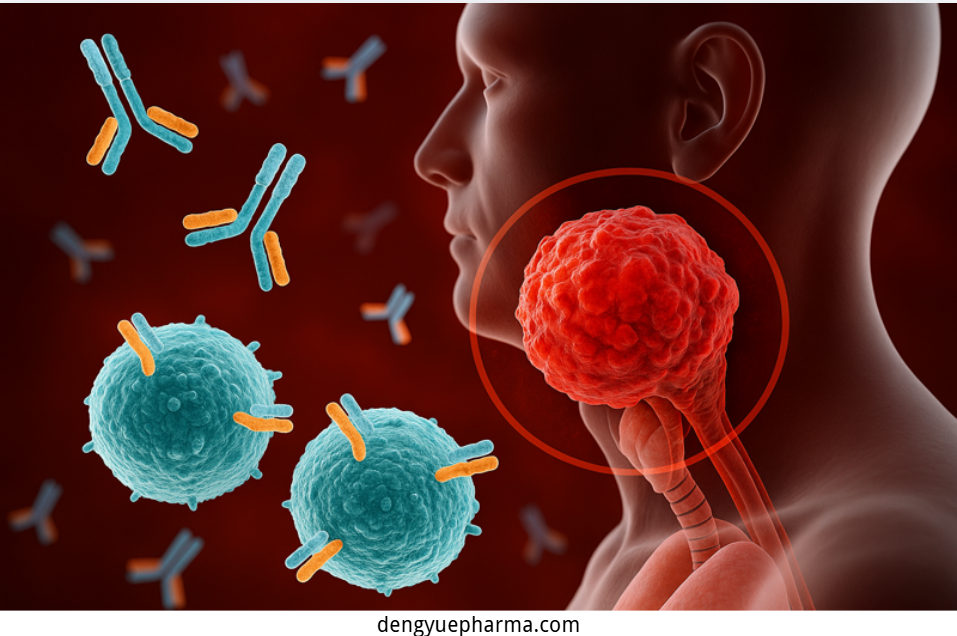
In recent years, antibody-drug conjugates (ADCs) have become one of the fastest-growing areas of innovation in oncology. From breast cancer and lung cancer to urothelial carcinoma and gastrointestinal malignancies, ADCs are rapidly reshaping the treatment landscape across multiple tumor types.
At the same time, head and neck squamous cell carcinoma (HNSCC) has emerged as an increasingly important focus for ADC research.
Although PD-1 inhibitors have become a standard treatment option for recurrent or metastatic HNSCC, significant unmet medical needs remain. Overall response rates remain modest, many patients eventually develop treatment resistance, and long-term survival remains unsatisfactory.
Consequently, researchers have turned their attention toward ADCs targeting HER3, EGFR, B7-H3, TROP2, PTK7, c-MET, CDH6, and other emerging biomarkers.
Drawing upon recently published clinical studies and the latest advances in global oncology drug development, DengYueMed provides a comprehensive overview of the evolving ADC landscape in head and neck cancer, highlighting promising therapeutic targets, representative drug candidates, and future research directions.
Why Have ADCs Become a New Research Hotspot in Head and Neck Cancer?
Head and neck squamous cell carcinoma primarily includes:
- Oral cavity cancer
- Oropharyngeal cancer
- Hypopharyngeal cancer
- Laryngeal cancer
More than 900,000 new cases are diagnosed worldwide each year, making HNSCC one of the most common solid tumors globally.
Current treatment options for recurrent or metastatic HNSCC include:
- PD-1 immunotherapy
- EGFR-targeted therapy (Cetuximab)
- Chemotherapy
- Radiotherapy
- Concurrent chemoradiotherapy
Although landmark studies such as KEYNOTE-048 established pembrolizumab-based therapy as a first-line standard of care, the overall objective response rate (ORR) remains below 50%, and most patients ultimately experience disease progression.
Improving treatment efficacy while minimizing toxicity therefore remains a major challenge.
ADCs provide an attractive solution by delivering highly potent cytotoxic agents directly to tumor cells while minimizing exposure to normal tissues.
For this reason, ADCs are widely regarded as one of the most promising next-generation precision therapies following immune checkpoint inhibitors.
Mechanism of Action of ADCs in Head and Neck Cancer
An antibody-drug conjugate generally consists of three essential components:
- A monoclonal antibody
- A chemical linker
- A highly potent cytotoxic payload
The therapeutic process typically involves the following sequence:
- The antibody specifically binds to an antigen expressed on the tumor cell surface.
- The ADC is internalized into the cancer cell.
- The linker is cleaved intracellularly.
- The cytotoxic payload is released.
- The payload induces DNA damage or disrupts microtubules, ultimately leading to tumor cell death.
- Certain ADCs also generate a bystander effect, allowing neighboring tumor cells with lower antigen expression to be eliminated.
This unique mechanism combines the specificity of targeted therapy with the powerful tumor-killing activity of chemotherapy, making ADCs especially attractive for the treatment of solid tumors.
HER3 ADCs: The Most Advanced Direction in HNSCC
Among all emerging ADC targets, HER3 has become one of the most extensively investigated in head and neck cancer.
Multiple studies have demonstrated that:
- HER3 is overexpressed in many HNSCC tumors.
- HER3 expression is associated with tumor invasion and metastasis.
- Increased HER3 expression correlates with poor prognosis.
- HER3 signaling frequently contributes to resistance following EGFR-targeted therapy.
Because of these characteristics, HER3 has become one of the most promising therapeutic targets for next-generation ADC development.
Representative Drug: Patritumab Deruxtecan (HER3-DXd)
Patritumab Deruxtecan (HER3-DXd) is currently the leading HER3-targeted ADC in global clinical development.
Its key characteristics include:
- HER3-targeting monoclonal antibody
- Cleavable linker technology
- DXd topoisomerase I inhibitor payload
- Potent bystander killing effect
HER3-DXd is currently being investigated in multiple HER3-expressing solid tumors, including:
- Non-small cell lung cancer (NSCLC)
- Head and neck squamous cell carcinoma
- Breast cancer
Early clinical studies have demonstrated encouraging antitumor activity in heavily pretreated HNSCC patients, supporting continued clinical development of HER3-targeted ADC therapy.
EGFR ADCs: Reinventing a Classic Therapeutic Target
EGFR has long been one of the best-established molecular targets in head and neck cancer.
More than 80% of HNSCC tumors exhibit EGFR overexpression, making Cetuximab an important component of standard therapy for many years.
However, conventional EGFR-targeted therapy faces several limitations, including:
- Modest objective response rates
- Development of acquired resistance
- Limited durability of response
ADC technology has renewed interest in EGFR-targeted treatment by enabling selective intracellular delivery of highly potent cytotoxic agents.
Representative Drug: MRG003
MRG003 is one of the leading EGFR-targeted ADCs currently undergoing clinical development.
Key features include:
- EGFR-targeting monoclonal antibody
- MMAE cytotoxic payload
- Cleavable linker technology
Clinical studies have demonstrated:
- Encouraging objective response rates
- Manageable safety profile
- Continued advancement through Phase II clinical evaluation
In addition to MRG003, several next-generation EGFR-targeted ADCs are currently undergoing Phase I and Phase II clinical trials worldwide.
Other Emerging ADC Targets Worth Watching
Beyond HER3, EGFR, B7-H3, and TROP2, several additional ADC targets are being investigated for head and neck cancer.
B7-H4
B7-H4 is another immune checkpoint-related protein that is overexpressed in various solid tumors while showing limited expression in normal tissues.
Potential applications include:
- HPV-negative HNSCC
- Highly aggressive head and neck tumors
- Advanced solid malignancies with poor prognosis
Although clinical development remains in the early stages, B7-H4 ADCs may become an important future treatment option for selected patient populations.
CDH6
Cadherin-6 (CDH6) has recently emerged as a promising ADC target.
Current research has mainly focused on:
- Ovarian cancer
- Renal cell carcinoma
As understanding of CDH6 biology expands, future studies may explore its role in selected head and neck cancers.
c-MET
MET pathway activation contributes to:
- Tumor invasion
- Metastasis
- Resistance to EGFR-targeted therapy
Although MET alterations occur in only a subset of HNSCC patients, several MET-targeted ADCs have already entered early-stage clinical development.
PTK7
Protein Tyrosine Kinase 7 (PTK7) is overexpressed in a proportion of head and neck squamous cell carcinomas.
Multiple PTK7-targeted ADC programs are currently under clinical investigation and may broaden future treatment options for patients with advanced disease.
Combination Strategies Represent the Future of ADC Therapy
Increasing clinical evidence suggests that ADC monotherapy is only the beginning.
Future treatment strategies are expected to focus on rational combination therapies capable of overcoming resistance mechanisms and enhancing antitumor immunity.
Potential combinations include:
- ADCs + PD-1/PD-L1 inhibitors
- ADCs + Radiotherapy
- ADCs + EGFR-targeted therapy
- ADCs + Chemotherapy
- ADCs + Anti-angiogenic therapy
- ADCs + Bispecific antibodies
These combination strategies may provide:
- Higher objective response rates (ORR)
- Longer progression-free survival (PFS)
- More durable overall survival (OS)
- Improved control of resistant disease
Several global Phase II and Phase III clinical trials are currently evaluating these approaches in recurrent or metastatic HNSCC.
Future Directions of ADC Development in Head and Neck Cancer
As ADC technology continues to mature, future innovation is expected to focus on improving both efficacy and safety.
Major research directions include:
More Stable Linker Technologies
Next-generation linker designs aim to:
- Improve plasma stability
- Reduce premature payload release
- Minimize systemic toxicity
Optimizing Drug-to-Antibody Ratio (DAR)
Careful optimization of the drug-to-antibody ratio can help achieve:
- Better pharmacokinetics
- Increased tumor delivery
- Improved therapeutic index
Bispecific ADCs
Bispecific ADCs are designed to recognize two tumor-associated antigens simultaneously.
Potential advantages include:
- Enhanced tumor selectivity
- Reduced antigen escape
- Greater efficacy in heterogeneous tumors
Dual-Payload ADCs
Researchers are also developing ADCs carrying two different cytotoxic agents.
Potential benefits include:
- Multiple mechanisms of tumor killing
- Reduced resistance
- Improved efficacy against heterogeneous cancer cell populations
Stronger Bystander Effect
Novel payloads and linker technologies are being optimized to improve the bystander effect, allowing ADCs to eliminate neighboring tumor cells with low or heterogeneous antigen expression.
Biomarker-Driven Precision Medicine
Future patient selection will increasingly rely on predictive biomarkers, including:
- HER3 expression
- B7-H3 expression
- EGFR amplification
- TROP2 expression
- Genomic sequencing
- AI-assisted pathology
These advances are expected to maximize treatment benefit while minimizing unnecessary toxicity.
Challenges That Still Need to Be Overcome
Despite rapid progress, several important challenges remain.
Tumor Heterogeneity
Different metastatic lesions within the same patient may express different target antigens, reducing the effectiveness of single-target ADCs.
Resistance Mechanisms
Potential resistance mechanisms include:
- Antigen downregulation
- Impaired ADC internalization
- Drug efflux pumps
- Altered intracellular trafficking
Understanding these mechanisms will be essential for developing next-generation therapies.
Toxicity Management
Although ADCs improve precision, adverse events still require careful monitoring.
Common toxicities vary by payload and target and may include:
- Interstitial lung disease (ILD)
- Neutropenia
- Peripheral neuropathy
- Ocular toxicity
- Gastrointestinal adverse events
Optimizing patient selection and supportive care will remain important components of successful treatment.
Global Development Outlook
ADC research in head and neck cancer is accelerating worldwide.
Major pharmaceutical companies and biotechnology firms are actively developing ADCs targeting:
- HER3
- EGFR
- B7-H3
- TROP2
- c-MET
- PTK7
- B7-H4
At the same time, Chinese innovative pharmaceutical companies have become increasingly active in ADC research, contributing multiple globally competitive candidates and expanding international clinical collaborations.
As more pivotal clinical trials report positive results, ADCs are expected to become an increasingly important component of precision therapy for recurrent and metastatic HNSCC.
Conclusion
Antibody-drug conjugates are rapidly emerging as one of the most promising treatment strategies for head and neck squamous cell carcinoma.
From HER3 and EGFR to B7-H3, TROP2, and other emerging targets, numerous ADC candidates have entered clinical development worldwide, with several demonstrating encouraging efficacy in patients with advanced HNSCC.
Continued advances in linker technology, payload design, biomarker-guided patient selection, and combination immunotherapy are expected to further expand the role of ADCs in head and neck cancer.
Although no ADC has yet become a universal standard for HNSCC, the rapid pace of clinical innovation suggests that ADC therapy may become one of the next major breakthroughs in precision oncology.
At Hong Kong DengYue Pharmaceutical Limited (DengYueMed), we continuously monitor global advances in oncology drug development, including antibody-drug conjugates, immunotherapy, targeted therapies, and other emerging treatment strategies. Through professional pharmaceutical information sharing and compliant international pharmaceutical supply services, we remain committed to helping healthcare professionals, partners, and patients stay informed about the latest innovations in precision cancer treatment.
Frequently Asked Questions (FAQ)
Are any ADCs currently approved specifically for head and neck cancer?
At present, no ADC has received broad global approval specifically for head and neck squamous cell carcinoma. However, multiple candidates are being evaluated in Phase I–III clinical trials.
Which ADC targets are considered the most promising?
Current research focuses primarily on:
- HER3
- EGFR
- B7-H3
- TROP2
Among these, HER3- and B7-H3-targeted ADCs have generated particularly encouraging early clinical data.
Can ADCs be combined with immunotherapy?
Yes. Numerous ongoing clinical trials are evaluating ADCs in combination with PD-1/PD-L1 inhibitors, with the goal of improving response rates and overcoming resistance.
Why are ADCs considered precision therapies?
ADCs use monoclonal antibodies to selectively recognize tumor-associated antigens and deliver highly potent cytotoxic drugs directly into cancer cells, reducing exposure to normal tissues compared with conventional chemotherapy.
Related Posts
- New Progress in First-Line Treatment of HER2-Positive Breast Cancer: Trastuzumab Deruxtecan Plus Pertuzumab Approved
- A New Breakthrough in Colorectal Cancer ADC Therapy: Trastuzumab Rezetecan Approved for HER2-Positive Colorectal Cancer in China
- Gastric Cancer Treatment Is No Longer Just About Chemotherapy: How Precision Medicine Is Shaping the Future | A Comprehensive Guide to HER2, CLDN18.2, and FGFR2b