Why Are ADC Drugs Remaining So Hot? A Comprehensive Analysis of the Global Cancer Innovation Landscape
Why Are ADC Drugs Remaining So Hot? A Comprehensive Analysis of the Global Cancer Innovation Landscape
In recent years, ADCs (Antibody-Drug Conjugates) have become one of the fastest-growing segments in the global oncology innovation market. From breast cancer and lung cancer to gastric cancer and urothelial carcinoma, an increasing number of ADC therapies have achieved breakthrough results in both clinical research and real-world treatment.
At the same time, major pharmaceutical companies worldwide have accelerated their investments in the ADC market through acquisitions, licensing agreements, and strategic partnerships, further driving the rapid expansion of this field.
As the era of precision medicine continues to evolve, ADCs are not only regarded as a new generation of targeted therapies but are also expected to become a key pillar of future cancer treatment.
Why have ADC drugs remained at the center of industry attention? What are the core advantages that make this field so competitive? And where is the ADC landscape headed next?
What Are ADC Drugs?
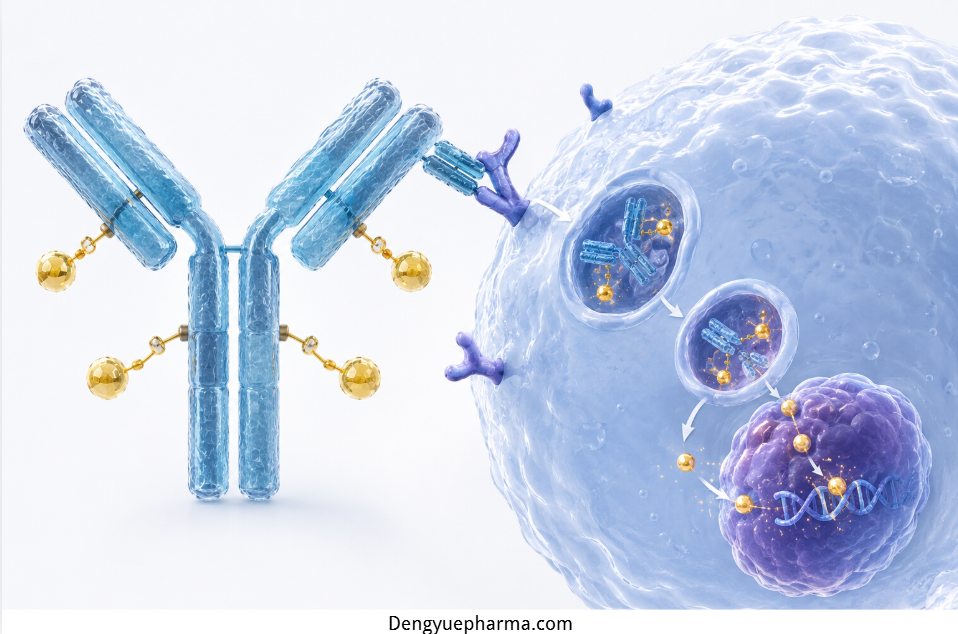
ADCs are often referred to as “precision-guided cancer missiles.”
Their core concept is to maintain the powerful tumor-killing capability of chemotherapy while significantly improving drug selectivity for cancer cells, thereby minimizing damage to healthy tissues.
A complete ADC consists of three essential components:
- Antibody — Precisely recognizes specific targets expressed on the surface of tumor cells.
- Linker — Connects the antibody to the payload and ensures stability during circulation in the body.
- Payload — A highly potent cytotoxic agent that delivers the actual anti-cancer effect.
Through this design, ADCs can selectively deliver therapeutic agents directly into cancer cells, enabling more precise and effective cancer treatment.
From Proof of Concept to Global Breakthrough: The Evolution of ADCs
The development of ADCs did not happen overnight. It is the result of decades of technological advancement and continuous innovation.
Early-generation ADCs successfully demonstrated the feasibility of targeted drug delivery. However, issues such as:
- Insufficient linker stability
- Limited drug-release efficiency
- Suboptimal toxicity profiles
prevented them from achieving their full clinical potential.
As antibody engineering, linker technologies, and payload development advanced, second-generation ADCs achieved significant breakthroughs.
Several blockbuster ADC products received regulatory approvals and established themselves as important treatment options across multiple cancer types.
Today, ADC development has entered what many industry experts call the “ADC 3.0 era.”
The focus is no longer limited to improving individual components. Instead, researchers are optimizing:
- Antibodies
- Linkers
- Payloads
- Tumor microenvironment interactions
simultaneously, transforming ADCs from targeted delivery tools into comprehensive anti-cancer treatment platforms.
Why Have ADCs Become a Strategic Priority for Global Pharmaceutical Companies?
The sustained enthusiasm surrounding ADCs stems from their strong potential in efficacy, safety, and commercial value.
Combining the Advantages of Targeted Therapy and Chemotherapy
While conventional chemotherapy can effectively kill cancer cells, it also damages healthy tissues, often leading to significant side effects.
ADCs use antibodies to precisely identify tumor targets and deliver therapeutic agents directly to cancer cells, improving treatment efficiency while reducing systemic toxicity.
Expanding Across Multiple Cancer Types
Early ADC successes were largely concentrated in HER2-positive breast cancer.
Today, ADC development spans:
- Lung cancer
- Gastric cancer
- Gynecologic cancers
- Urothelial cancers
- Gastrointestinal malignancies
and many other solid tumors.
Strong Commercial Momentum
Growing confidence from global capital markets has accelerated ADC development.
In recent years, multiple ADC-related transactions worth billions of dollars have emerged, making ADCs one of the most active sectors in oncology innovation investment.
Five Key Areas Driving ADC Innovation
1. Expansion of Tumor Targets
Early ADC development focused primarily on HER2.
Today, researchers have identified a growing number of promising tumor-associated targets, including:
- HER3
- TROP2
- CLDN18.2
- B7-H3
- Nectin-4
- LIV-1
The emergence of these new targets may enable ADCs to benefit a broader range of patients with solid tumors, including those who previously lacked effective targeted treatment options.
2. Continued Advances in Linker Technology
Although linkers may seem like simple connectors within ADC structures, they are widely regarded as one of the most critical determinants of clinical success.
An ideal linker must:
- Remain stable in the bloodstream.
- Release its payload efficiently within tumor tissue.
Next-generation ADCs employ advanced cleavable linker technologies that respond to:
- Acidic conditions
- Tumor-associated enzymes
- Redox environments
within the tumor microenvironment, improving efficacy while reducing systemic toxicity.
3. Increasing Diversity of Payloads
Historically, ADCs primarily utilized microtubule inhibitors as payloads.
However, differences in tumor biology and drug sensitivity have prompted researchers to explore a wider range of payload technologies.
Current areas of interest include:
- Topoisomerase I inhibitors
- DNA-damaging agents
- RNA polymerase inhibitors
- Protein degraders
These novel payloads may offer stronger anti-tumor activity and help overcome certain mechanisms of treatment resistance.
4. Enhanced Bystander Effect
Solid tumors often exhibit substantial heterogeneity, meaning target expression can vary significantly among different cancer cells within the same tumor.
One of the defining features of third-generation ADCs is an enhanced bystander effect.
The process works as follows:
- The ADC enters a target-positive tumor cell.
- The payload is released inside the cell.
- The released drug diffuses into surrounding tissue.
- Neighboring tumor cells with low or absent target expression are also eliminated.
This capability can significantly improve overall anti-tumor activity and is considered one of the key innovations behind several next-generation ADC therapies.
5. Combination Therapy as the Future Direction
As ADC efficacy continues to improve, researchers are actively exploring combinations with other treatment modalities.
The most promising strategies currently include:
- ADC plus PD-1/PD-L1 immunotherapy
- ADC plus targeted therapies
- ADC plus chemotherapy
- ADC plus bispecific antibodies
- ADC plus radiotherapy
An increasing number of studies suggest that ADCs not only directly kill tumor cells but may also remodel the tumor microenvironment, enhancing immune recognition and anti-tumor responses.
As a result, ADC-based combination therapies represent one of the most exciting areas of future development.
China’s ADC Innovation Ecosystem Is Rapidly Emerging
Historically, the ADC field was dominated by pharmaceutical companies from Europe and North America.
However, Chinese biotech and pharmaceutical companies have become increasingly active in ADC development in recent years.
A growing number of Chinese ADC candidates have:
- Entered international multicenter clinical trials
- Secured global partnership opportunities
- Advanced toward commercialization
Some companies have already established comprehensive ADC development platforms covering:
- Target discovery
- Antibody engineering
- Linker development
- Payload optimization
- Clinical translation
As research capabilities continue to strengthen, China is becoming an increasingly important contributor to the global ADC innovation ecosystem and is expected to play a larger role in bringing innovative ADC therapies to international markets.
The ADC Market Outlook
Several trends are expected to shape the next stage of ADC development:
More Novel Targets
Researchers continue to identify tumor-specific antigens that may support highly differentiated ADC programs.
Smarter Drug Design
Future ADCs will likely feature:
- Improved target selectivity
- Better pharmacokinetics
- More stable linkers
- Optimized payload delivery
Broader Combination Strategies
Combination approaches may significantly expand ADC applications beyond current treatment settings.
Expansion Beyond Oncology
Researchers are beginning to investigate whether ADC technology can be adapted for selected non-oncology diseases, potentially creating entirely new therapeutic opportunities.
Conclusion
From early proof-of-concept studies to today’s rapidly expanding innovation landscape, ADCs are continuously redefining the future of precision oncology.
With their combination of targeted delivery, potent anti-cancer activity, and strong potential for combination therapy, ADCs have become one of the most closely watched areas in global cancer drug development.
As new targets continue to emerge, linker and payload technologies become increasingly sophisticated, and more innovative products advance through clinical development and commercialization, ADCs are expected to provide additional treatment opportunities for patients with breast cancer, lung cancer, gastric cancer, and many other solid tumors.
In the years ahead, ADCs are likely to remain at the forefront of oncology innovation while serving as a key driver of precision medicine.
As a professional platform dedicated to monitoring global pharmaceutical innovation, DengYueMed will continue to follow major breakthroughs in ADCs, cell therapies, bispecific antibodies, and other cutting-edge fields.
By sharing the latest international research developments and clinical advances, we aim to provide patients, healthcare professionals, and industry partners with timely and comprehensive insights into innovative therapies worldwide.
Related Posts
- Chinese HER2 Bispecific Antibody + PD-1 Combination Approved in the U.S. for Gastroesophageal Adenocarcinoma, Advancing to the Forefront of Global Oncology
- Breaking Through for an Asian Cancer: China’s Innovation Rewrites the Future of Nasopharyngeal Cancer Treatment
- Sevabertinib for HER2-Mutant NSCLC in China: A New Targeted Treatment Option