When ADCs Achieve a 50% Objective Response Rate: How Technological Innovation Translates into Patient Benefit
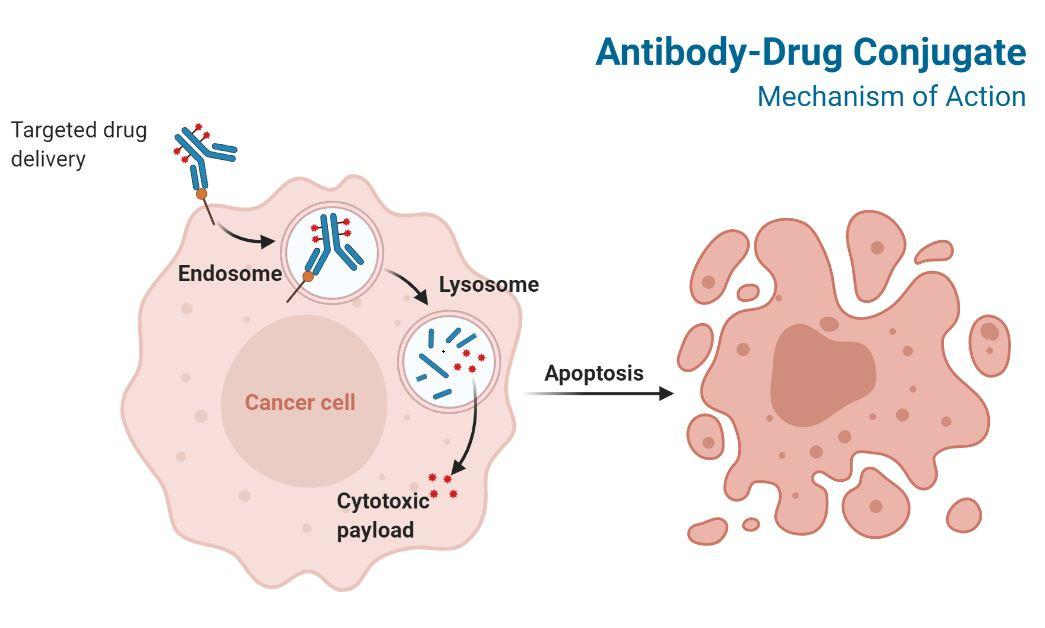
In recent years, Antibody-Drug Conjugates (ADCs) have emerged as one of the most closely watched areas in global oncology drug development. From breast cancer and lung cancer to gastric cancer and urothelial carcinoma, an increasing number of ADCs have demonstrated encouraging efficacy in clinical studies.
At major international medical conferences and in clinical research reports, objective response rates (ORRs) of 50% or higher often attract significant attention from researchers, clinicians, investors, and industry stakeholders alike.
But what does a 50% ORR actually mean? Why are ADCs continuing to achieve impressive clinical breakthroughs? And how do these technological innovations ultimately translate into meaningful benefits for patients?
The Clinical Significance Behind a Single Number
In oncology drug development, Objective Response Rate (ORR) is one of the most commonly used indicators for evaluating a therapy’s antitumor activity.
Simply put, ORR refers to the proportion of patients whose tumors shrink significantly following treatment, including:
- Complete Response (CR): Complete disappearance of detectable tumors
- Partial Response (PR): Significant reduction in tumor size
For example, if 100 patients receive treatment and 50 achieve either complete or partial response, the ORR is 50%.
To the general public, 50% may seem like just another statistic. However, for cancer patients, it means that one out of every two treated patients experiences a measurable reduction in tumor burden.
This is particularly meaningful in advanced solid tumors, where treatment options may be limited and traditional therapies often achieve ORRs of only 10% to 30%.
Therefore, when an innovative therapy demonstrates an ORR of 50% or higher, it generally suggests stronger antitumor activity and the potential to provide patients with longer disease control and additional treatment opportunities.
Of course, ORR is not the only measure of a drug’s value. Overall Survival (OS), Progression-Free Survival (PFS), safety, and quality of life are equally important. Nevertheless, in oncology drug development, a high ORR is often considered an important early signal of clinical potential and a key driver of further development.
Why Is a 50% ORR Worth Attention?
In many advanced solid tumors, existing standard treatments offer limited response rates.
Depending on the cancer type and treatment setting, conventional therapies may achieve ORRs ranging from approximately 10% to 30%.
As a result, when a new therapy achieves an ORR of 50% or higher, it often indicates:
- More patients are benefiting from treatment
- Strong antitumor activity
- Potential for longer disease control
- The possibility of reshaping existing treatment paradigms
While survival outcomes and safety profiles remain critical considerations, high ORR results frequently serve as an important indicator of clinical breakthrough potential.
Why Are ADCs Continuously Setting New Efficacy Benchmarks?
ADCs are often referred to as “biological missiles” because they combine the targeting precision of antibodies with the potent cell-killing ability of cytotoxic drugs.
By delivering highly effective payloads directly to tumor cells, ADCs aim to maximize efficacy while minimizing damage to healthy tissues.
Over the past decade, ADC technology has evolved rapidly, and the impressive clinical outcomes seen today are largely the result of continuous technological innovation.
Optimization of Target Selection
Advances in tumor biology have led to the identification of numerous clinically relevant targets.
From HER2 and TROP2 to emerging targets such as CLDN18.2 and B7-H3, improved target selection has expanded the range of cancers that may benefit from ADC therapy while increasing treatment precision.
Advances in Linker Technology
The linker serves as the bridge connecting the antibody and the payload.
Its stability plays a critical role in determining both efficacy and safety.
Next-generation linker technologies are designed to remain stable in circulation while releasing the payload precisely within tumor cells, thereby improving therapeutic windows and reducing off-target toxicity.
More Potent Payload Design
Payload innovation has become another major driver of ADC success.
In recent years, topoisomerase inhibitors have emerged as highly effective payloads, demonstrating strong tumor-killing activity across multiple cancer types.
In addition, the bystander effect allows some payloads to affect neighboring tumor cells, further enhancing therapeutic outcomes.
Comprehensive Optimization of ADC Design
Beyond antibodies, linkers, and payloads, innovations such as drug-to-antibody ratio (DAR) optimization, antibody engineering, and improved conjugation technologies continue to advance the field.
These developments have enabled ADCs to move beyond proof-of-concept and into an era of increasingly sophisticated and highly effective drug design.
From target discovery and linker innovation to payload optimization and overall molecular engineering, ADC development has become progressively more precise and systematic. These breakthroughs have enabled ADCs to achieve higher response rates and deliver greater clinical benefits to patients across multiple cancer types.
From Laboratory Innovation to Patient Benefit
Within the biopharmaceutical industry, significant attention is often given to novel technologies, platforms, and mechanisms of action.
However, the true value of innovation is ultimately determined by whether it improves patient outcomes.
The recent success of ADCs represents a compelling example of how technological innovation can be translated into meaningful clinical benefit.
For researchers, advancements in linker chemistry, payload design, and target discovery represent scientific progress.
For patients, these innovations translate into:
- Higher response rates
- Longer periods of disease control
- Expanded treatment options
- Improved quality of life
This is precisely why ADC clinical studies reporting ORRs of 50% or higher receive substantial attention across the industry. Such results not only validate scientific innovation but also indicate that more patients may gain access to effective treatment options.
DengYue Pharmaceutical Focuses on Translating Innovation into Clinical Value

As oncology treatment continues to evolve toward greater precision and personalization, drug development is no longer focused solely on technological advancement. Increasingly, attention is being directed toward how innovation can generate tangible benefits for patients.
As a company committed to monitoring global pharmaceutical innovation, DengYue Pharmaceutical closely follows developments in ADCs, bispecific antibodies, T-cell engagers (TCEs), and other emerging oncology therapies.
By tracking global research trends, clinical outcomes, and evolving technologies, DengYue Pharmaceutical aims to help industry professionals and patients better understand the future direction and potential value of innovative therapies.
As ADC technologies continue to advance, future competition will extend beyond individual targets and increasingly focus on overall drug design, clinical benefit, and long-term patient value. Companies capable of successfully bridging scientific innovation and clinical needs will play an important role in shaping the next generation of cancer therapies.
Conclusion
From target discovery and antibody engineering to linker optimization and next-generation payload development, the evolution of ADCs demonstrates a fundamental principle: meaningful innovation must ultimately translate into patient benefit.
When ADCs achieve objective response rates of 50% or higher, the significance extends far beyond a clinical statistic. These results reflect the ongoing transformation of cancer treatment toward greater precision, effectiveness, and patient-centered care.
As new technologies mature and clinical evidence continues to accumulate, ADCs are expected to offer new treatment opportunities for a growing number of cancer patients.
Converting scientific breakthroughs into real-world clinical value will remain a key focus for industry participants, including DengYue Pharmaceutical, as they contribute to the future of oncology innovation.
About DengYue Pharmaceutical
DengYue Pharmaceutical is committed to tracking global pharmaceutical innovation and emerging treatment trends. The company closely monitors advances in ADCs, bispecific antibodies, cell therapies, targeted therapies, and other cutting-edge oncology fields.
By sharing timely information on research progress, clinical developments, and innovative medicines, DengYue Pharmaceutical aims to support healthcare professionals, industry partners, and patients in navigating the rapidly evolving landscape of cancer treatment.