What Is Synthetic Lethality? How PARP Inhibitors Work in Cancer Treatment

In the field of precision oncology, synthetic lethality is an important concept that has helped shape new approaches to cancer treatment. In simple terms, synthetic lethality occurs when cancer cells already have a defect in one survival pathway and become dependent on another pathway to survive. Blocking the remaining pathway can cause the cancer cells to die.
PARP inhibitors are one of the best-known examples of this therapeutic strategy. They are particularly relevant to cancers with BRCA1 or BRCA2 alterations and other forms of homologous recombination deficiency (HRD).
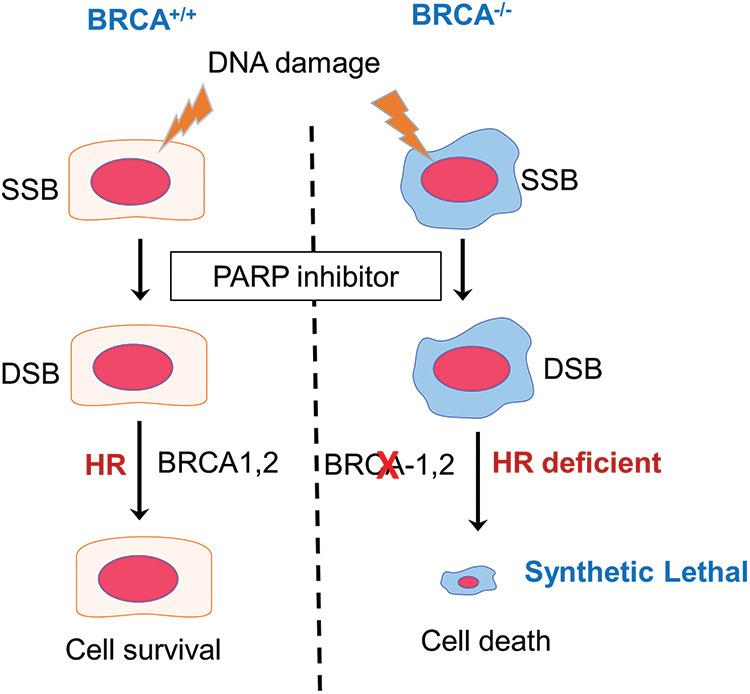
What Is Synthetic Lethality?
Our cells have several mechanisms for repairing damaged DNA. DNA damage can occur naturally during cell replication or as a result of various environmental and cellular factors. DNA repair systems help maintain genomic stability and allow cells to continue functioning normally.
Cancer cells, however, can develop genetic changes that impair one of these repair mechanisms. Although the cells may survive with this defect, they can become more dependent on other DNA repair pathways.
This creates a potential therapeutic vulnerability.
If a drug blocks another repair pathway that the cancer cell relies on, the combined effect may become lethal to the tumor cell. This is the basic concept of synthetic lethality.
The approach offers an important idea in precision cancer treatment: rather than simply trying to damage cancer cells, researchers can identify specific weaknesses in tumor biology and develop treatments that target those weaknesses.
How Do PARP Inhibitors Work?
PARP, or poly(ADP-ribose) polymerase, refers to a family of proteins involved in DNA damage response and repair. PARP1 and PARP2, in particular, play important roles in recognizing and responding to certain forms of DNA damage.
BRCA1 and BRCA2 are also involved in DNA repair, particularly in a pathway known as homologous recombination repair (HRR).
When cancer cells have certain harmful BRCA1 or BRCA2 alterations, their ability to repair specific types of DNA damage may be reduced. These cells may then become more dependent on alternative repair mechanisms, including those involving PARP.
PARP inhibitors block PARP-related activity. As a result, DNA damage can accumulate, particularly when cancer cells are undergoing replication. Tumor cells with significant DNA repair deficiencies may be less able to cope with this accumulated damage and can eventually die.
In simple terms:
The cancer cell already has a DNA repair weakness, and the PARP inhibitor blocks another important repair mechanism, creating a synthetic lethal effect.
Some PARP inhibitors can also cause “PARP trapping,” in which PARP proteins remain associated with damaged DNA and interfere with DNA replication and repair. This can further increase stress on cancer cells and contribute to their death.
What Do BRCA Mutations and HRD Mean?
BRCA1 and BRCA2 alterations are among the best-known biomarkers associated with PARP inhibitor treatment. However, BRCA mutations are not the only factor that may be relevant.
Some tumors have defects in other genes involved in DNA damage repair and may develop homologous recombination deficiency (HRD). These tumors may share certain biological characteristics with BRCA-deficient cancers.
For this reason, depending on the cancer type and treatment setting, doctors may consider molecular testing for BRCA1/2, HRD, or other DNA repair-related biomarkers when evaluating potential treatment options.
However, having a BRCA alteration or HRD does not automatically mean that a patient should receive a PARP inhibitor. Treatment decisions depend on several factors, including the type and stage of cancer, previous treatments, overall health, molecular test results, and the approved indication of the specific drug.
Which Cancers Can Be Treated With PARP Inhibitors?
PARP inhibitors have been incorporated into treatment strategies for several types of cancer, including certain cases of ovarian cancer, breast cancer, pancreatic cancer, and prostate cancer.
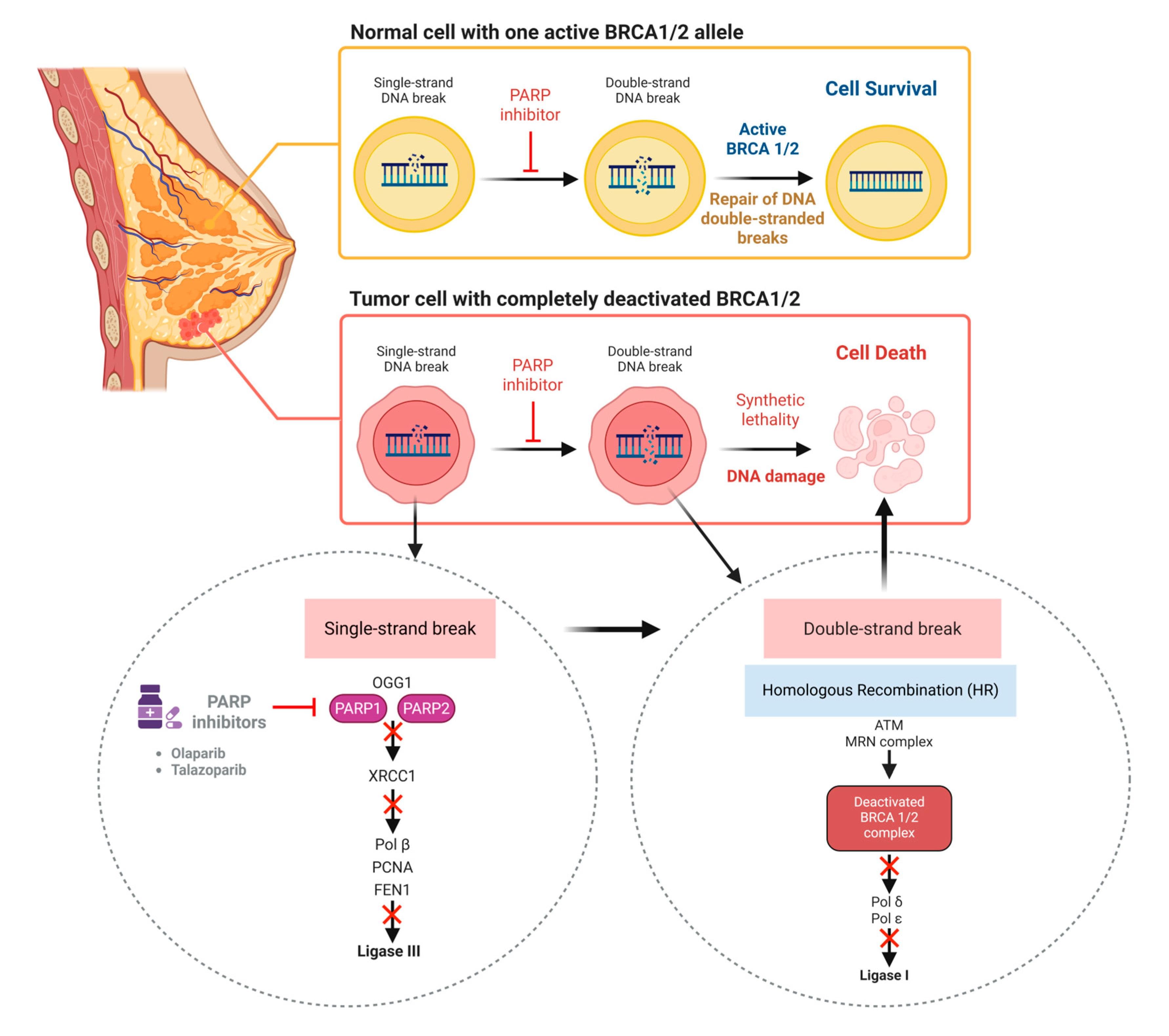
Well-known PARP inhibitors include:
- Olaparib
- Niraparib
- Rucaparib
- Talazoparib
Although these medicines belong to the same drug class, their approved indications are not identical. Some treatment settings require specific BRCA-related alterations, while others may involve HRR-related genetic changes or other defined clinical and molecular characteristics.
Therefore, PARP inhibitors should not be considered universal treatments for all cancer patients. Their potential benefit depends on the relationship between the cancer type, molecular profile, and individual clinical situation.
PARP Inhibitors and the Future of Precision Oncology
The importance of PARP inhibitors goes beyond their role as a class of anticancer medicines. They demonstrate an important principle of precision oncology: identify a biological weakness in cancer cells and use that weakness to guide treatment.
The connection between BRCA1/2 alterations, HRD, DNA repair and PARP inhibition is a clear example of how molecular biology can influence treatment decisions.
Cancer treatment is increasingly moving beyond simply asking where a tumor originated. Molecular characteristics, genetic alterations and biomarkers are becoming increasingly important when doctors evaluate treatment options.
This is one of the reasons why molecular testing has become an important part of modern oncology.
DengYuePharmacy and Precision Cancer Treatment
As precision medicine and innovative therapies continue to develop, DengYuePharmacy follows advances in targeted therapies, DNA damage repair, oncology medicines and other emerging treatment areas.
For healthcare institutions, pharmaceutical buyers and customers seeking information about innovative medicines, DengYuePharmacy provides pharmaceutical information and supply-chain services.
PARP inhibitors are prescription medicines, and treatment decisions should always be made by qualified healthcare professionals based on the patient’s cancer type, molecular test results, previous treatment history, overall health and the approved indication of the specific medicine.
The goal of precision medicine is not simply to find the “strongest” drug, but to identify a treatment that is better matched to the biological characteristics of the disease. Synthetic lethality and PARP inhibitors represent an important example of this approach in modern cancer treatment.
Related Posts
- Which Pancreatic Cancer Patients May Benefit from Immunotherapy? An Analysis of Biomarkers and Treatment Options
- Colorectal Cancer Immunotherapy: How MSI-H/dMMR Helps Identify Patients Who May Benefit
- Capivasertib vs Inavolisib: Comparing PI3K-AKT Pathway Targeted Therapies in HR+/HER2− Breast Cancer