New Drug for Biliary Tract Cancer! A Japanese Innovation Enters China, Adding a New Variable to the Global FGFR Landscape
New Drug for Biliary Tract Cancer! A Japanese Innovation Enters China, Adding a New Variable to the Global FGFR Landscape
For the global biliary tract cancer treatment landscape, FGFR2 is emerging as an increasingly important target for precision therapy.
As more drugs targeting the FGFR pathway receive regulatory approvals, patients with FGFR2 fusions or rearrangements are gaining access to more targeted treatment options, while China is becoming an increasingly important market in this field.
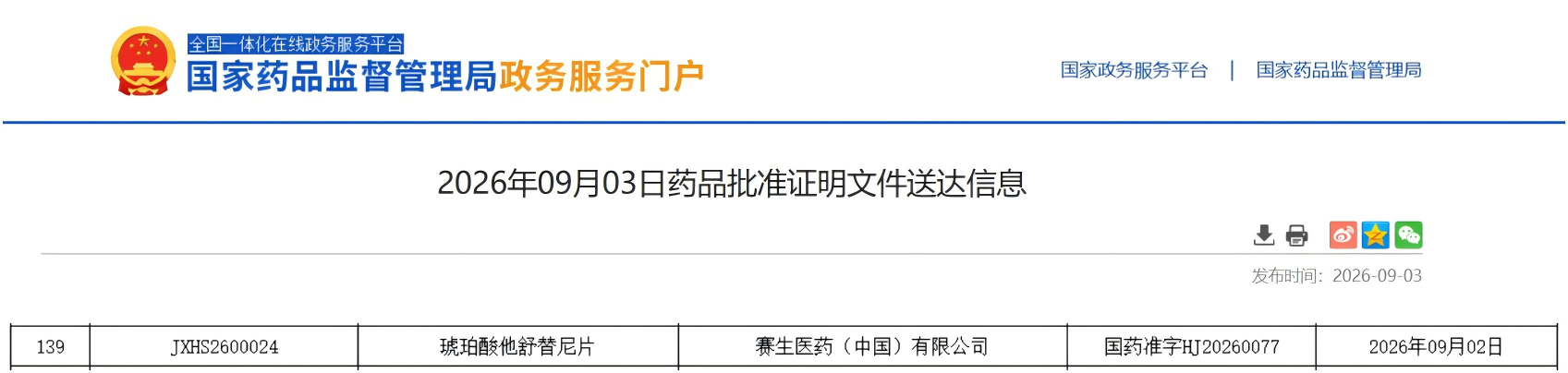
On September 3, 2026, the official website of China’s NMPA showed that SciClone’s application for tasurgratinib succinate tablets (Tasurgratinib), developed by Japan’s Eisai, had been approved in China. The drug is indicated for patients with unresectable biliary tract cancer who have failed prior chemotherapy and have been confirmed to have FGFR2 gene fusions or rearrangements.
Biliary Tract Cancer: A Significant Unmet Treatment Need Globally
Biliary tract cancer (BTC) refers to a group of malignant tumors arising in the biliary system, including intrahepatic cholangiocarcinoma (ICC), as well as hilar and distal cholangiocarcinoma.
Compared with more common cancers such as lung cancer and breast cancer, biliary tract cancer is relatively uncommon but remains difficult to treat.
Some patients are diagnosed at an advanced stage or are unable to undergo curative surgery, while treatment options after disease progression remain limited.
As a result, biliary tract cancer continues to present a significant unmet medical need.
One of the major developments in the global precision oncology landscape is the growing focus on molecular differences among patients with biliary tract cancer.
For a subset of patients with intrahepatic cholangiocarcinoma, FGFR2 fusions or rearrangements represent a clinically relevant molecular abnormality.
According to publicly available data, FGFR2 fusions or rearrangements occur in approximately 14% of patients with intrahepatic cholangiocarcinoma.
Although this represents a relatively small patient population, the alteration provides a druggable target that can be identified through molecular testing.
Why Is FGFR2 Receiving Increasing Global Attention?
FGFR, or fibroblast growth factor receptor, is an important signaling pathway involved in cell growth, differentiation and survival.
When FGFR2 undergoes a fusion or rearrangement, abnormal signaling may become persistently activated, potentially promoting tumor cell proliferation.
As a result, inhibiting the FGFR pathway has become an important area of research in precision treatment for biliary tract cancer.
This trend is not limited to China.
In recent years, several FGFR-related drugs have entered the biliary tract cancer treatment landscape globally, including targeted therapies designed for patients with FGFR2 fusions or rearrangements.
As different products receive regulatory approvals, FGFR has gradually evolved from a research focus into an important drug development segment in precision treatment for biliary tract cancer.
For global pharmaceutical companies, this also points to a more clearly defined market opportunity.
Biliary tract cancer treatment is increasingly moving from a disease-focused approach toward treatment based on specific molecular abnormalities.
Patient populations defined by clear biomarkers are also becoming important targets for innovative drug development and commercialization.
Tasurgratinib: The Globalization Path of a Japanese Innovation
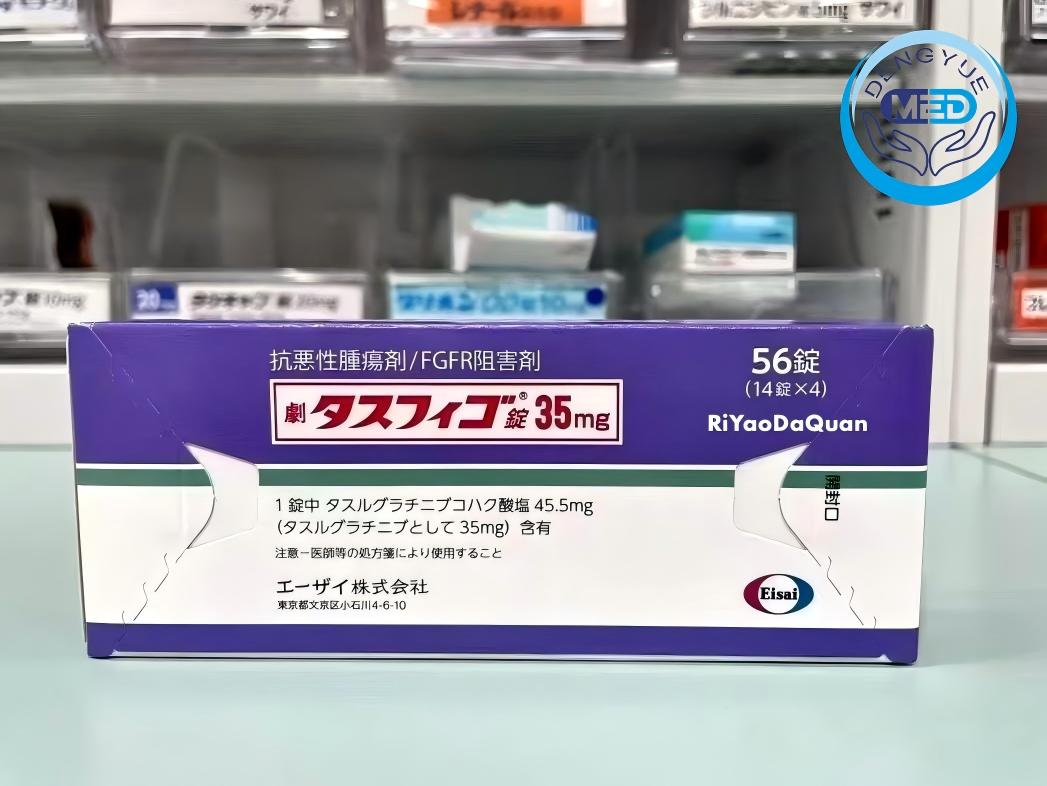
Tasurgratinib Tasfygo® was developed by Japan’s Eisai.
It is an oral selective fibroblast growth factor receptor (FGFR) tyrosine kinase inhibitor with selective inhibitory activity against FGFR1, FGFR2 and FGFR3.
In September 2024, tasurgratinib was first approved in Japan for the treatment of patients with unresectable biliary tract cancer harboring FGFR2 gene fusions or rearrangements whose disease had progressed following chemotherapy.
The Japanese-developed innovative drug subsequently began entering additional international markets.
In February 2025, SciClone entered into a licensing agreement with Eisai, under which SciClone obtained exclusive development and commercialization rights for tasurgratinib in China.
The partnership itself carries broader significance for the pharmaceutical industry.
For innovative drug developers, commercialization in overseas markets does not necessarily mean that the original developer operates independently in every market.
Working with local pharmaceutical companies can provide access to local expertise in clinical development, regulatory requirements and commercial environments, helping innovative drugs enter new markets more efficiently.
For Chinese pharmaceutical companies, meanwhile, bringing overseas innovative medicines into China is increasingly evolving beyond simple product licensing toward deeper local development and commercialization partnerships.
The entry of tasurgratinib into China is one example of this cross-border pharmaceutical collaboration model.
Chinese Clinical Data: A New Window into Global Development
One of the key foundations for tasurgratinib’s approval in China was a multicenter, open-label, single-arm Phase II pivotal clinical study conducted in China and Japan — the E7090-J000-201 study.
The study enrolled 63 patients with unresectable advanced or metastatic cholangiocarcinoma.
All patients had previously received gemcitabine-based combination chemotherapy and were confirmed to have FGFR2 gene fusions or rearrangements.
The primary endpoint of the study was objective response rate (ORR).
Updated results showed that, as of May 27, 2025, the median follow-up was 38 months.
Based on independent radiologic assessment, the ORR in the evaluable population was 31.7% (95% CI: 20.6%-44.7%), while the ORR among Chinese patients was 37.1% (95% CI: 21.5%-55.1%).
Overall survival (OS) was 20.1 months (95% CI: 11.3-22.4).
For overseas readers, the significance of these data goes beyond the approval of another drug in China.
More importantly, Chinese patients are increasingly participating in the global development of innovative medicines and becoming an important part of cross-regional drug development programs.
China has a large population of cancer patients, alongside a continuously developing clinical research and regulatory environment.
For innovative pharmaceutical companies seeking development opportunities in Asia and beyond, China is no longer simply a destination for drug commercialization.
It is also becoming an increasingly important market within global research and clinical development programs.
China’s FGFR Landscape Continues to Take Shape
With the approval of tasurgratinib, the competitive landscape for FGFR-related drugs in China’s biliary tract cancer market has further evolved.
Before tasurgratinib, three FGFR-related drugs had already been approved in China for biliary tract cancer:
- Pemigatinib, licensed by Innovent from Incyte;
- Tinengotinib, independently developed by TransThera; and
- Fanregratinib from HUTCHMED.
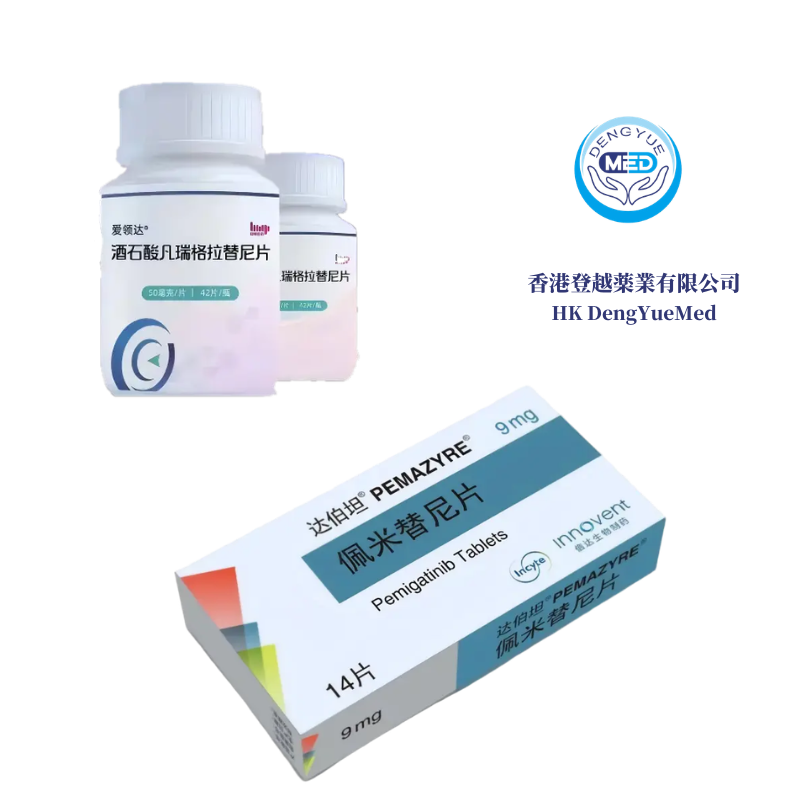
Among them, tinengotinib is a China-developed multitarget small-molecule kinase inhibitor designed to target multiple tumor-related pathways, including FGFR/VEGFR, JAK and Aurora.
With the approval of tasurgratinib, China has become an increasingly active market within the global landscape of FGFR drug development and commercialization for biliary tract cancer.
This also reflects a broader trend.
China’s oncology market is increasingly serving both as a destination for global innovative medicines and as a source of domestically developed innovations for international markets.
On the one hand, innovative drugs from markets such as Japan and the United States are entering China through licensing partnerships.
On the other hand, Chinese companies are continuing to advance their independently developed products toward international markets.
This two-way flow is reshaping traditional models of global pharmaceutical commercialization.
Conclusion: How Far Can Precision Treatment for Biliary Tract Cancer Go After FGFR2?
The global treatment landscape for biliary tract cancer is currently moving from traditional treatment approaches toward greater use of molecular profiling and precision medicine.
FGFR2 is only one important target among many.
As genetic testing becomes more widely adopted and additional molecular abnormalities are identified, patients with biliary tract cancer may increasingly be stratified according to different biomarkers and matched with more precise treatment options.
For patients, this could mean more potential treatment choices.
For pharmaceutical companies, it also points to a more specialized and increasingly globalized landscape for innovative drug development.
The entry of tasurgratinib into China will not fundamentally change the global biliary tract cancer treatment landscape.
But it does highlight one important trend:
Precision treatment targeting FGFR2 is moving beyond individual markets toward broader global commercialization, with China becoming an increasingly important part of this process.
As a China pharmaceutical exporter, DengYueMed will continue to follow developments in China’s pharmaceutical market and global pharmaceutical collaboration, providing overseas industry partners with information on China’s pharmaceutical market, pharmaceutical supply chains, and China pharmacy wholesale online services, while supporting cross-border business connections and helping global partners better understand and connect with China’s pharmaceutical market.

Disclaimer: This article is provided for educational and industry information purposes only. It is not medical advice, a treatment recommendation, or a substitute for professional medical consultation. Drug approvals, indications, and regulatory information should be verified with the relevant official regulatory authorities and product documentation.
Related Posts
- New Treatment Option for Non-Radiographic Axial Spondyloarthritis: Innovative Drug Ivarmacitinib Approved for This Indication
- China's First Generic Tiotropium Bromide and Olodaterol Inhalation Spray Approved: Ending an 8-Year Market Exclusivity and Bringing New Options for COPD Treatment
- HER2 ADCs for Brain Metastases: Global Leading Therapies and Clinical Advances