From Frequent Management to Long-Acting Treatment: How Plozasiran's Three-Month Dosing Is Changing FCS Care

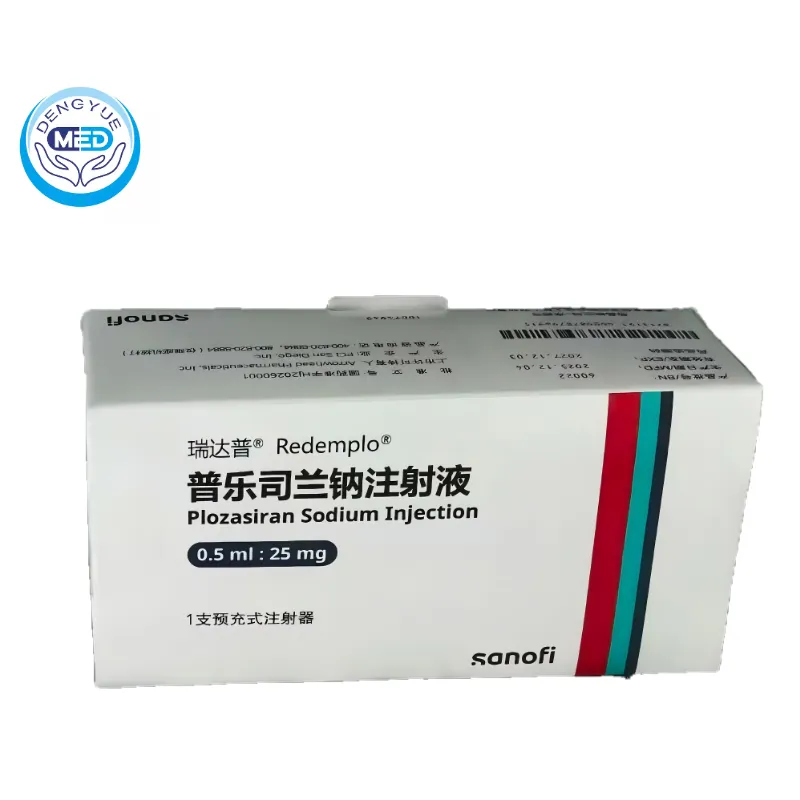
Recently, the world’s first APOC3 siRNA therapy, Plozasiran Sodium Injection (Redemplo®), has officially achieved commercial availability in China, providing a new long-acting treatment option for adult patients with Familial Chylomicronemia Syndrome (FCS).
Compared with traditional treatment approaches, Plozasiran adopts a dosing regimen of one subcutaneous injection every three months (only four injections per year). This not only represents an innovative breakthrough of RNA therapy in the field of rare diseases but also provides a more convenient approach for long-term disease management.
As a China pharmaceutical wholesaler focusing on global innovative drug developments, DengYueMed continues to share insights on cutting-edge therapies and pharmaceutical advancements, helping global partners stay informed about the latest progress in China and international innovative medicine markets.
What Is FCS? Why Do Patients Need Long-Term Management?
Familial Chylomicronemia Syndrome (FCS) is a rare autosomal recessive genetic disorder, with an estimated global prevalence of approximately 1 in 1 million to 2 million people.
Due to impaired key metabolic pathways responsible for triglyceride breakdown, patients are unable to effectively metabolize triglyceride-rich chylomicrons. Even with strict dietary control, triglyceride levels may remain persistently elevated above 10 mmol/L, and some patients may experience levels exceeding 20 mmol/L.
Persistently high triglyceride levels may lead to serious complications, including:
- Recurrent acute pancreatitis
- Chronic abdominal pain
- Hepatosplenomegaly
- Eruptive xanthomas
- Milky or “milk-like” blood appearance
- Reduced long-term quality of life
Among these complications, acute pancreatitis is one of the most serious risks associated with FCS and represents a major cause of hospitalization and increased disease burden.
Why Do Traditional Treatment Approaches Remain Limited?
Currently, the foundation of FCS management remains strict dietary fat restriction.
Patients typically need to:
- Maintain a very low-fat diet over the long term;
- Avoid alcohol consumption;
- Manage body weight;
- Regularly monitor triglyceride levels;
- Receive medication based on physicians’ recommendations.
However, because FCS is a genetic disorder, traditional lipid-lowering therapies, such as statins and fibrates, have limited effectiveness in many patients with classic FCS. As a result, some patients continue to experience difficulty achieving adequate triglyceride control despite long-term disease management.
Therefore, developing new therapies targeting the underlying disease mechanism has become an important focus in FCS treatment.
One Injection Every Three Months: How Does Plozasiran’s Long-Acting RNA Therapy Change FCS Management?
In recent years, advances in small interfering RNA (siRNA) technology have brought new breakthroughs to the treatment of lipid metabolism disorders.
Plozasiran is the world’s first small interfering RNA (siRNA) therapy targeting apolipoprotein C-III (APOC3) mRNA.
Rather than directly lowering blood lipid levels, it works by silencing APOC3 mRNA, reducing APOC3 protein expression, and decreasing the production and circulation of triglyceride-rich lipoproteins, thereby achieving sustained triglyceride reduction.
Compared with traditional approaches that may require frequent medication use or disease management, Plozasiran is administered through one subcutaneous injection every three months, meaning only four injections per year.
For FCS patients requiring long-term treatment, this long-acting dosing approach may offer several potential benefits:
- Reducing treatment frequency and improving treatment adherence;
- Helping maintain more stable triglyceride control;
- Reducing the burden associated with long-term disease management;
- Providing a more convenient option for long-term treatment.
Important: Medication therapy should always be combined with dietary management and a comprehensive treatment plan developed by healthcare professionals. Patients should never adjust or discontinue treatment without medical guidance.
Clinical Studies Demonstrate Sustained Triglyceride Reduction
The approval of Plozasiran in China was primarily supported by multiple clinical studies, including the Phase III PALISADE study.
PALISADE was a randomized, double-blind, placebo-controlled Phase III clinical trial that enrolled 75 adult patients with Familial Chylomicronemia Syndrome (FCS).
The study demonstrated:
- Approximately 78%–80% median triglyceride reduction at Month 10 versus placebo-adjusted results;
- Achievement of all key secondary endpoints;
- Sustained triglyceride lowering throughout the study period;
- Favorable overall safety and tolerability.
These findings further validated the clinical value of APOC3-targeted RNA therapy and provided important evidence supporting long-term disease management.
Plozasiran Has Achieved Commercial Availability in China
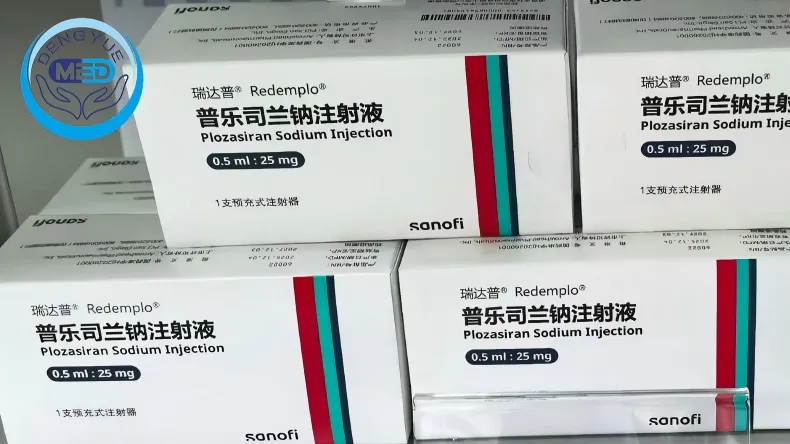
On July 22, 2026, Sanofi announced that Plozasiran Sodium Injection (Redemplo®) had officially achieved commercial availability in China.
The therapy is indicated, in addition to dietary control, to reduce triglyceride levels in adult patients with Familial Chylomicronemia Syndrome (FCS).
Previously, Plozasiran received approval from the National Medical Products Administration (NMPA) in January 2026, becoming:
- The first approved treatment for Familial Chylomicronemia Syndrome (FCS) in China
- The world’s first APOC3 siRNA therapy
This milestone provides eligible patients in China with access to a more precise and long-lasting treatment option while highlighting the expanding application of RNA interference technology in metabolic disease treatment.
FCS Treatment Is Moving Toward Precision and Long-Acting Therapy
With the rapid development of precision medicine, treatment strategies for FCS continue to evolve.
Historically, disease management primarily relied on dietary restriction and prevention of complications.
Today, innovative therapies targeting APOC3 are shifting treatment toward addressing the underlying disease mechanism rather than simply managing symptoms.
For patients requiring lifelong treatment, one injection every three months represents more than a reduction in dosing frequency—it reflects a new generation of long-acting precision therapies designed to improve adherence, convenience, and long-term disease control.
As RNA interference technologies continue to advance, future treatment options are expected to become even more personalized and effective.
Conclusion
For patients living with Familial Chylomicronemia Syndrome, treatment aims not only to reduce triglyceride levels but also to minimize the risk of life-threatening complications such as acute pancreatitis while improving long-term quality of life.
The commercialization of Plozasiran Sodium Injection marks an important milestone in the evolution of rare disease treatment.
Its innovative three-month dosing regimen demonstrates how RNA therapies are transforming long-term disease management by providing sustained efficacy with fewer injections.

As a Hong Kong-based pharmaceutical wholesaler, DengYueMed remains committed to tracking the latest developments in innovative medicines, rare diseases, and RNA therapeutics.
Through professional pharmaceutical sourcing, global supply chain services, and timely industry insights, we strive to help pharmaceutical distributors, healthcare institutions, and partners worldwide gain access to the latest pharmaceutical innovations from China and beyond.
If you would like to learn more about innovative rare disease therapies or pharmaceutical sourcing from China, stay connected with DengYueMed for the latest industry updates.