World’s First Semaglutide Nasal Spray Approved by the FDA to Enter Clinical Trials
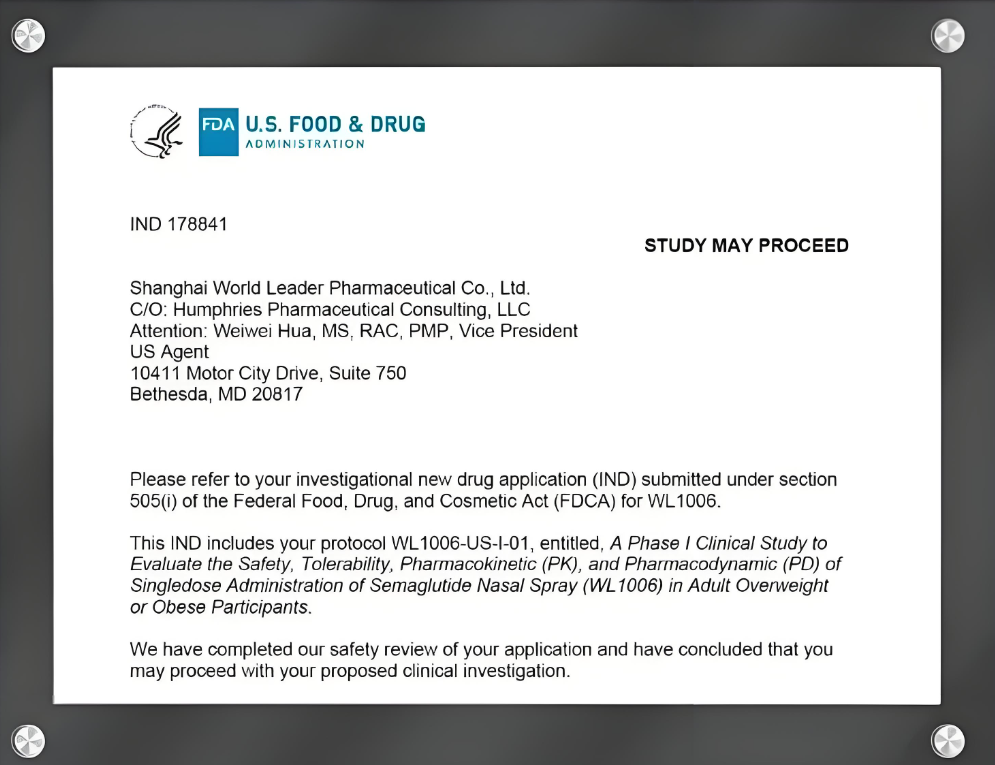
World’s First Semaglutide Nasal Spray Approved by the FDA to Enter Clinical Trials
In recent years, GLP-1 receptor agonists have demonstrated strong market potential in the treatment of diabetes and obesity. Among them, Semaglutide has emerged as one of the most successful drugs globally.
Recently, a semaglutide nasal spray received approval from the U.S. FDA to enter the clinical research stage, drawing widespread attention across the pharmaceutical industry.
This development suggests that GLP-1 drugs may not be limited to injections or oral tablets in the future. Nasal spray formulations could become an innovative method of drug delivery.
The growing global interest in innovative pharmaceutical development is also reflected in trends discussed in
China’s Innovative Drugs Are Entering the Global Healthcare Supply Chain.
Semaglutide: A Star Drug in the GLP-1 Field
Semaglutide is a GLP-1 receptor agonist (GLP-1 RA) primarily used to treat type 2 diabetes and obesity.
By mimicking the action of the natural GLP-1 hormone, the drug can:
- Stimulate insulin secretion
- Suppress glucagon release
- Slow gastric emptying
- Increase feelings of fullness
Currently, semaglutide products developed by Novo Nordisk are widely used worldwide, including:
- Ozempic – diabetes treatment
- Wegovy – weight management
- Rybelsus – oral semaglutide
As global obesity rates continue to rise, demand for semaglutide continues to grow rapidly.

Nasal Spray Formulation: A New Direction for GLP-1 Drugs
Most semaglutide products currently on the market are injectable or oral formulations. However, injectable treatments may present adherence challenges for some patients.
A nasal spray formulation may offer several potential advantages.
1. More Convenient Administration
Patients would not need injections or tablets.
The medication could simply be delivered through the nasal cavity.
2. Rapid Absorption
The nasal mucosa is highly vascularized, which may allow drugs to enter the bloodstream quickly.
3. Improved Patient Compliance
For patients requiring long-term treatment for diabetes or obesity, non-invasive delivery methods are often easier to accept.
Because of these factors, semaglutide nasal spray is considered a potential breakthrough in GLP-1 drug delivery technology.
What Does FDA Approval for Clinical Trials Mean?
Receiving FDA approval to enter the clinical stage typically indicates that the drug has completed preclinical research and safety evaluations.
The semaglutide nasal spray will now move through the standard clinical trial process.
Phase I Clinical Trials
Evaluate the drug’s safety and tolerability in humans.
Phase II Clinical Trials
Investigate efficacy and optimal dosage.
Phase III Clinical Trials
Large-scale trials designed to confirm safety and therapeutic effectiveness.
If these trials are successfully completed, the drug may eventually submit a New Drug Application (NDA) to the FDA.
Understanding regulatory pathways has become increasingly important in modern drug development, particularly as more innovative therapies enter international markets, similar to trends discussed in
Chinese EGFR and MET Targeted Therapies in NSCLC.
The Expanding GLP-1 Drug Market
In recent years, GLP-1 drugs have become one of the fastest-growing segments in the global pharmaceutical industry.
Industry forecasts suggest that the GLP-1 market may reach hundreds of billions of dollars in the coming years.
Key drivers include:
- Rising global obesity rates
- Increasing numbers of type 2 diabetes patients
- Continuous innovation in drug formulations
Within this context, nasal spray formulations may significantly expand the therapeutic possibilities of GLP-1 drugs.
Future Outlook
The FDA approval allowing semaglutide nasal spray to enter clinical trials represents an important innovation in drug delivery technology for GLP-1 therapies.
If clinical studies demonstrate positive results, this product could provide a more convenient treatment option for patients with diabetes and obesity.
As global pharmaceutical research continues to advance, the GLP-1 field is expected to remain one of the most competitive areas in innovative drug development over the next decade.
Related Posts
- Compliance Upgrades in Cross-Border Pharmaceutical Trade
- Profits from Weight-Loss Drugs Fuel a Growing Gray Market: How Can Global Pharmaceutical Regulation Achieve Long-Term Governance?
- Lilly’s Triple Agonist Retatrutide Shows Promising Phase III Results: Up to 2% HbA1c Reduction and Nearly 17% Weight Loss