Oral Weight-Loss Drug Welcomes a New Competitor: AI-Designed Drug MDR-001 Enters Phase III Clinical Trials
Oral Weight-Loss Drug Welcomes a New Competitor: AI-Designed Drug MDR-001 Enters Phase III Clinical Trials
In recent years, the global weight-loss drug market has continued to gain momentum, with innovation in obesity and metabolic disease treatments accelerating rapidly. Following the market enthusiasm sparked by GLP-1 therapies, an increasing number of products featuring novel mechanisms of action and new formulations have entered clinical development.
Recently, a major development emerged from China’s AI-driven pharmaceutical sector: MDR-001, an AI-assisted small-molecule drug independently developed by Hangzhou DTRM Biopharma Co., Ltd., has officially initiated a Phase III clinical trial in China. As a highly anticipated oral weight-loss therapy, the clinical progress of MDR-001 not only injects fresh momentum into the obesity treatment market but also once again places the application of artificial intelligence in drug development at the center of industry attention.
MDR-001 Enters Phase III Clinical Trials as AI Drug Development Reaches a Critical Validation Stage
In innovative drug development, Phase III clinical trials are generally regarded as one of the most important stages and often represent the final step before regulatory approval. A drug’s entry into Phase III indicates that it has completed preliminary evaluations of safety and efficacy and is ready for validation in a larger patient population.
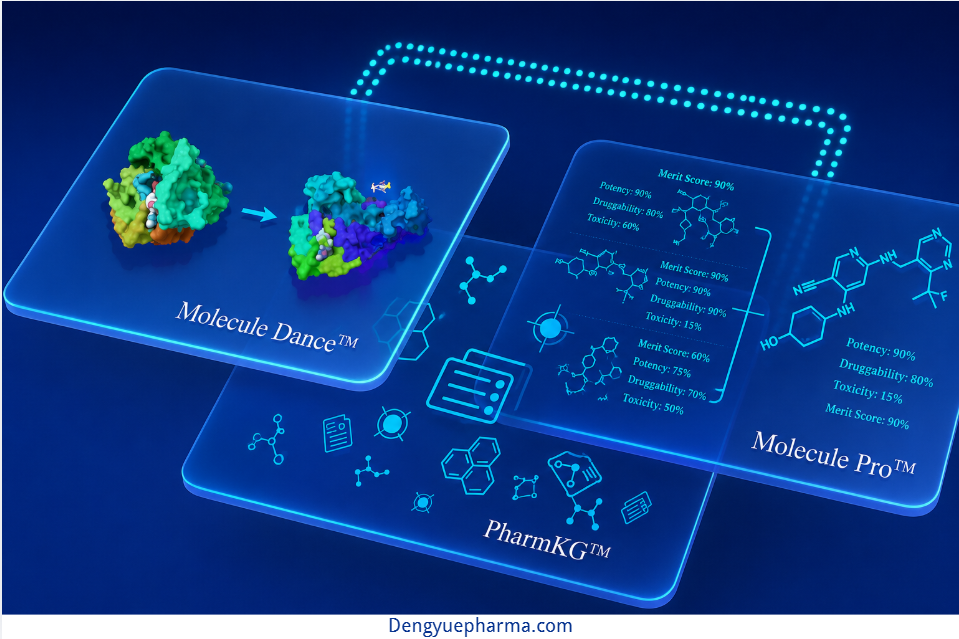
One of the most notable aspects of MDR-001 is the incorporation of AI-assisted drug design throughout its development process. Traditionally, drug discovery has required research teams to conduct extensive screening and optimization of vast numbers of compounds over many years. AI technology, however, can analyze biological data and chemical structure information through advanced algorithms, enabling the more efficient identification of promising candidate molecules.
Industry experts believe that MDR-001’s progression into Phase III clinical trials represents not only an important milestone for a single product but also a valuable real-world case study demonstrating AI’s role in innovative drug development. If subsequent trial results meet expectations, confidence in AI-driven pharmaceutical development models is likely to increase even further.
The Global Weight-Loss Drug Market Continues to Expand
Obesity has become one of the most significant public health challenges worldwide. As the links between obesity and chronic conditions such as diabetes, cardiovascular disease, and hypertension continue to be established, demand for weight-management therapies is steadily increasing.
In recent years, the global weight-loss drug market has experienced rapid expansion, with several blockbuster products gaining widespread recognition. At the same time, patient expectations regarding treatment options are evolving. Current market priorities are largely focused on:
- Better weight-loss outcomes
- Improved long-term safety profiles
- More convenient administration methods
- Broader patient applicability
Within this market environment, oral weight-loss medications are gradually becoming a key strategic focus for major pharmaceutical companies.
Why Are Oral Formulations Receiving So Much Attention?
Many of today’s most prominent weight-loss therapies are administered through injections. Although these products have demonstrated strong clinical efficacy, some patients remain hesitant about long-term injectable treatments.
By comparison, oral medications offer significant convenience advantages. For patients requiring long-term weight management, oral administration generally means a simpler treatment process and better treatment adherence. In addition, oral formulations may help expand access to therapy among a broader patient population.
As a result, a clear trend has emerged in global obesity drug development: more companies are accelerating investments in oral weight-loss therapies in an effort to meet growing demand for convenient treatment options. As an oral small-molecule drug, MDR-001 is therefore attracting considerable attention regarding its future clinical performance.
AI Is Transforming Traditional Drug Development Models
For decades, pharmaceutical research and development has faced challenges including lengthy development timelines, high costs, and low success rates. Bringing an innovative drug from laboratory discovery to regulatory approval often requires more than a decade and substantial financial investment.
As artificial intelligence technologies continue to mature, the global pharmaceutical industry is increasingly exploring ways to use AI to improve R&D efficiency. Today, AI is being applied across multiple stages of the development process, including:
- Disease target discovery
- Candidate molecule screening
- Drug structure optimization
- Clinical data analysis
- R&D decision support
Through machine learning and deep learning technologies, AI can rapidly process large volumes of complex data and help researchers uncover patterns that may be difficult to identify using traditional methods.
Many industry observers believe that AI will not replace scientists but will become an essential tool in innovative drug development. MDR-001’s advancement into Phase III clinical trials is widely viewed as an important example of AI technology moving from laboratory research toward real-world industrial application.
China’s AI-Driven Pharmaceutical Innovation Continues to Advance
In recent years, China has significantly strengthened its innovative drug development capabilities, while the integration of artificial intelligence and life sciences has accelerated. An increasing number of domestic companies are exploring AI-assisted R&D approaches and achieving meaningful progress in oncology, autoimmune diseases, metabolic disorders, and rare diseases.
From an industry perspective, future competition will extend beyond products themselves and increasingly focus on:
- R&D efficiency
- Data capabilities
- Technology platform development
As more AI-enabled drug development programs enter clinical stages, Chinese companies are evolving from technology explorers into important contributors to global pharmaceutical innovation.
The Industry Enters a New Phase
The initiation of Phase III clinical trials for MDR-001 in China marks a new stage in the development of AI-assisted drug discovery in the country. From growing demand in the obesity treatment market to the increasingly deep integration of artificial intelligence into drug discovery and development, the global pharmaceutical industry is undergoing profound transformation.
For the obesity treatment sector, new oral therapeutic options could lead to a broader range of future treatment choices. For the AI pharmaceutical industry, Phase III clinical trials represent a critical milestone in validating the value of the technology.
As more AI-designed drugs advance into late-stage clinical development, the role of artificial intelligence in pharmaceutical innovation is expected to become increasingly evident. In the future, drug development may become more efficient, precise, and intelligent, while this technology-driven wave of innovation continues to redefine the direction of the global pharmaceutical industry.
Conclusion
The entry of MDR-001 into Phase III clinical trials represents an important milestone for both obesity treatment and AI-assisted pharmaceutical innovation. As artificial intelligence becomes increasingly integrated into every stage of drug development, pharmaceutical companies may be able to accelerate discovery timelines, improve development efficiency, and bring innovative therapies to patients more quickly.
For the weight-loss drug market, oral therapies such as MDR-001 may help expand treatment accessibility and provide greater convenience for patients. For the broader pharmaceutical industry, successful AI-designed drug programs could fundamentally reshape how future medicines are discovered and developed.
DengYueMed will continue to monitor global developments in AI-driven drug discovery, obesity treatment innovations, and emerging pharmaceutical technologies while helping innovative therapies advance toward broader patient access and global commercialization.