The First AI-Designed Drugs Enter Clinical Trials: A Historic Breakthrough for the Pharmaceutical Industry
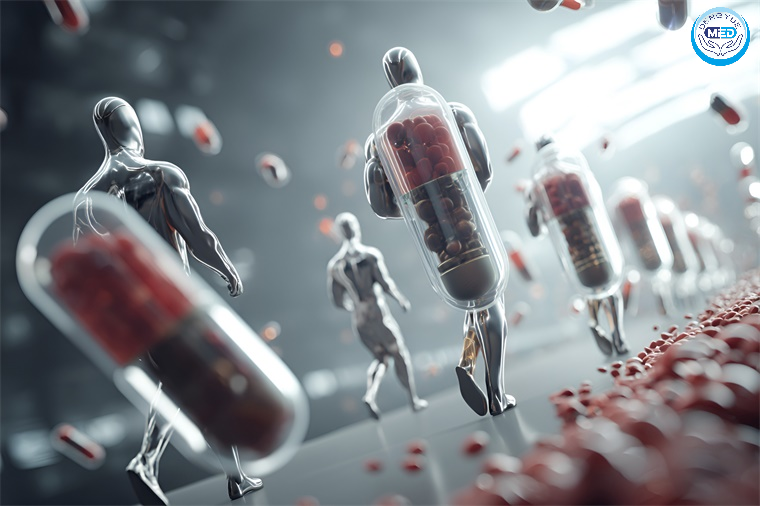
In recent years, Artificial Intelligence (AI) has been transforming the global healthcare industry at an unprecedented pace. From disease screening and medical imaging analysis to precision medicine and drug discovery, AI technologies are gradually permeating every stage of pharmaceutical innovation. Today, a scenario once considered futuristic has become reality—the world’s first AI-designed drugs have officially entered clinical trials.
This milestone not only represents a major breakthrough for AI in the life sciences but also signals a profound transformation in the global drug development model. For an industry that has long struggled with high costs, high risks, and low success rates, the entry of AI-designed drugs into clinical testing is widely regarded as another revolutionary wave of innovation following genetic engineering and biopharmaceuticals.
Why Has Drug Development Always Been Considered a “High-Risk Endeavor”?
For decades, drug development has been one of the most complex and time-consuming innovation processes in the world. From identifying disease targets to bringing a drug to market, an innovative therapy typically undergoes basic research, compound screening, preclinical studies, Phase I–III clinical trials, and regulatory review. The entire process often takes 10 to 15 years and may require investments of several billion dollars.
Even more challenging is the fact that the vast majority of candidate drugs never reach the market. Statistics show that fewer than 10% of compounds discovered in laboratories ultimately receive regulatory approval. Many projects are discontinued due to insufficient efficacy, safety concerns, or limited commercial viability.
As a result, pharmaceutical companies worldwide have consistently sought ways to shorten development timelines, improve R&D efficiency, and reduce costs. It is against this backdrop that artificial intelligence began making its way into drug discovery.
How Is AI Transforming Traditional Drug Discovery?
Traditional drug development relies heavily on scientific expertise and extensive laboratory experimentation. For example, after identifying a potential therapeutic target, researchers must search through vast libraries of compounds to find candidates that may produce therapeutic effects, followed by repeated rounds of optimization and testing. This process often requires enormous amounts of time and resources.
AI’s strength lies in its ability to process massive datasets and identify complex patterns. Through machine learning, deep learning, and generative AI technologies, AI can rapidly analyze:
- Genomic data
- Protein structure data
- Drug databases
- Clinical research information
- Medical literature
Based on these analyses, AI can predict which molecules are most likely to bind to disease targets and even generate entirely new candidate drug structures.
Tasks that previously required years of laboratory work may now be completed in a matter of months or even weeks. This dramatic increase in efficiency has quickly made AI one of the most closely watched technologies in pharmaceutical innovation.
Why Are the First AI-Designed Drugs Receiving So Much Attention?
In recent years, several international biotechnology companies have announced that drugs designed using AI platforms have advanced into human clinical trials.
This development means AI is no longer merely a supporting research tool; it is now actively participating in the core process of innovative drug development. Compared with traditional approaches, AI-designed drugs offer several significant advantages:
- Faster identification of therapeutic targets
- More efficient screening of candidate molecules
- Lower early-stage development costs
- Shorter drug development timelines
- Higher probability of successful drug design
More importantly, AI can explore chemical spaces that are difficult or impossible to access through conventional methods.
What Progress Has AI-Designed Drug Development Achieved?
Currently, AI-designed drugs entering clinical trials are primarily focused on the following therapeutic areas:
- Cancer treatment
- Idiopathic pulmonary fibrosis
- Autoimmune diseases
- Neurological disorders
- Metabolic diseases
In some cases, candidate drugs have progressed from target discovery to clinical trials in less than two years, whereas traditional drug development often requires four to six years or more during the same stage.
For example, certain AI platforms can automatically analyze millions of candidate molecules and optimize them based on efficacy, safety, and pharmacokinetic properties, ultimately selecting the most promising drug structures.
Although these therapies must still undergo rigorous clinical validation, their progression into human trials already demonstrates the practical value of AI-driven drug design strategies. This is one of the key reasons why both global capital markets and the pharmaceutical industry are paying close attention to AI-powered drug development.
Rare Diseases May Become the Biggest Beneficiaries
Among all potential applications, rare diseases are widely regarded as one of the most promising areas for AI-driven drug discovery. More than 7,000 rare diseases have been identified worldwide, yet the vast majority still lack effective treatment options.
Traditionally, pharmaceutical companies tend to focus on diseases with larger patient populations. For rare diseases with limited market size, the balance between R&D investment and commercial return is often difficult to achieve.
AI has the potential to change this equation. By reducing discovery costs and improving research efficiency, AI can help scientists identify therapeutic targets more rapidly and discover novel molecules with therapeutic potential.
This means diseases that were previously overlooked due to commercial constraints may receive greater research attention in the future. For hundreds of millions of rare disease patients worldwide, this represents a highly encouraging development.
The Global Pharmaceutical Landscape Is Changing
The rise of AI-powered drug development is also reshaping the competitive landscape of the pharmaceutical industry. In the past, a company’s competitive advantage was primarily determined by factors such as R&D funding, laboratory infrastructure, and clinical resources.
In the AI era, new competitive strengths are emerging:
- High-quality data resources
- Artificial intelligence algorithm capabilities
- Computing infrastructure
- Cross-disciplinary research teams
- Digital innovation capacity
An increasing number of traditional pharmaceutical companies are now partnering with AI firms to develop the next generation of innovative therapies.
At the same time, regulatory authorities around the world have begun exploring evaluation frameworks for AI-assisted drug development to ensure that innovation progresses without compromising drug safety.
It is foreseeable that AI-driven drug discovery will become one of the most important forces shaping pharmaceutical innovation over the next decade.
Conclusion
The entry of the world’s first AI-designed drugs into clinical trials marks the official arrival of artificial intelligence at the core of innovative drug development. From shortening development timelines and reducing costs to identifying entirely new therapeutic targets and advancing precision medicine, AI is creating unprecedented opportunities for the global pharmaceutical industry.
Although AI-designed drugs remain in the early stages of development, their demonstrated potential is already significant enough to reshape the future rules of drug discovery. As algorithms continue to improve, data resources expand, and additional clinical results emerge, artificial intelligence is expected to become a major driver of the next pharmaceutical revolution.
In the future, drug development will no longer be solely a laboratory-based endeavor. Instead, it will become a new chapter defined by the deep integration of artificial intelligence, life sciences, and clinical medicine. For patients around the world, the ultimate significance of this transformation lies in faster, more precise, and more effective treatment options—and greater hope in the fight against disease.
DengYueMed believes that as AI technology continues to integrate with innovative drug research and development, patients worldwide may gain faster access to breakthrough therapies, while the pharmaceutical industry enters a new era characterized by greater efficiency, precision, and intelligence.
Related Posts
- What Do RET and BRAF Gene Changes Mean in Thyroid Cancer?
- What Is the Difference Between Nasopharyngeal Cancer, Oropharyngeal Cancer, and Laryngeal Cancer? Understanding the Key Differences Among Three Head and Neck Cancers
- Why Are Solid Tumors More Difficult to Treat Than Blood Cancers? Uncovering the Key Challenges Behind Cancer Therapy