How AI Reshapes Drug R&D: A Full-Chain Innovation from Target Discovery to Clinical Trials
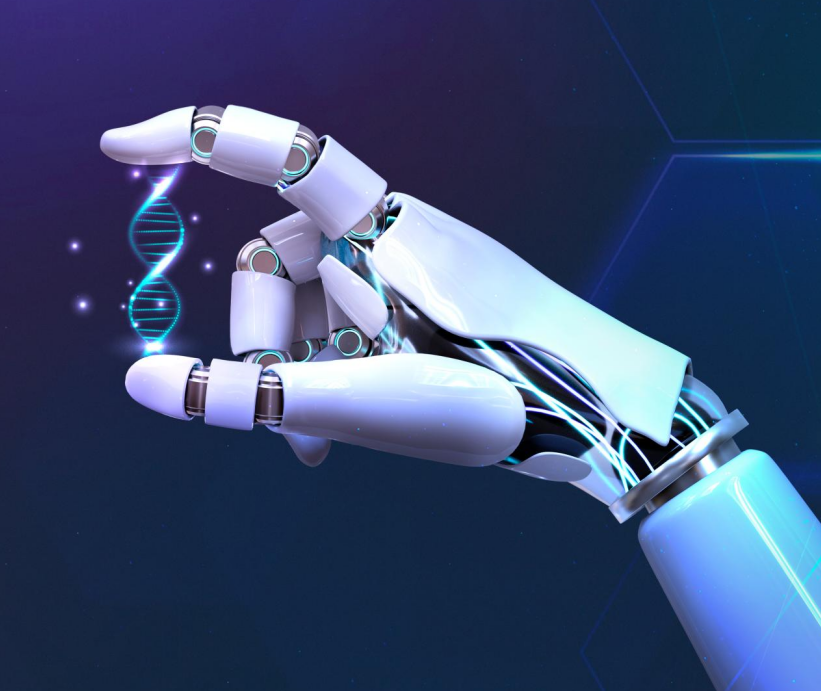
As global pharmaceutical innovation gradually enters a stage of high complexity and high investment, traditional drug research and development (R&D) is facing multiple challenges of “long cycle, high cost, and low success rate.” According to statistics, it takes an average of more than 10 years for an innovative drug to go from early research to final market launch, with R&D costs reaching billions of US dollars.
Against this backdrop, artificial intelligence (AI) is accelerating its integration into the pharmaceutical R&D system and has become a key driving force behind industrial transformation. From target discovery to molecular design, and then to clinical trial optimization, AI is reconstructing the underlying logic of new drug development.
I. Target Discovery: From “Experience-Driven” to “Data-Driven”
Target discovery is the starting point of drug R&D and a key factor determining success or failure. Traditional methods rely heavily on biological hypotheses and experimental verification, which are both time-consuming and highly uncertain.
The introduction of AI technology enables researchers to conduct systematic analysis based on multi-omics data, including genomics, proteomics, and metabolomics. Through machine learning and deep learning models, researchers can rapidly identify complex relationships between disease-related genes, proteins, and signaling pathways, thereby predicting potential therapeutic targets with higher accuracy.
For example, AI can mine key regulatory nodes by constructing disease network models and identify “hidden targets” that were difficult to discover using conventional approaches. This capability transforms target discovery from a broad exploratory process into a more precise and data-driven strategy, significantly improving early-stage R&D efficiency.
II. Molecular Design: From “Iterative Trial-and-Error” to “Intelligent Generation”
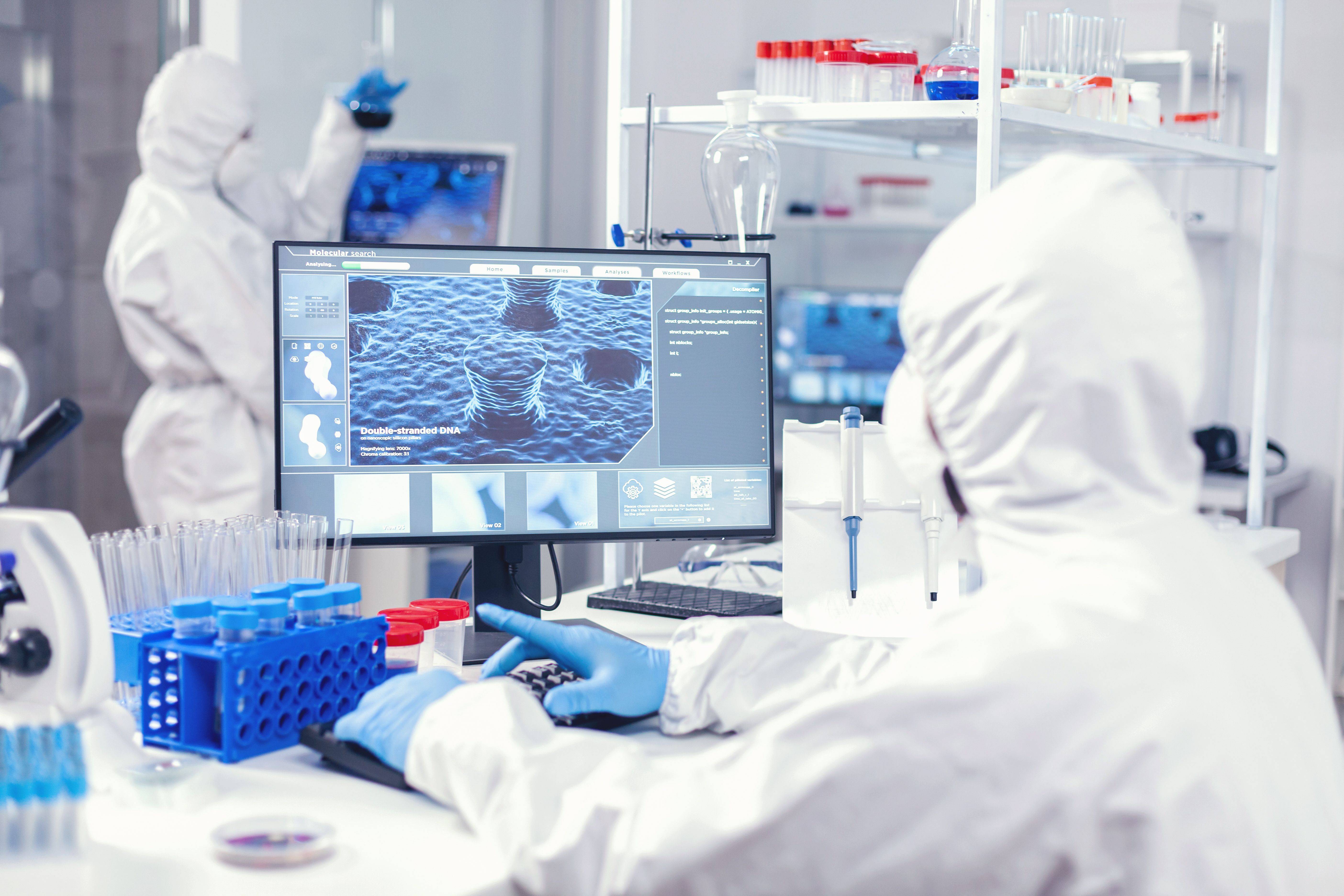
In traditional drug R&D, molecular design often depends on the experience of medicinal chemists, who repeatedly synthesize and screen candidate compounds to optimize efficacy. This process consumes enormous amounts of time and resources.
AI is fundamentally changing this model.
Based on generative AI models — including generative adversarial networks (GANs), variational autoencoders (VAEs), and reinforcement learning algorithms — researchers can now design entirely new molecular structures in silico. These systems can simultaneously optimize multiple critical indicators, including:
- Target binding affinity
- Selectivity
- Toxicity
- Pharmacokinetic properties
This enables true multi-objective optimization in drug discovery.
In addition, AI can predict interactions between molecules and protein structures, helping researchers identify promising candidates earlier in development. As a result, molecular design is evolving from an “experiment-led” approach into an “algorithm-driven” process that shortens development timelines and reduces failure risk.
Currently, some industry participants have begun integrating AI into the R&D process. For example, DengYue Pharmaceutical is exploring AI-assisted small-molecule drug design pathways by integrating global innovative resources and computational technology platforms to improve screening efficiency and increase the success rate of candidate compounds. This collaborative model combining “technology + resources” is becoming an important development direction for next-generation pharmaceutical enterprises.
III. Clinical Trial Optimization: From “High Uncertainty” to “Refined Management”
Clinical trials remain one of the most expensive and risky stages of drug development. Traditional trials face significant challenges in patient recruitment, study design, and data analysis.
AI is bringing systematic optimization to this process.
First, AI can analyze electronic medical records and real-world data to rapidly identify patients who meet enrollment criteria, improving recruitment efficiency and reducing selection bias.
Second, AI can simulate the effects of different trial designs, helping optimize dosage selection, sample size, and trial duration.
More importantly, AI enables real-time analysis of clinical data, allowing researchers to identify potential safety signals or efficacy trends during ongoing studies. This supports the implementation of adaptive clinical trials, which dynamically optimize study protocols and improve overall trial success rates while reducing development costs.
IV. Challenges and Future Directions of AI-Driven Pharmaceutical R&D
Although AI offers enormous potential in pharmaceutical R&D, several challenges remain.
1. Data Quality and Standardization
AI model performance depends heavily on data quality. However, current medical datasets still face issues such as:
- Inconsistent standards
- Missing data
- Privacy restrictions
- Fragmented data systems
These limitations can reduce the reliability and scalability of AI models.
2. Model Interpretability
Many AI systems still operate as “black-box” algorithms, making their decision-making processes difficult to interpret. This remains a significant obstacle in regulatory approval and clinical adoption.
3. Interdisciplinary Collaboration
Successful AI pharmaceutical development requires close collaboration between:
- Algorithm scientists
- Biologists
- Clinical experts
- Regulatory specialists
Building efficient interdisciplinary collaboration mechanisms will be essential for unlocking the full potential of AI in medicine.
Future Development Trends
Looking ahead, AI-driven pharmaceutical R&D is expected to deepen in several important directions:
- Precision medicine and personalized treatment
- Multi-target and complex disease therapeutic strategies
- Real-time clinical decision support systems
- Digitalized and automated R&D platforms
As an important participant in pharmaceutical wholesale and international distribution, DengYue Pharma continues to closely monitor the transformation of the industry driven by AI innovation. By connecting global pharmaceutical resources with market demand, DengYue plays a bridging role in improving drug accessibility and supporting the commercialization of innovative therapies.
This resource-integration capability within the pharmaceutical circulation sector is expected to become increasingly important in the AI era.
Conclusion
AI is reshaping the pharmaceutical R&D system with unprecedented depth and breadth. From target discovery to molecular design and clinical trial optimization, this technology is significantly improving the efficiency and success rate of innovative drug development.
More importantly, AI is not only changing how drugs are developed but also reconstructing how drugs are connected, distributed, and accessed. In this process, pharmaceutical circulation enterprises such as DengYue Pharma can help accelerate the transition of innovative medicines from technological breakthroughs to real-world patient benefits by integrating global resources and market networks.
The pharmaceutical industry is now entering a new era in which AI-driven innovation may fundamentally redefine the future of medicine.