From CAR-T to Checkpoint Inhibitors: A Comparative Overview of Major Immunotherapy Modalities
From CAR-T to Checkpoint Inhibitors
Immunotherapy has fundamentally reshaped the landscape of cancer treatment. From hematologic malignancies to solid tumors, an increasing number of patients are achieving durable remission and even clinical cure.
As a professional pharmaceutical wholesaler, Hong Kong DengYueMed has long been engaged in the global import and export of innovative oncology drugs, continuously supporting access to cutting-edge therapies including PD-1/PD-L1 inhibitors, CAR-T cell therapies, bispecific antibodies, and tumor vaccines.
I. The Essence of Immunotherapy
Unlike chemotherapy and targeted therapy that directly kill tumor cells, immunotherapy works by activating or reshaping the body’s immune system to recognize and eliminate cancer.
These approaches act across different stages of the cancer immunity cycle:
- Antigen release
- Antigen presentation
- T-cell activation
- Tumor infiltration and killing
- Immune memory formation
II. Mechanisms of Four Major Modalities
1. Checkpoint Inhibitors (ICI)
Mechanism: Block inhibitory pathways such as PD-1/PD-L1 and CTLA-4 to restore T-cell activity.
- Advantages: Broad applicability, first-line standard in multiple cancers
- Limitations: Dependence on tumor microenvironment, immune-related adverse events
- Trend: Combination therapies (PD-1 + LAG-3 / TIGIT)
2. CAR-T Cell Therapy
Mechanism: Genetically engineered T cells target tumor antigens independently of MHC.
- Advantages: High response rates, long-term remission potential
- Limitations: Toxicity risks, high cost, limited solid tumor success
- Trend: Dual-target CAR-T, in vivo CAR-T
3. Bispecific Antibodies
Mechanism: Simultaneously bind tumor cells and T cells to induce immune killing.
- Advantages: Off-the-shelf, precise targeting
- Limitations: Cytokine release syndrome, continuous dosing
- Trend: PD-1/VEGF and multi-target bispecifics
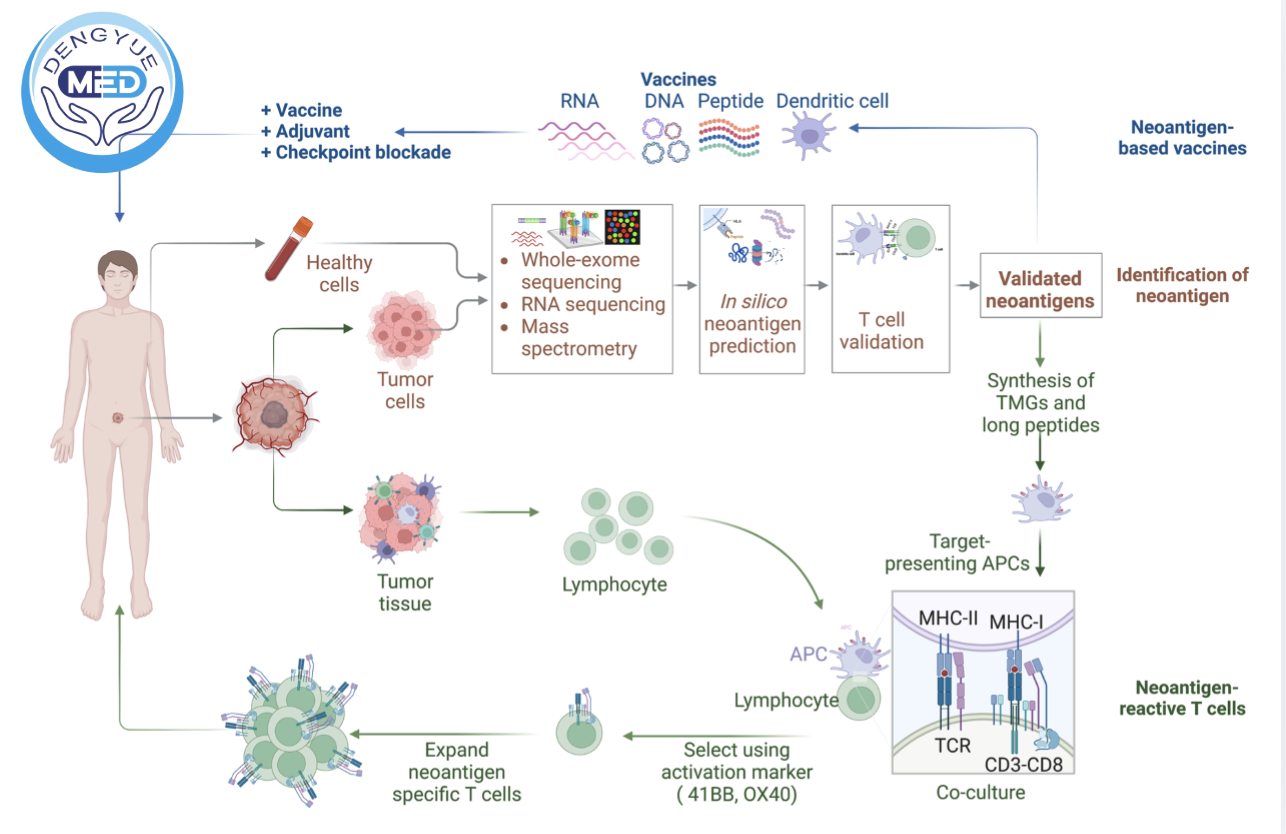
4. Tumor Vaccines
Mechanism: Present tumor antigens to activate immune response and memory.
- Advantages: Low toxicity, strong long-term potential
- Limitations: Weak as monotherapy
- Trend: Personalized mRNA vaccines + checkpoint inhibitors
III. Key Comparison
| Modality | Mechanism Stage | Personalization | Strength | Limitation |
|---|---|---|---|---|
| Checkpoint Inhibitors | T-cell activation | Low | Broad use | Needs “hot tumors” |
| CAR-T | Direct killing | High | Strong efficacy | Toxicity, cost |
| Bispecific Antibodies | T-cell bridging | Low | Ready-to-use | CRS risk |
| Tumor Vaccines | Immune priming | Medium–High | Low toxicity | Weak alone |
IV. Clinical Strategy and Future Trends
The future of immunotherapy lies in combination strategies:
- Checkpoint inhibitors + vaccines to activate “cold tumors”
- CAR-T + bispecific antibodies to overcome resistance
- Bispecific antibodies + ADCs for synergistic effects
Biomarker-driven decision-making using PD-L1, TMB, MSI, and ctDNA is becoming standard in precision oncology.
Conclusion
The four major immunotherapy modalities are not competing approaches, but complementary tools within a unified immune strategy.
With advances in in vivo CAR-T, mRNA vaccines, and multi-target biologics, cancer treatment is moving toward functional cure.
Hong Kong DengYueMed continues to support global access to innovative therapies, helping bridge cutting-edge drug development with real-world clinical application.
Explore more insights on global oncology and pharmaceutical trends:
Related Posts
- A New Option in Targeted Biologic Therapy: Clinical Insights into Guselkumab Injection
- Chinese HER2 Bispecific Antibody + PD-1 Combination Approved in the U.S. for Gastroesophageal Adenocarcinoma, Advancing to the Forefront of Global Oncology
- The 30-Year Chemotherapy Standard Faces a New Challenge: China's PD-1 Serplulimab Breaks New Ground in Gastric Cancer Treatment