Mechanism of Action of HLX3901: How a Tetraspecific Antibody Simultaneously Targets DLL3, CD3, and CD28
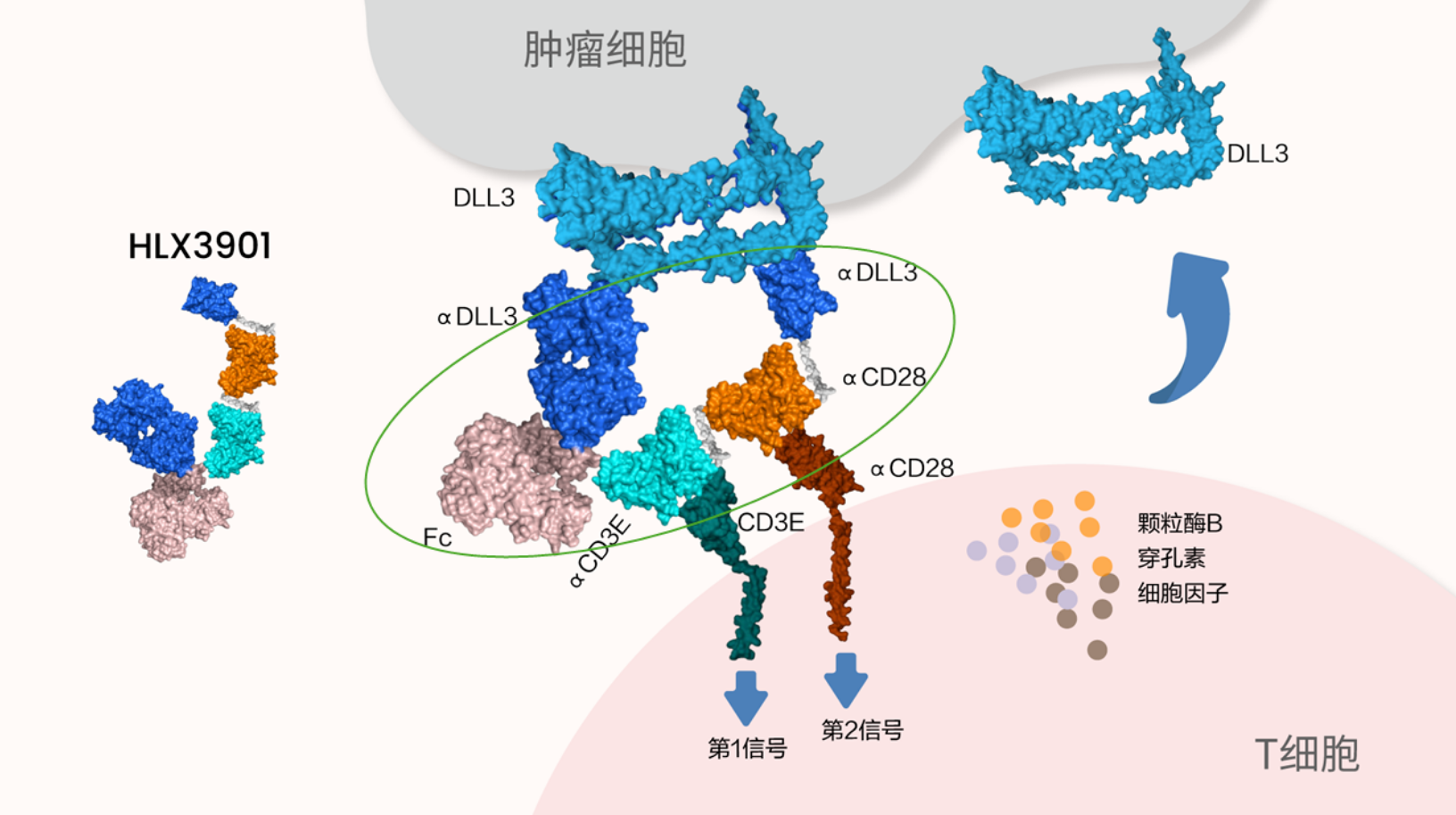
Mechanism of Action of HLX3901
In recent years, cancer immunotherapy has evolved from the single-target era to a multi-dimensional synergy era.
HLX3901, a next-generation tetraspecific antibody developed by Henlius, represents a major innovation in antibody engineering. It simultaneously targets:
- Two epitopes of DLL3
- CD3 (T cell activation)
- CD28 (co-stimulation)
👉 This enables precise tumor targeting + full T cell activation
Tetraspecific Antibodies: Beyond Bispecific Design
Traditional approaches:
- Monoclonal antibodies → single target
- Bispecific antibodies → tumor + T cell bridging
HLX3901 goes further:
- Dual DLL3 binding → stronger tumor recognition
- CD3 + CD28 → complete immune activation
👉 It acts as an immune system orchestrator, not just a connector.
Mechanism of Action: Triple-Synergy Model
1️⃣ Dual-Epitope DLL3 Targeting
DLL3 is highly expressed in small cell lung cancer (SCLC).
Advantages:
- Higher binding affinity
- Stronger tumor localization
- Reduced antigen escape
2️⃣ CD3 Activation Signal (Signal 1)
- Activates T cells
- Initiates cytotoxic response
- Triggers tumor cell killing
👉 Equivalent to “turning on the engine”
3️⃣ CD28 Co-Stimulation (Signal 2)
- Enhances T cell proliferation
- Improves survival
- Promotes cytokine release (IL-2, IFN-γ)
👉 Converts T cells into sustained high-efficiency killers
Why HLX3901 Is a Breakthrough
🔬 Full Simulation of T Cell Activation
- Signal 1 (CD3)
- Signal 2 (CD28)
👉 Mimics physiological immune activation
🧬 Enhanced Anti-Tumor Activity
- Stronger tumor killing
- Better immune infiltration
- Reduced immune escape
💊 Resistance Prevention Potential
- Multi-pathway activation
- Harder for tumors to bypass
Key Indication: Small Cell Lung Cancer (SCLC)
SCLC characteristics:
- Highly aggressive
- High relapse rate
- Limited treatment options
- Poor prognosis
👉 DLL3 is one of the most promising targets in this field.
HLX3901 may represent a new therapeutic paradigm.
Challenges and Risks
⚠️ Safety
- Cytokine Release Syndrome (CRS)
- Overactivation of immune system
⚠️ Manufacturing Complexity
- Multi-specific structure
- Stability challenges
- Higher production cost
⚠️ Clinical Validation
- More complex trials required
- Long validation timeline
Conclusion
HLX3901 represents a major step forward in immunotherapy:
👉 From single-target inhibition
👉 To multi-mechanism immune orchestration
By integrating:
- Dual-epitope DLL3 targeting
- CD3 activation
- CD28 co-stimulation
it opens a new era of network-level immune activation.
As clinical data mature, HLX3901 may become a key therapy for SCLC and other solid tumors.