How Does the Dual-arm Structure of T-cell Engagers Work? Unveiling the Design Logic Behind T-cell Engagers
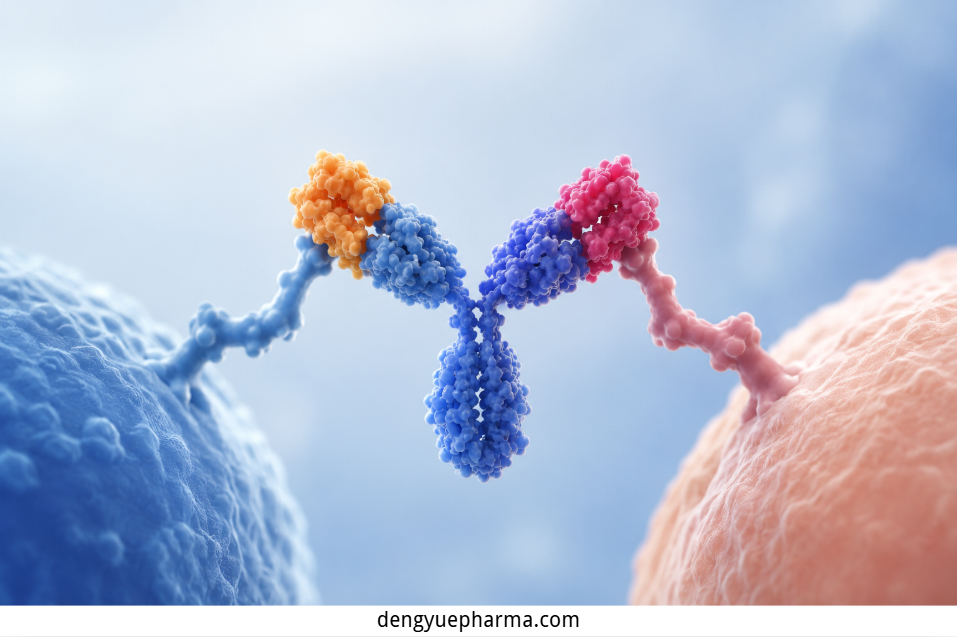
In recent years, T-cell Engagers (TCEs) have become one of the most closely watched innovations in global cancer immunotherapy. From hematologic malignancies to solid tumors, a growing number of TCE candidates have entered clinical development and continue to deliver increasingly encouraging efficacy data.
Unlike conventional monoclonal antibodies, T-cell engagers actively bridge the body’s own immune system with tumor cells, enabling T cells to recognize and destroy cancer cells directly. At the heart of this capability lies their unique dual-arm molecular structure.
So, how exactly does this dual-arm design work? Why has it become one of the most successful antibody engineering strategies in modern oncology? This article explores the scientific principles behind T-cell engagers and their growing role in precision cancer immunotherapy.
What Is a T-cell Engager (TCE)?
A T-cell Engager (TCE) is an innovative immunotherapy engineered using bispecific antibody technology. Its primary purpose is to redirect the patient’s own T cells toward cancer cells and trigger targeted immune-mediated killing.
Unlike conventional monoclonal antibodies that recognize only a single antigen, a typical TCE contains two independent binding domains:
- One arm binds to the CD3 receptor expressed on T cells.
- The other arm recognizes a tumor-associated antigen, such as:
- BCMA
- CD19
- CD20
- GPRC5D
- DLL3
- PSMA
This dual-target architecture allows TCEs to physically connect immune cells with tumor cells, initiating a highly efficient antitumor response.
How Does the Dual-arm Structure Work?
A T-cell engager functions as a molecular bridge that links two different cell types together.
Step 1. Recognizing T Cells
The first binding arm specifically recognizes the CD3 receptor on mature T cells.
CD3 is an essential signaling complex responsible for T-cell activation. Once the TCE binds CD3, resting T cells are recruited and prepared for activation.
Step 2. Recognizing Tumor Cells
The second binding arm recognizes a tumor-associated antigen.
Only cancer cells expressing the target antigen can be bound effectively, greatly improving specificity while minimizing damage to healthy tissues.
Step 3. Forming an Immunological Synapse
After both binding events occur simultaneously, the TCE pulls the T cell and tumor cell into extremely close proximity.
This creates an immunological synapse, allowing T cells to become activated without requiring traditional antigen presentation through MHC molecules.
The formation of this immune bridge is the defining feature of T-cell engagers.
Step 4. Destroying Tumor Cells
Activated T cells release multiple cytotoxic molecules, including:
- Perforin
- Granzymes
- Inflammatory cytokines
These molecules induce apoptosis of tumor cells.
Importantly, after killing one target cell, the T cell can detach and continue attacking additional tumor cells, enabling serial killing and remarkable immune efficiency.
Why Is the Dual-arm Structure So Important?
Compared with conventional monoclonal antibodies, the dual-arm structure fundamentally changes how antibody drugs work.
Its major advantages include:
Active Recruitment of Immune Cells
Rather than waiting for the immune system to naturally recognize tumors, TCEs actively recruit T cells and direct them toward cancer cells.
Improved Cytotoxic Efficiency
By minimizing the physical distance between immune cells and tumor cells, TCEs greatly facilitate immunological synapse formation and accelerate tumor killing.
Greater Target Specificity
Therapeutic activity occurs only when both CD3 and the tumor antigen are simultaneously engaged, reducing nonspecific immune activation.
Overcoming Certain Immune Escape Mechanisms
Even when tumors downregulate antigen presentation pathways, T cells can still be activated through direct physical bridging.
These advantages explain why the dual-arm structure has become the foundational design for most current T-cell engager therapies.
Does a Dual-arm Structure Guarantee Better Efficacy?
Not necessarily.
Although the dual-arm design is essential, overall clinical efficacy depends on careful optimization of many molecular characteristics.
Successful TCE development requires balancing factors such as:
- CD3-binding affinity
- Tumor antigen specificity
- Spatial geometry between the two binding arms
- Molecular stability
- Pharmacokinetics and half-life
- Safety profile
For example:
An excessively strong CD3 interaction may overstimulate T cells and increase the risk of cytokine release syndrome (CRS).
Conversely, insufficient CD3 affinity may fail to adequately activate immune responses.
Finding the optimal balance between efficacy and safety remains one of the greatest challenges in TCE engineering.
The Evolution of Dual-arm Engineering
Modern T-cell engagers have evolved far beyond the original “dual-arm bridge” concept.
Current engineering strategies include:
- Fine-tuning CD3-binding affinity to reduce immune toxicity
- Incorporating Fc domains to extend serum half-life
- Improving tumor antigen selectivity
- Developing conditionally activated TCEs that function primarily within the tumor microenvironment
- Combining TCEs with:
- Antibody-drug conjugates (ADCs)
- Immune checkpoint inhibitors
- Cell therapies
These innovations aim to broaden the therapeutic window while preserving potent antitumor activity.
Future Perspectives for T-cell Engagers
T-cell engagers have become one of the fastest-growing areas of global oncology drug development.
While hematologic malignancies remain the most successful clinical application, developers are rapidly expanding TCE programs into solid tumors, including:
- Lung cancer
- Prostate cancer
- Gastric cancer
- Colorectal cancer
- Ovarian cancer
- Pancreatic cancer
Meanwhile, next-generation platforms continue to emerge, including:
- Multi-target T-cell engagers
- Dual T-cell engagers
- Trispecific T-cell engagers
- Conditionally activated TCEs
Advances in artificial intelligence, protein engineering, structural biology, and precision medicine are expected to further optimize TCE design and improve patient outcomes.
Conclusion
The dual-arm structure is far more than an elegant molecular design—it is the fundamental mechanism that enables T-cell engagers to redirect the body’s immune system against cancer.
By simultaneously binding T cells and tumor cells, TCEs establish highly efficient immune bridges that trigger precise and sustained tumor cell killing.
As antibody engineering technologies continue to evolve, future T-cell engagers will become increasingly sophisticated through improvements in affinity tuning, target selection, conditional activation, and rational combination therapies.
These innovations are expected to expand the clinical potential of TCEs and further establish them as one of the most promising platforms in next-generation cancer immunotherapy.
Related Articles
- Is a Trispecific Antibody Necessarily Better Than a Bispecific?
- Advances in Bispecific Antibody Engineering
- Understanding Cytokine Release Syndrome in Cancer Immunotherapy
- The Future of Antibody-based Cancer Therapies
Related Posts
- Current Status of Immunotherapy for Bladder Cancer: From BCG to Precision Combination Therapy
- Are Women More Prone to Thyroid Cancer? Causes and Prevention Explained
- How Do EGFR×CD3 Bispecific Antibodies Activate T Cells to Kill Head and Neck Tumors? Mechanisms, Advantages, and Latest Clinical Progress