How Do EGFR×CD3 Bispecific Antibodies Activate T Cells to Kill Head and Neck Tumors? Mechanisms, Advantages, and Latest Clinical Progress
Head and neck cancer is one of the most common malignancies worldwide, with more than 90% of cases classified as Head and Neck Squamous Cell Carcinoma (HNSCC). Although surgery, radiotherapy, chemotherapy, targeted therapy, and PD-1 immunotherapy have significantly improved treatment outcomes, long-term survival for patients with recurrent or metastatic disease remains limited.
In recent years, EGFR×CD3 bispecific antibodies have emerged as a promising new direction in immunotherapy for head and neck cancers. By physically linking tumor cells and T cells, these innovative therapies reactivate the body’s immune system to achieve precise tumor cell destruction and may improve outcomes for patients with EGFR-positive HNSCC.
Based on current scientific evidence and ongoing clinical research, DengYueMed reviews the mechanism of action, therapeutic advantages, clinical progress, and future prospects of EGFR×CD3 bispecific antibodies in head and neck cancer treatment.
What Are EGFR×CD3 Bispecific Antibodies?
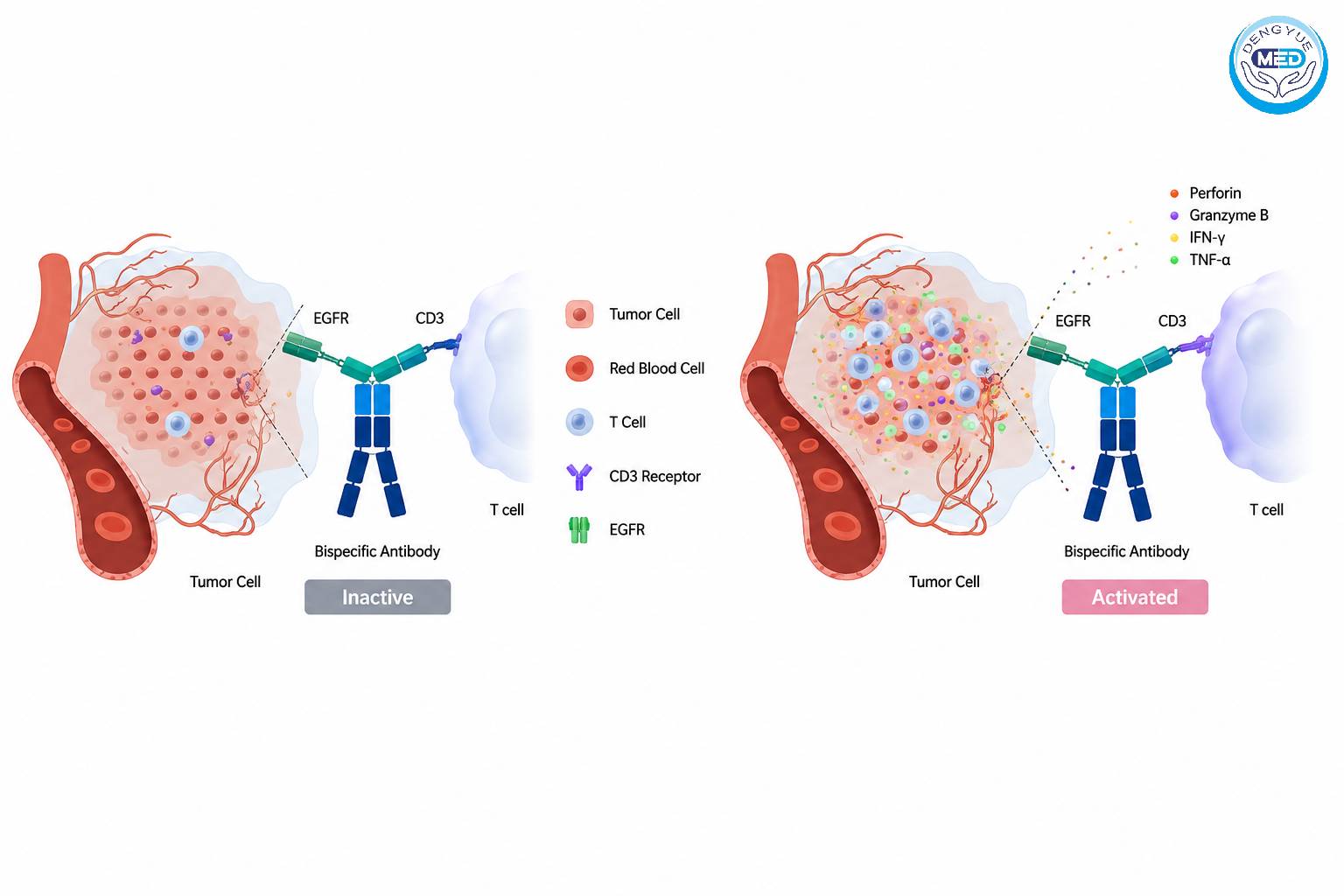
Bispecific antibodies (BsAbs) are a new generation of engineered antibodies capable of simultaneously recognizing two different molecular targets.
EGFR×CD3 bispecific antibodies typically contain two functional binding domains:
- EGFR-binding arm — recognizes Epidermal Growth Factor Receptor (EGFR) expressed on tumor cells.
- CD3-binding arm — binds to the CD3 receptor on T lymphocytes.
Once both ends bind simultaneously, the antibody functions as an immune bridge, bringing cytotoxic T cells into direct contact with cancer cells.
This enables T cells that would otherwise have difficulty recognizing tumors to rapidly initiate an antitumor immune response.
Why Is EGFR an Important Therapeutic Target in Head and Neck Cancer?
EGFR is one of the most extensively studied therapeutic targets in HNSCC.
Research has shown that:
- More than 80–90% of HNSCC tumors overexpress EGFR.
- High EGFR expression is associated with aggressive tumor behavior.
- EGFR overexpression is linked to increased local recurrence and poorer prognosis.
- EGFR signaling promotes tumor proliferation, angiogenesis, invasion, and metastasis.
Current EGFR-targeted therapies—including monoclonal antibodies and tyrosine kinase inhibitors (TKIs)—have improved outcomes for some patients.
However, treatment resistance and limited long-term efficacy remain important clinical challenges.
By directly recruiting cytotoxic T cells, EGFR×CD3 bispecific antibodies provide a completely different strategy for targeting EGFR-positive tumors.
How Do EGFR×CD3 Bispecific Antibodies Activate T Cells?
The therapeutic mechanism is known as T-cell redirection, which can be divided into four major steps.
Step 1. Precise Recognition of Tumor Cells
The EGFR-binding arm selectively recognizes EGFR molecules on tumor cells.
Because EGFR is highly expressed in most HNSCC tumors, bispecific antibodies preferentially accumulate within tumor tissue.
Step 2. Recruitment and Activation of T Cells
The CD3-binding arm simultaneously binds CD3 receptors on T cells.
Unlike conventional immune responses:
- No tumor antigen presentation is required.
- No MHC restriction is necessary.
- No pre-existing antitumor immune response is needed.
Instead, the antibody actively forces T cells into direct contact with tumor cells.
Step 3. Formation of the Immune Synapse
After binding both cells, a stable immune synapse is formed.
Activated T cells release powerful cytotoxic molecules, including:
- Perforin
- Granzyme B
- Interferon-γ (IFN-γ)
- Tumor Necrosis Factor-α (TNF-α)
These molecules induce apoptosis and destruction of tumor cells.
Step 4. Serial Killing
One activated T cell can eliminate multiple tumor cells sequentially.
This serial killing capability allows sustained antitumor activity even when tumor-specific T cells are relatively scarce.
Advantages Over Conventional Therapies
1. No Dependence on Tumor Antigen Presentation
Conventional T-cell responses require recognition of peptide antigens presented by MHC molecules.
EGFR×CD3 bispecific antibodies bypass this requirement and directly activate T cells.
2. Recruitment of More T Cells
Both:
- CD4⁺ helper T cells
- CD8⁺ cytotoxic T cells
can participate in tumor killing through CD3 engagement.
This broadens the immune response.
3. Potential to Overcome Certain Forms of PD-1 Resistance
Some tumors respond poorly to PD-1 inhibitors because of:
- Low immunogenicity
- Poor T-cell infiltration
- Immune escape mechanisms
EGFR×CD3 bispecific antibodies actively recruit circulating T cells into tumors and may help convert immunologically “cold” tumors into more responsive ones.
4. Excellent Combination Therapy Potential
Current research is evaluating combinations with:
- PD-1/PD-L1 inhibitors
- Chemotherapy
- Radiotherapy
- Antibody-drug conjugates (ADCs)
- Other immunotherapies
These combinations may produce synergistic antitumor effects.
Latest Clinical Progress
Several international biotechnology and pharmaceutical companies have advanced EGFR×CD3 bispecific antibodies into early-phase clinical development.
Current research focuses include:
- Improving antibody architecture
- Enhancing tumor selectivity
- Optimizing EGFR/CD3 binding affinity
- Extending half-life
- Developing subcutaneous formulations
- Combining with checkpoint inhibitors
- Combining with ADCs
- Combining with radiotherapy
Next-generation molecules are also being designed with conditional activation mechanisms to improve tumor specificity and reduce toxicity to normal tissues expressing EGFR.
Challenges That Remain
Despite encouraging progress, several important hurdles remain.
Cytokine Release Syndrome (CRS)
Rapid activation of T cells may trigger immune-related adverse events such as:
- Fever
- Hypotension
- Fatigue
Dose-escalation strategies and supportive care remain important.
Off-Target Toxicity
EGFR is also expressed in healthy tissues including:
- Skin
- Gastrointestinal tract
Improving tumor selectivity remains essential for reducing adverse effects.
Tumor Heterogeneity
Not all HNSCC tumors express EGFR at the same level.
Future treatment strategies may rely on biomarker-guided patient selection to maximize therapeutic benefit.
Resistance Mechanisms
Tumors may eventually develop resistance through:
- Loss of EGFR expression
- Tumor microenvironment remodeling
- Additional immune escape pathways
Combination therapies and next-generation bispecific antibodies are expected to address these challenges.
Future Outlook
As bispecific antibody engineering continues to evolve, EGFR×CD3 bispecific antibodies are becoming an increasingly important component of precision immunotherapy for head and neck cancer.
Future advances may include:
- Safer molecular designs
- Improved CRS management
- Longer-acting antibodies
- More convenient dosing schedules
- Personalized biomarker selection
- Combination treatment strategies with PD-1 inhibitors, ADCs, radiotherapy, and targeted therapies
For patients with EGFR-overexpressing HNSCC, these therapies represent an exciting new approach capable of redirecting the immune system to eliminate tumor cells more efficiently.
As additional clinical trial results become available, EGFR×CD3 bispecific antibodies may become an important new treatment option for recurrent and metastatic head and neck cancer.
Conclusion
EGFR×CD3 bispecific antibodies represent one of the most promising advances in immunotherapy for head and neck squamous cell carcinoma.
By simultaneously binding EGFR-positive tumor cells and CD3-positive T cells, these innovative antibodies effectively redirect immune cells to destroy cancer cells without requiring conventional antigen presentation.
Although challenges such as cytokine release syndrome, tumor heterogeneity, and resistance remain, ongoing advances in antibody engineering and combination therapy strategies continue to improve their clinical potential.
As precision oncology evolves, EGFR×CD3 bispecific antibodies are expected to play an increasingly important role alongside PD-1 inhibitors, antibody-drug conjugates, and targeted therapies, offering new hope for patients with recurrent or metastatic head and neck cancer.
Related Posts
- Chinese HER2 Bispecific Antibody + PD-1 Combination Approved in the U.S. for Gastroesophageal Adenocarcinoma, Advancing to the Forefront of Global Oncology
- Sevabertinib for HER2-Mutant NSCLC in China: A New Targeted Treatment Option
- Gastric Cancer Treatment Is No Longer Just About Chemotherapy: How Precision Medicine Is Shaping the Future | A Comprehensive Guide to HER2, CLDN18.2, and FGFR2b