2026 CSCO Oncology Guidelines: Frontline Treatment Updates and Global Precision Oncology Trends
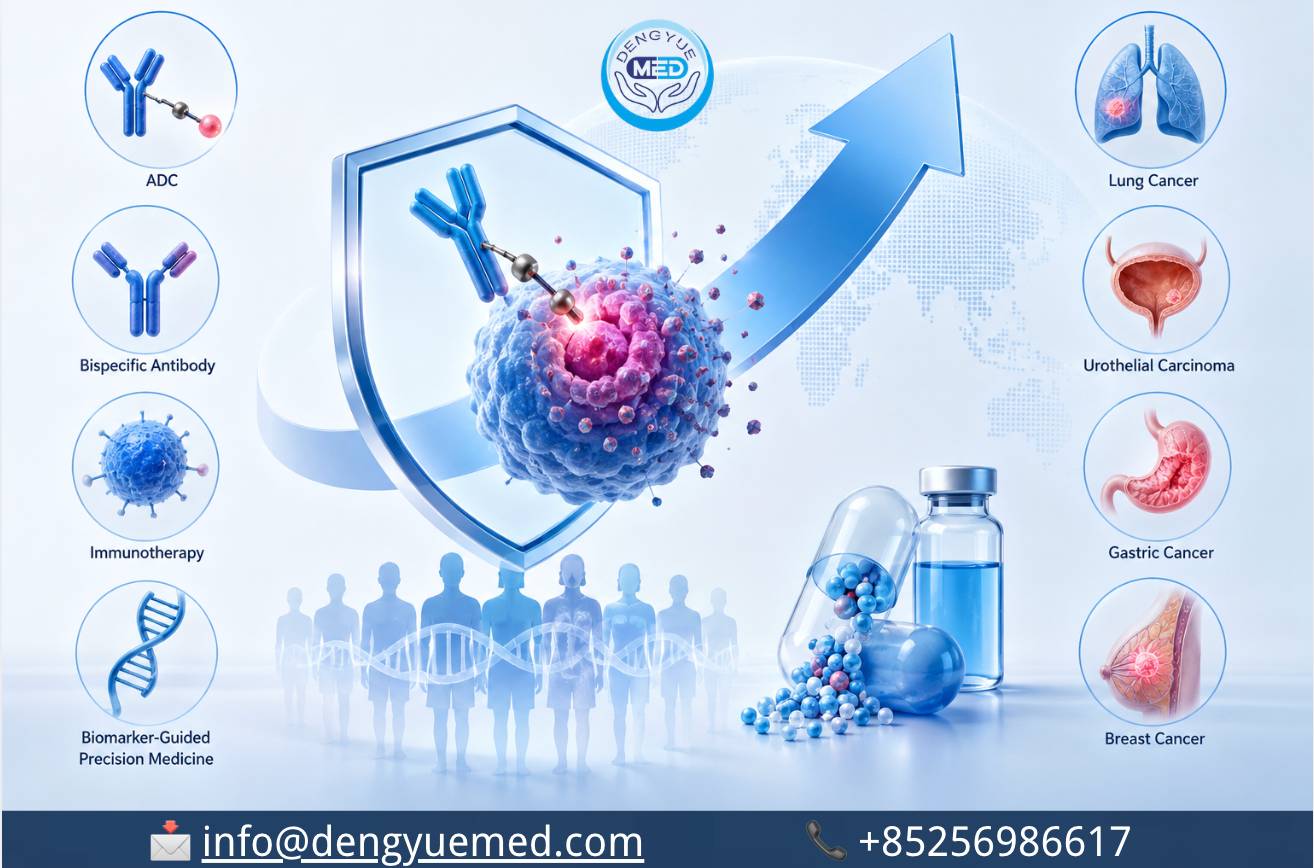
In recent years, with the continuous updates of authoritative clinical guidelines from the Chinese Society of Clinical Oncology (CSCO), the National Comprehensive Cancer Network (NCCN), and the European Society for Medical Oncology (ESMO), oncology treatment has been rapidly evolving from the era of conventional chemotherapy toward precision medicine and immunotherapy.
Between 2025 and 2026, multiple landmark Phase III clinical trials were incorporated into the latest treatment guidelines, including antibody-drug conjugates (ADCs), bispecific antibodies, immune checkpoint inhibitors (PD-1/PD-L1), and novel targeted therapies.
Notably, several Chinese-origin innovative drugs achieved historic breakthroughs by being incorporated into frontline treatment recommendations across multiple tumor types, marking China’s transition from a follower to a global innovator—and in some areas, a leader—in oncology drug development.
This article reviews the most significant frontline treatment updates and emerging trends based on the latest 2026 CSCO guidelines, as well as updates from ASCO, ESMO, and NCCN.
Urothelial Carcinoma: DV + Toripalimab Becomes a Category I Recommendation
The 2026 edition of the CSCO Guidelines for Urothelial Carcinoma introduced one of its most important updates: the combination of Disitamab Vedotin (DV, RC48) and Toripalimab was added as a Category I recommendation (Level 1A evidence) for first-line treatment of:
- Metastatic bladder urothelial carcinoma
- Upper tract urothelial carcinoma (UTUC)
The recommendation applies to both:
- Cisplatin-eligible patients
- Cisplatin-ineligible patients
RC48-C016 Trial Highlights
Compared with platinum-based chemotherapy, DV + Toripalimab demonstrated:
- Nearly doubled objective response rate (ORR)
- Significant improvement in progression-free survival (PFS)
- Meaningful overall survival (OS) benefit
Results from the international RC48-G001 study also confirmed efficacy in Western populations, supporting broader global adoption.
Lung Cancer: Chinese Innovation Challenges Global Standards
Lung cancer remains the leading cause of cancer-related mortality worldwide.
EGFR-Mutated NSCLC
Recommended first-line regimens continue to include:
- Osimertinib
- Osimertinib plus chemotherapy
- Osimertinib plus VEGF inhibition
ALK-Rearranged NSCLC
Preferred options include:
- Alectinib
- Lorlatinib
High PD-L1 Expression
Immunotherapy alone remains strongly recommended:
Among the most closely watched innovations is Ivonescimab, China’s PD-1/VEGF bispecific antibody, which has shown highly promising Phase III clinical results.
Breast Cancer Enters the ADC Era
Recent guideline updates emphasize earlier use of antibody-drug conjugates (ADCs).
Triple-Negative Breast Cancer (TNBC)
Sacituzumab Govitecan has gained stronger recommendations, particularly for:
- PD-L1-positive disease
- Patients previously treated with taxanes
- High-risk recurrence populations
HER2-Low Breast Cancer
The recognition of HER2-low disease has expanded treatment opportunities.
Recommended ADCs include:
- Trastuzumab Deruxtecan (T-DXd)
- Next-generation HER2 ADCs
Gastric Cancer: Biomarker-Driven Precision Therapy
Treatment decisions are increasingly guided by molecular biomarkers rather than histology alone.
Important biomarkers include:
- HER2
- PD-L1 CPS
- Claudin 18.2
- FGFR2b
- MSI-H / dMMR
Claudin 18.2
CLDN18.2-targeted therapies continue to gain momentum globally and are expected to become an important component of gastric cancer treatment.
Chinese PD-1 Inhibitors
First-line recommendations increasingly include:
- Sintilimab
- Tislelizumab
- Cadonilimab
- Toripalimab
Four Major Trends in the 2026 Oncology Guidelines
1. ADCs Move Earlier
ADCs are rapidly moving into:
- First-line treatment
- Neoadjuvant therapy
- Perioperative therapy
2. Bispecific Antibodies Continue Rapid Growth
Bispecific antibodies are expected to reshape treatment across:
- Lung cancer
- Gastric cancer
- Colorectal cancer
- Breast cancer
3. Precision Diagnostics Become Essential
Clinical decision-making increasingly relies on:
- Next-generation sequencing (NGS)
- Immunohistochemistry (IHC)
- Liquid biopsy
- Circulating tumor DNA (ctDNA)
Precision diagnosis has become the gateway to precision treatment.
4. Chinese Innovative Drugs Go Global
During 2025–2026:
- ADC licensing reached record highs
- Bispecific antibody partnerships expanded
- CAR-T therapies accelerated internationally
- Multiple Chinese drugs entered FDA and EMA review pathways
China’s role in global oncology innovation continues to grow.
Clinical Implications
Important recommendations include:
- Earlier molecular profiling
- Multidisciplinary team (MDT) management
- Personalized treatment strategies
- Proactive management of ADC and immune-related toxicities
- Continuous MRD and resistance monitoring
Treatment decisions are becoming increasingly biomarker-driven rather than histology-driven.
DengYueMed: Connecting Global Innovation with Precision Medicine
As CSCO, NCCN, and ESMO guidelines continue to evolve, timely access to trustworthy clinical information is increasingly important.
DengYueMed continuously monitors:
- International oncology guideline updates
- Innovative cancer drug approvals
- Global clinical trial progress
- Precision medicine advances
- Cross-border pharmaceutical accessibility
Through evidence-based medical content, DengYueMed helps healthcare professionals and patients stay informed about the rapidly evolving oncology landscape.
Conclusion
The 2026 oncology guideline updates clearly demonstrate that cancer treatment is entering the era of precision medicine.
ADCs, bispecific antibodies, immunotherapy, and biomarker-guided treatment strategies are reshaping clinical practice worldwide.
Perhaps most importantly, Chinese innovative drugs are increasingly contributing to international treatment standards rather than simply following them.
For patients, timely molecular testing, individualized treatment planning, and awareness of evolving clinical evidence may provide the greatest opportunity for improved survival and quality of life.
Related Posts
- A New Option in Targeted Biologic Therapy: Clinical Insights into Guselkumab Injection
- Chinese HER2 Bispecific Antibody + PD-1 Combination Approved in the U.S. for Gastroesophageal Adenocarcinoma, Advancing to the Forefront of Global Oncology
- The 30-Year Chemotherapy Standard Faces a New Challenge: China's PD-1 Serplulimab Breaks New Ground in Gastric Cancer Treatment