The Role of PD-L1 Expression in Head and Neck Cancer: Treatment Decision-Making and the Latest Advances in Immunotherapy

In recent years, the rapid development of immune checkpoint inhibitors (ICIs) has significantly transformed the treatment landscape of head and neck cancer. Among the various biomarkers used in clinical practice, PD-L1 expression has emerged as one of the most important indicators for determining whether patients are suitable candidates for immunotherapy. It is playing an increasingly critical role in treatment decision-making for patients with recurrent or metastatic head and neck squamous cell carcinoma (HNSCC).
As results from multiple large-scale clinical studies continue to emerge, the role of PD-L1 expression in head and neck cancer extends beyond patient selection. It is also closely associated with treatment strategy selection, response prediction, and long-term survival benefits.
As a Hong Kong-based pharmaceutical wholesaler focusing on innovative oncology medicines, DengYueMed continues to monitor the latest advances in precision oncology and immunotherapy. This article provides a comprehensive overview of the biological mechanisms of PD-L1, testing methodologies, clinical applications, and the latest research developments.
Understanding the PD-1/PD-L1 Immune Checkpoint
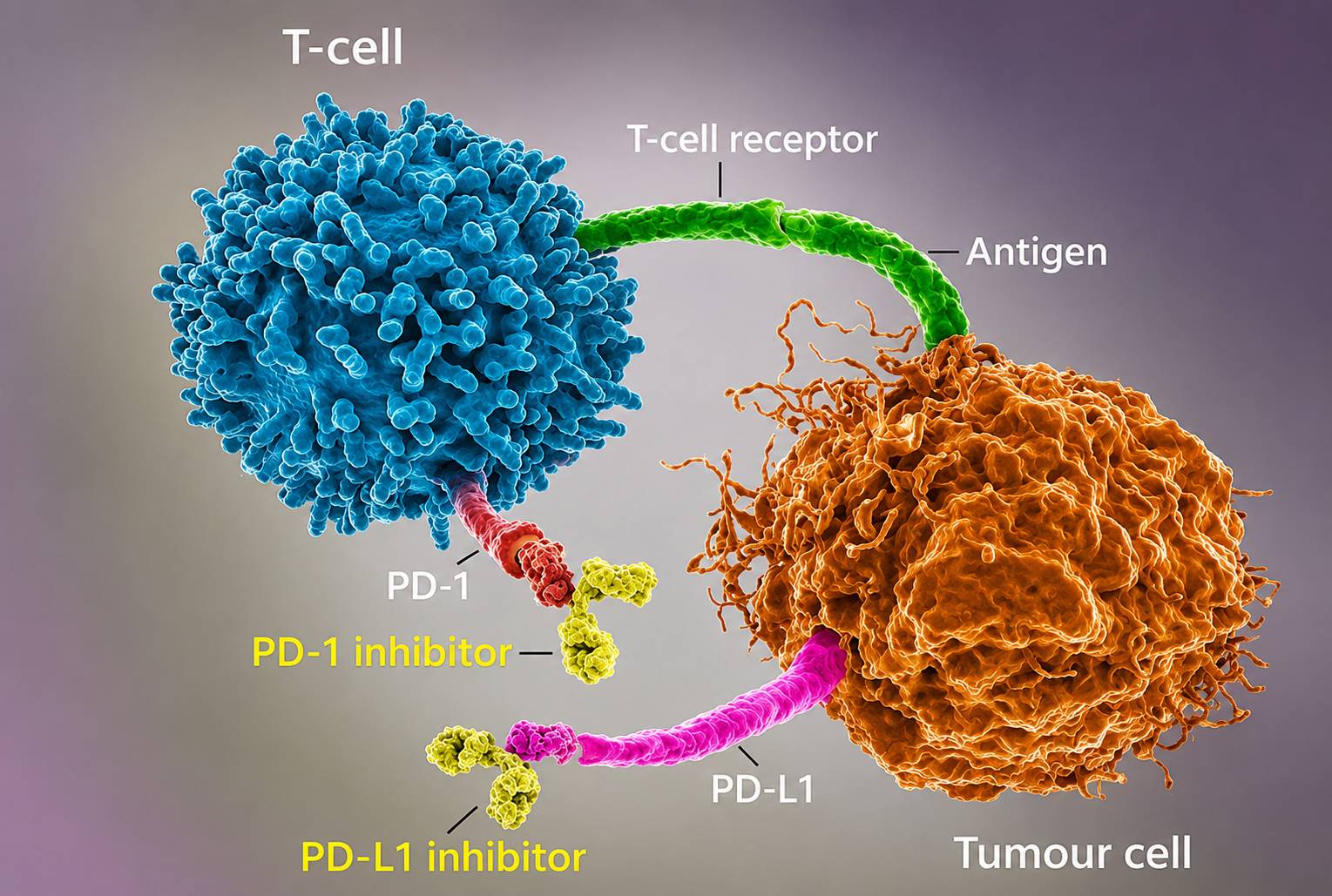
Under normal physiological conditions, the immune system carefully balances attacking harmful pathogens while avoiding damage to healthy tissues.
One of the most important immune regulatory pathways is the PD-1/PD-L1 checkpoint.
- PD-1 (Programmed Death-1) is an inhibitory receptor located on activated T cells.
- PD-L1 (Programmed Death-Ligand 1) is a protein expressed on tumor cells and certain immune cells.
When PD-L1 binds to PD-1, T-cell activity is suppressed, preventing excessive immune responses.
Unfortunately, many cancers—including head and neck squamous cell carcinoma (HNSCC)—exploit this pathway by overexpressing PD-L1, allowing tumor cells to evade immune surveillance.
PD-1 and PD-L1 inhibitors interrupt this interaction, restoring T-cell activity and enabling the immune system to recognize and destroy cancer cells.
Why Is PD-L1 Expression Important in Head and Neck Cancer?
PD-L1 expression has become an essential biomarker in modern HNSCC management because it helps clinicians determine which patients are more likely to benefit from immunotherapy.
Its clinical value includes:
- Selecting patients most likely to respond to PD-1/PD-L1 inhibitors
- Guiding first-line treatment strategies
- Predicting long-term clinical outcomes
- Supporting personalized treatment planning
1. Identifying Patients Most Likely to Benefit from Immunotherapy
Many international clinical guidelines recommend PD-L1 testing before initiating immune checkpoint inhibitor therapy.
The most widely used evaluation method is the Combined Positive Score (CPS).
| CPS Score | Clinical Interpretation |
|---|---|
| CPS < 1 | Low PD-L1 expression; relatively limited benefit from immunotherapy |
| CPS ≥ 1 | Immunotherapy may be considered |
| CPS ≥ 20 | Greater likelihood of durable benefit from immunotherapy |
Although higher PD-L1 expression generally predicts better responses, PD-L1 should be regarded as a predictive biomarker rather than an absolute treatment criterion.
Some patients with low PD-L1 expression may still experience meaningful clinical benefit.
2. Guiding First-Line Treatment Decisions
Several landmark Phase III clinical trials have transformed treatment recommendations for recurrent or metastatic HNSCC.
One of the most influential studies is KEYNOTE-048, which demonstrated that:
- Patients with higher CPS scores achieved longer overall survival with PD-1 inhibitor therapy.
- Selected patients could receive immunotherapy alone.
- Patients with heavy tumor burden may benefit from immunotherapy combined with chemotherapy.
Consequently, PD-L1 testing has become a routine component of first-line treatment planning.
3. Predicting Long-Term Survival
Compared with conventional chemotherapy, immunotherapy offers the possibility of durable responses.
Clinical studies consistently show that patients with higher PD-L1 expression are more likely to experience:
- Longer overall survival (OS)
- More durable disease control
- Extended remission lasting several years in selected patients
Nevertheless, treatment decisions should always integrate PD-L1 status with clinical factors such as disease burden, performance status, and comorbidities.
How Is PD-L1 Tested?
PD-L1 expression is primarily evaluated using immunohistochemistry (IHC).
The typical workflow includes:
- Collection of tumor tissue.
- Immunohistochemical staining using validated PD-L1 antibodies.
- Pathologist calculation of the Combined Positive Score (CPS).
- Integration of laboratory findings with clinical assessment.
Because different immune checkpoint inhibitors may require different companion diagnostic assays, testing should follow the recommendations associated with each therapy.
How Immunotherapy Has Changed Head and Neck Cancer Treatment
The approval of multiple PD-1/PD-L1 inhibitors has ushered in the era of precision immunotherapy.
Current treatment strategies include:
- PD-1 inhibitor monotherapy
- PD-1 inhibitor plus chemotherapy
- PD-1 inhibitor plus radiotherapy
- PD-1 inhibitor plus EGFR-targeted therapy
- PD-1 inhibitor plus antibody-drug conjugates (ADCs)
- PD-1 inhibitor plus bispecific antibodies
- PD-1 inhibitor plus personalized cancer vaccines
Ongoing research suggests that combination therapies may further improve response rates and prolong survival.
Latest Research Developments
Combining Multiple Biomarkers
Researchers increasingly recognize that PD-L1 alone cannot fully predict treatment response.
Future precision medicine strategies may integrate:
- Tumor Mutational Burden (TMB)
- HPV infection status
- IFN-γ gene expression signatures
- CD8⁺ T-cell infiltration
- Circulating tumor DNA (ctDNA)
These comprehensive biomarker models may improve patient selection for immunotherapy.
Perioperative Immunotherapy
Recent clinical studies are evaluating PD-1 inhibitors in:
- Neoadjuvant therapy
- Adjuvant therapy
- Comprehensive perioperative treatment strategies
Early evidence suggests these approaches may improve pathological response rates and reduce recurrence risk.
Emerging Combination Therapies
Several innovative treatment strategies are rapidly advancing, including:
- EGFR×CD3 bispecific antibodies
- HER3-targeted ADCs
- B7-H3-targeted ADCs
- PD-1 inhibitors combined with CAR-T therapy
- PD-1 inhibitors combined with CTLA-4 inhibitors
- Cancer vaccines combined with immunotherapy
These approaches may help overcome resistance and further improve long-term outcomes.
Which Patients Should Undergo PD-L1 Testing?
PD-L1 testing is generally recommended for:
- Newly diagnosed recurrent or metastatic HNSCC patients
- Patients being considered for PD-1/PD-L1 inhibitor therapy
- Patients interested in immunotherapy clinical trials
- Individuals whose physicians believe may benefit from immunotherapy assessment
Appropriate biomarker testing supports more personalized treatment planning.
Future Perspectives
The role of PD-L1 is expected to continue expanding alongside advances in precision oncology.
Future developments will likely include:
- Multi-biomarker predictive models
- Artificial intelligence-assisted pathology
- More personalized immunotherapy combinations
- Integration with genomic sequencing and liquid biopsy
- Earlier application of immunotherapy across disease stages
As research progresses, PD-L1 testing will remain one of the cornerstones of individualized cancer care.
Conclusion
PD-L1 expression has evolved from a biological marker into one of the most important tools for guiding precision medicine in head and neck cancer.
By evaluating PD-L1 expression together with molecular characteristics and clinical factors, physicians can better identify patients who are most likely to benefit from immunotherapy and develop individualized treatment strategies.
As innovative therapies—including immune checkpoint inhibitors, antibody-drug conjugates (ADCs), bispecific antibodies, and cell therapies—continue to advance, PD-L1 testing will play an increasingly central role in optimizing treatment outcomes and expanding the reach of precision immunotherapy.
At DengYueMed, we remain committed to monitoring the latest developments in oncology, immunotherapy, targeted therapies, and precision medicine, helping healthcare professionals and international partners stay informed about emerging treatment options and global pharmaceutical innovation.
Related Posts
- A New Option in Targeted Biologic Therapy: Clinical Insights into Guselkumab Injection
- Chinese HER2 Bispecific Antibody + PD-1 Combination Approved in the U.S. for Gastroesophageal Adenocarcinoma, Advancing to the Forefront of Global Oncology
- The 30-Year Chemotherapy Standard Faces a New Challenge: China's PD-1 Serplulimab Breaks New Ground in Gastric Cancer Treatment