Why Can CAR-T Therapy Cost Tens or Even Hundreds of Thousands More, Even for the Same Treatment?
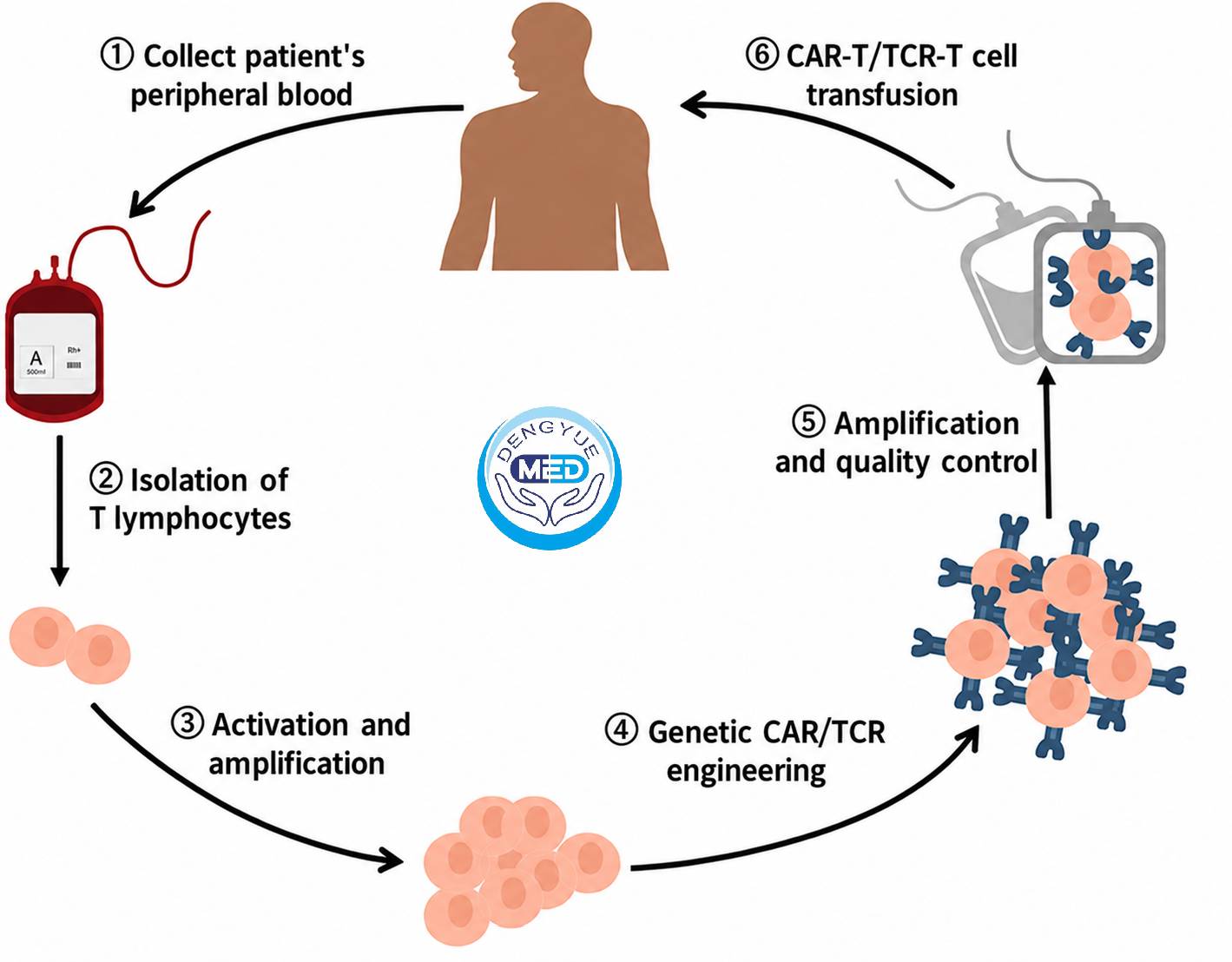
In recent years, CAR-T cell therapy (Chimeric Antigen Receptor T-cell Therapy) has become one of the most groundbreaking advances in cancer treatment. It has offered new hope to many patients with relapsed or refractory leukemia, lymphoma, and multiple myeloma, particularly those who have exhausted conventional treatment options.
However, one question often puzzles patients and their families:
Why can the cost of CAR-T therapy vary so dramatically? Even for the same type of treatment, prices may differ by tens or even hundreds of thousands of dollars depending on the country, hospital, or product.
Where does the money go, and how should patients make informed decisions?
Why Is CAR-T Considered a “Personalized” Cancer Therapy?
Unlike conventional drugs, CAR-T is an individualized cell therapy. The treatment begins with collecting a patient’s own T cells, which are then genetically engineered to recognize and attack cancer cells. After being expanded in a specialized laboratory, the modified cells are infused back into the patient to fight the disease.
The typical treatment process includes:
- T-cell collection
- Genetic modification
- Cell expansion and manufacturing
- Quality control testing
- Cell infusion
- Post-treatment monitoring and follow-up
Because every patient’s cells must be manufactured individually, CAR-T therapy cannot be mass-produced like traditional pharmaceuticals. This highly personalized production process is one of the primary reasons for its high cost.
Why Do CAR-T Prices Vary So Much Between Countries?
The cost of CAR-T therapy differs significantly around the world.
In the United States and Europe, the list price of some approved CAR-T products alone may exceed USD 300,000 to USD 500,000. Once hospitalization, laboratory testing, supportive care, and management of treatment-related side effects are included, the total cost can rise substantially.
By comparison, the overall cost of CAR-T therapy in China has become increasingly competitive in recent years.
Several factors contribute to these pricing differences:
- Different healthcare systems and pricing policies
- Variations in manufacturing costs
- Differences in hospital service charges
- Labor and operational expenses
- Insurance reimbursement and coverage
For international patients, the total treatment cost includes much more than the CAR-T product itself—it encompasses the entire treatment journey.
Where Does the Cost of CAR-T Therapy Go?
Many people assume that the high price is mainly due to the CAR-T product itself. In reality, a complete CAR-T treatment involves several major cost components.
Cell Manufacturing
The largest portion of the cost comes from manufacturing the personalized CAR-T cells. Since each patient’s cells are individually processed, production requires:
- GMP-certified manufacturing facilities
- Viral vector production
- Gene transfer technology
- Cell expansion equipment
- Comprehensive quality control systems
These processes require advanced technology, specialized facilities, and strict regulatory oversight.
Hospitalization and Clinical Care
After CAR-T infusion, patients typically require close monitoring. Some may develop Cytokine Release Syndrome (CRS) or neurological adverse events, both of which require prompt management by experienced medical teams.
Related medical expenses may include:
- Hospital stays
- Intensive care support when necessary
- Laboratory testing
- Medical imaging
- Supportive medications and treatments
Multidisciplinary Medical Team
CAR-T therapy requires coordination among multiple specialists throughout the treatment process, including:
- Hematologists and oncologists
- Cell therapy specialists
- Transfusion medicine experts
- Intensive care physicians
- Pharmacists
- Specialized nursing teams
This multidisciplinary approach is another important contributor to overall treatment costs.
Why Are Chinese CAR-T Therapies Receiving Increasing Attention?
China’s CAR-T industry has advanced rapidly over the past several years. With multiple domestically developed CAR-T therapies approved for clinical use, China has become one of the world’s most active centers for CAR-T research and innovation.
Key advantages of China’s CAR-T ecosystem include:
- Extensive clinical research resources
- A large patient population
- An increasingly mature manufacturing infrastructure
- Rapid technological innovation
- More competitive treatment costs
China has also established several internationally recognized CAR-T treatment centers, particularly for hematologic malignancies. As a result, an increasing number of international patients are considering China as a destination for CAR-T therapy.
Why Do Different CAR-T Products Have Different Prices?
Even within the same country, CAR-T products can vary considerably in price.
Major reasons include:
- Different therapeutic targets
- Different technology platforms
- Different approved indications
- Different manufacturing processes
- Differences in research and development investment
Current CAR-T therapies are primarily designed to treat conditions such as:
- CD19-positive leukemia
- B-cell lymphoma
- BCMA-positive multiple myeloma
- Certain solid tumors under clinical investigation
Since each product serves different patient populations and clinical objectives, pricing naturally varies.
Does a Higher Price Mean Better Outcomes?
Not necessarily.
One of the most common misconceptions is that a more expensive CAR-T therapy automatically delivers superior results. In reality, treatment effectiveness depends on many factors beyond price.
Patients should instead consider:
- Whether the therapy is appropriate for their specific disease
- The strength of available clinical evidence
- The experience of the treating hospital
- The expertise of the medical team
- The quality of post-treatment monitoring and long-term follow-up
Choosing the most suitable treatment is far more important than simply selecting the most expensive option.
China Is Emerging as a Global Destination for CAR-T Therapy
In the past, many patients believed that CAR-T therapy was available only in the United States or Europe. Today, China has made remarkable progress in CAR-T research, manufacturing, and clinical application.
Beyond technological advances, China also offers several additional advantages:
- More competitive treatment costs
- Strong clinical resources
- A growing pipeline of innovative CAR-T therapies
- Relatively shorter waiting times
- Continuously improving international patient services
At the same time, DengYue Medicine remains committed to innovative therapies and international patient support, helping overseas patients connect efficiently with high-quality medical resources in China.
Conclusion
CAR-T therapy is transforming treatment outcomes for many patients with hematologic cancers. However, significant price differences—sometimes reaching tens or even hundreds of thousands of dollars—reflect multiple factors, including personalized cell manufacturing, healthcare infrastructure, hospital services, and national healthcare systems.
When considering CAR-T therapy, patients should look beyond price alone. The most important considerations are whether the treatment is appropriate for their condition, the clinical experience of the medical team, safety management, and overall treatment accessibility.
As China’s CAR-T industry continues to expand and innovate, the country is becoming an increasingly attractive destination for international patients seeking advanced, high-quality, and cost-effective cell therapies.
DengYue Medicine continuously monitors the latest developments in CAR-T therapy, hematologic malignancies, cell therapy, and precision oncology, helping healthcare professionals and international patients stay informed about innovative treatment options and global medical advances.
Related Posts
- A New Option in Targeted Biologic Therapy: Clinical Insights into Guselkumab Injection
- Chinese HER2 Bispecific Antibody + PD-1 Combination Approved in the U.S. for Gastroesophageal Adenocarcinoma, Advancing to the Forefront of Global Oncology
- The 30-Year Chemotherapy Standard Faces a New Challenge: China's PD-1 Serplulimab Breaks New Ground in Gastric Cancer Treatment