Understanding Breast Cancer Subtypes: Differences Between Luminal A, Luminal B, HER2-Positive, and Triple-Negative Breast Cancer

Breast cancer is the most commonly diagnosed cancer among women worldwide and remains one of the most widely discussed health concerns today. With the rapid development of precision medicine, researchers have learned that breast cancer is not a single disease, but rather a group of diseases with distinct biological characteristics.
At DengYue Medicine, while sharing the latest updates on global oncology innovations and breakthrough therapies, we are frequently asked one common question by patients and healthcare partners:
Why do people with breast cancer receive completely different treatment plans?
Some patients mainly receive endocrine therapy, while others require HER2-targeted therapy, chemotherapy, immunotherapy, or antibody-drug conjugates (ADCs). Although they all have breast cancer, their treatment approaches can be remarkably different.
The answer lies in breast cancer subtypes.
Different molecular subtypes vary significantly in their biological behavior, growth rate, risk of recurrence, and response to treatment. Understanding these differences allows physicians to develop personalized treatment strategies and helps patients better understand their pathology reports and treatment options.
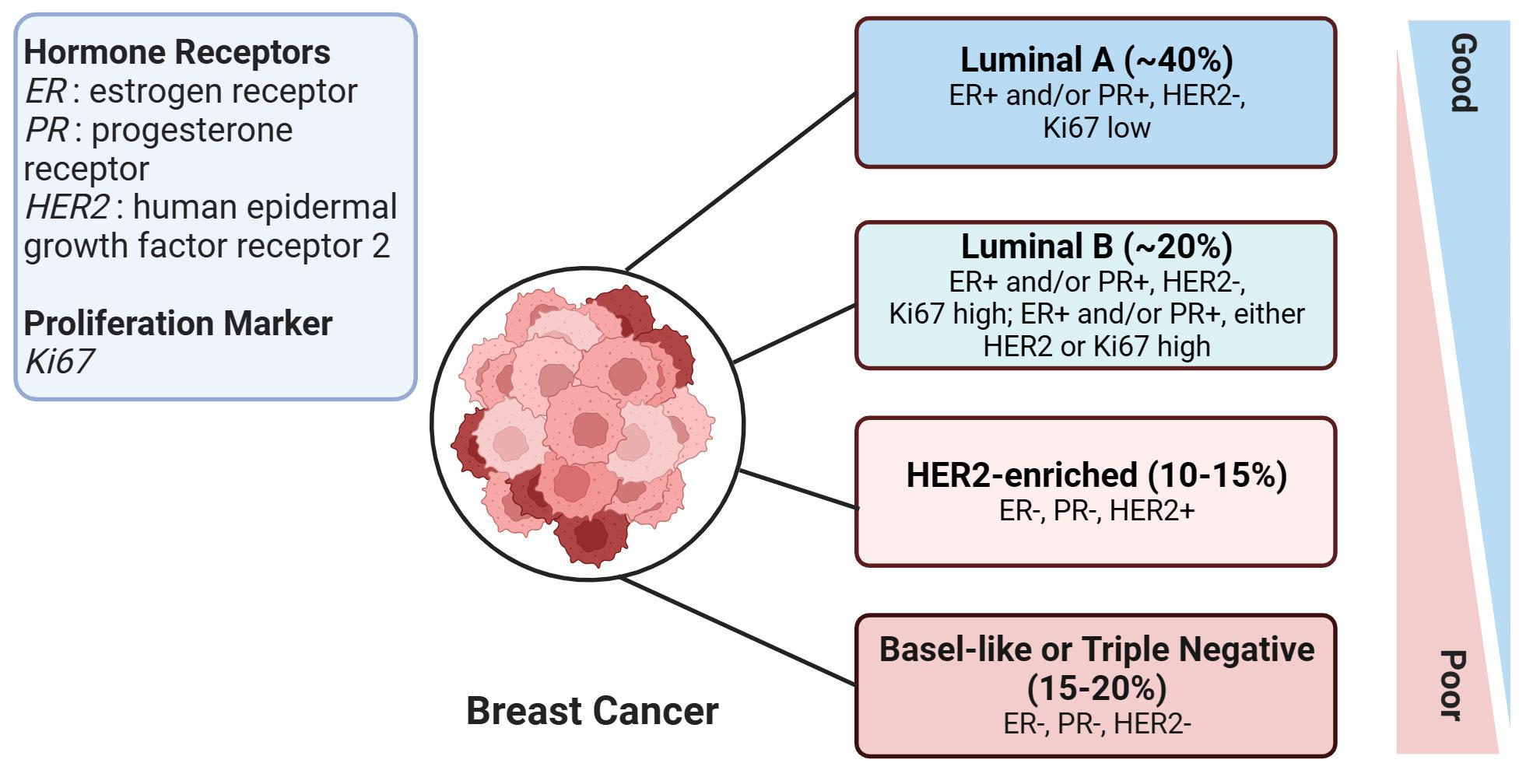
Today, breast cancer is generally classified into four major molecular subtypes based on immunohistochemistry (IHC) and pathological testing:
- Luminal A
- Luminal B
- HER2-Positive Breast Cancer
- Triple-Negative Breast Cancer (TNBC)
Each subtype has unique characteristics, treatment strategies, and clinical outcomes.
Why Are Breast Cancer Subtypes Important?
In the past, treatment decisions were primarily based on tumor size and lymph node involvement.
Today, physicians pay much closer attention to the biological characteristics of cancer cells because these factors determine which therapies are most likely to be effective.
A pathology report usually includes several important biomarkers:
Estrogen Receptor (ER)
ER indicates whether cancer cells depend on estrogen for growth.
Patients with ER-positive tumors often benefit from endocrine therapy.
Progesterone Receptor (PR)
PR helps evaluate hormone sensitivity and provides additional information for treatment planning.
Human Epidermal Growth Factor Receptor 2 (HER2)
HER2 is a protein that promotes cell growth.
Tumors with HER2 overexpression generally grow more aggressively but respond well to HER2-targeted therapies.
Ki-67
Ki-67 measures how quickly cancer cells are dividing.
Higher Ki-67 generally indicates a faster-growing and more aggressive tumor.
Physicians combine these biomarkers with other clinical factors—including patient age, disease stage, lymph node status, and genetic testing—to determine the optimal treatment strategy.
Breast Cancer Molecular Subtypes
Luminal A Breast Cancer
Luminal A accounts for approximately 40–50% of breast cancers.
Typical characteristics include:
- ER-positive
- PR-positive
- HER2-negative
- Low Ki-67
These tumors usually grow slowly, have lower aggressiveness, and are associated with the lowest recurrence risk among the four subtypes.
Common Treatment
- Surgery
- Radiation therapy (when indicated)
- Endocrine therapy
Common endocrine medicines include:
- Tamoxifen
- Letrozole
- Anastrozole
- Exemestane
Higher-risk patients may also receive CDK4/6 inhibitors:
- Abemaciclib
- Palbociclib
- Ribociclib
Overall, Luminal A has the most favorable prognosis.
Luminal B Breast Cancer
Luminal B is hormone receptor-positive but generally more aggressive than Luminal A.
Typical features include:
- ER-positive
- PR-low or PR-negative
- Higher Ki-67
- HER2-positive or HER2-negative
Compared with Luminal A, Luminal B tumors grow faster and have a higher recurrence risk.
Treatment
Treatment often includes:
- Surgery
- Radiation therapy
- Chemotherapy
- Endocrine therapy
If HER2-positive:
- HER2-targeted therapy
CDK4/6 inhibitors have also significantly improved outcomes for patients with hormone receptor-positive, HER2-negative advanced disease.
HER2-Positive Breast Cancer
HER2-positive breast cancer accounts for approximately 15–20% of all cases.
Before targeted therapy became available, HER2-positive disease was considered one of the most aggressive breast cancer subtypes.
Today, HER2-positive breast cancer is considered one of the greatest success stories in precision oncology.
Standard Treatment
Treatment generally includes:
- Surgery
- Chemotherapy
- HER2-targeted therapy
- Radiation therapy
Common HER2-targeted medicines include:
- Trastuzumab
- Pertuzumab
- Trastuzumab Emtansine (T-DM1)
- Trastuzumab Deruxtecan (T-DXd)
- Pyrotinib
- Tucatinib
The Rise of ADC Therapy
Antibody-drug conjugates (ADCs) combine monoclonal antibodies with highly potent chemotherapy payloads.
They deliver treatment more precisely to tumor cells while reducing damage to healthy tissues.
Next-generation ADCs have significantly improved outcomes for patients with advanced HER2-positive disease.
Triple-Negative Breast Cancer (TNBC)
Triple-Negative Breast Cancer accounts for approximately 10–20% of all breast cancers.
TNBC lacks expression of:
- Estrogen Receptor (ER)
- Progesterone Receptor (PR)
- HER2
Because these targets are absent, TNBC patients generally do not benefit from endocrine therapy or HER2-targeted therapy.
TNBC is often associated with:
- Faster tumor growth
- Greater aggressiveness
- Higher recurrence risk
- More frequent metastasis
- Younger patient age
- BRCA1 mutations
Advances in TNBC Treatment
Immunotherapy
Immune checkpoint inhibitors have become important treatment options.
Representative medicine:
For eligible patients, immunotherapy combined with chemotherapy has demonstrated improved outcomes.
PARP Inhibitors
For patients with BRCA mutations:
PARP inhibitors selectively target cancer cells by interfering with DNA repair mechanisms.
Antibody-Drug Conjugates (ADCs)
Representative ADCs include:
Clinical studies have demonstrated improved disease control and prolonged survival for many patients with metastatic TNBC.
Comparison of the Four Major Breast Cancer Subtypes
| Subtype | ER/PR | HER2 | Growth Rate | Main Treatment | Prognosis |
|---|---|---|---|---|---|
| Luminal A | Positive | Negative | Slow | Endocrine therapy | Most favorable |
| Luminal B | Positive | Positive or Negative | Moderate to Fast | Endocrine therapy + Chemotherapy ± HER2 therapy | Good |
| HER2-Positive | Positive or Negative | Positive | Fast | HER2-targeted therapy + Chemotherapy | Significantly improved |
| Triple-Negative (TNBC) | Negative | Negative | Fastest | Chemotherapy + Immunotherapy + PARP inhibitors + ADCs | Relatively poorer but improving |
How Is Breast Cancer Subtype Determined?
Breast cancer subtype cannot be determined through symptoms or imaging alone.
Diagnosis requires pathological examination after biopsy or surgery.
Key biomarkers include:
- Estrogen Receptor (ER)
- Progesterone Receptor (PR)
- HER2
- Ki-67
If HER2 results are equivocal, physicians may recommend Fluorescence In Situ Hybridization (FISH) testing to determine HER2 gene amplification.
Understanding these biomarkers is essential for selecting individualized treatment.
Conclusion
Breast cancer is not a single disease but a collection of biologically distinct subtypes.
Luminal A, Luminal B, HER2-positive, and Triple-Negative Breast Cancer each differ in molecular characteristics, treatment strategies, and prognosis.
With continuous advances in:
- Endocrine therapy
- HER2-targeted therapy
- CDK4/6 inhibitors
- PARP inhibitors
- Immunotherapy
- Antibody-drug conjugates (ADCs)
patients now have access to increasingly personalized treatment options.
For patients, regular screening, complete pathological evaluation, biomarker testing, and close collaboration with experienced healthcare professionals remain the foundation of optimal breast cancer care.
At DengYueMed, we continue to follow global advances in breast cancer diagnosis, precision medicine, and innovative therapies while providing reliable educational resources and pharmaceutical insights to healthcare professionals, partners, and patients worldwide.
Related Posts
- A New Option in Targeted Biologic Therapy: Clinical Insights into Guselkumab Injection
- Chinese HER2 Bispecific Antibody + PD-1 Combination Approved in the U.S. for Gastroesophageal Adenocarcinoma, Advancing to the Forefront of Global Oncology
- The 30-Year Chemotherapy Standard Faces a New Challenge: China's PD-1 Serplulimab Breaks New Ground in Gastric Cancer Treatment