Eli Lilly’s Retatrutide Phase 3 Data Shocks the Market: Behind the 30% Weight Loss, the Peptide API Supply Chain Emerges as a New Hotspot
On May 21, Eli Lilly and Company announced positive topline results from the Phase 3 TRIUMPH-1 clinical trial of its next-generation weight-loss drug Retatrutide. The data showed that Retatrutide delivered highly significant weight reduction in adults with obesity or overweight accompanied by at least one weight-related comorbidity, but without diabetes.
The results quickly drew intense attention from both the global pharmaceutical industry and capital markets. In the increasingly competitive GLP-1 obesity drug landscape, Retatrutide demonstrated weight-loss efficacy approaching that of certain bariatric surgeries, further strengthening expectations for the “next-generation obesity treatment revolution.”
At the same time, another previously low-profile sector has rapidly gained momentum — the peptide raw material and API supply chain.
Why Is Retatrutide Shaking the Industry?
The biggest distinguishing feature of Retatrutide is that it is not a traditional single-target GLP-1 drug. Instead, it is a “triple agonist” that simultaneously targets:
- GLP-1 receptors
- GIP receptors
- Glucagon (GCG) receptors
This mechanism means Retatrutide may not only suppress appetite and delay gastric emptying, but also further enhance energy expenditure and fat metabolism efficiency, making it one of the most powerful weight-loss drug candidates currently under development.
According to Eli Lilly’s published data:
- The 9mg dose group achieved an average weight loss of 25.9%
- The 12mg dose group achieved an average weight loss of 28.3%
- The 4mg dose group achieved an average weight loss of 19.0%
Even more remarkably, in the extension study involving participants with BMI ≥35, those receiving 12mg Retatrutide for 104 weeks achieved an average weight loss of 30.3%.
This means that for some patients with severe obesity, the degree of weight reduction has already reached — or even approached — the results typically associated with metabolic bariatric surgery.
What Does “30% Weight Loss” Really Mean?
For many years, traditional weight-loss drugs typically achieved average weight reductions of only 5%–10%.
Then Semaglutide raised the industry benchmark to around 15%, while Tirzepatide pushed it beyond 20%.
Now, Retatrutide is driving that figure close to 30% — a development with enormous clinical significance.
For obesity treatment, greater weight reduction often translates into broader metabolic benefits, including improvements in:
- Blood glucose control
- Lipid metabolism
- Cardiovascular risk
- Fatty liver disease
- Hypertension
- Sleep apnea
In this clinical trial, Retatrutide also demonstrated meaningful improvements in several cardiometabolic indicators, including:
- Reduced waist circumference
- Improved triglyceride levels
- Lower non-HDL cholesterol
- Reduced systolic blood pressure
- Improved hsCRP levels
Dr. Ania Jastreboff, professor at the Yale School of Medicine and director of the Yale Obesity Research Center, even stated that Retatrutide could become “an important tool for changing patients’ health trajectories.”
This also signals that GLP-1 therapies are evolving from simple “weight-loss products” into true platform therapies for metabolic diseases.
Why Is Capital Now Focusing on Peptide API Companies?
From the perspective of capital markets, the significance of Retatrutide goes far beyond impressive clinical data.
More importantly, it once again validates the enormous global market potential for obesity drugs.
Within this industrial chain, peptide raw material and API manufacturers are becoming key beneficiaries.
The reason is simple: Retatrutide is fundamentally a highly complex long-chain peptide drug.
Its development and manufacturing rely heavily on:
- Solid-phase peptide synthesis
- High-purity separation technologies
- Advanced modification processes
- Large-scale GMP manufacturing capabilities
Compared with earlier GLP-1 drugs, Retatrutide has a more complex molecular structure and presents greater manufacturing challenges, placing much stricter demands on upstream supply chains.
This means that in the future, the truly scarce resource may not be obesity drug concepts themselves, but rather high-quality peptide manufacturing capacity.
Is the Peptide Industry Entering a “Super Cycle”?
As Semaglutide, Tirzepatide, and now Retatrutide continue driving the rapid expansion of the global obesity drug market, the peptide industry is experiencing unprecedented demand growth.
In the past, peptide drugs were primarily used in:
- Diabetes
- Growth hormone therapies
- Rare diseases
- Certain oncology indications
Today, however, obesity drugs are transforming the peptide market into a mass-consumer healthcare industry.
The potential patient population is expanding from millions to hundreds of millions worldwide.
The challenge is that global high-end peptide production capacity remains limited.
In particular, significant bottlenecks still exist in:
- Long-chain peptides
- High-purity peptide production
- Commercial-scale manufacturing
As a result, investors are beginning to reassess the long-term strategic value of peptide API companies.
Why Are Chinese Peptide Companies Drawing Attention?
In recent years, China’s peptide supply chain has developed rapidly.
Some Chinese companies now possess:
- International GMP certification capabilities
- Commercial-scale manufacturing experience
- Advanced CDMO service capabilities
- Long-chain peptide development technologies
At the same time, China continues to maintain strong advantages in engineering efficiency and cost control.
Against the backdrop of surging global demand for obesity drugs, many overseas pharmaceutical companies are actively seeking new supply chain partners.
This creates an important window of opportunity for Chinese peptide manufacturers.
Recently, many companies have begun:
- Expanding peptide production workshops
- Increasing investment in solid-phase synthesis lines
- Developing continuous manufacturing technologies
- Enhancing international regulatory registration capabilities
At the core, these investments represent long-term bets on the future growth of the GLP-1 and metabolic disease market.
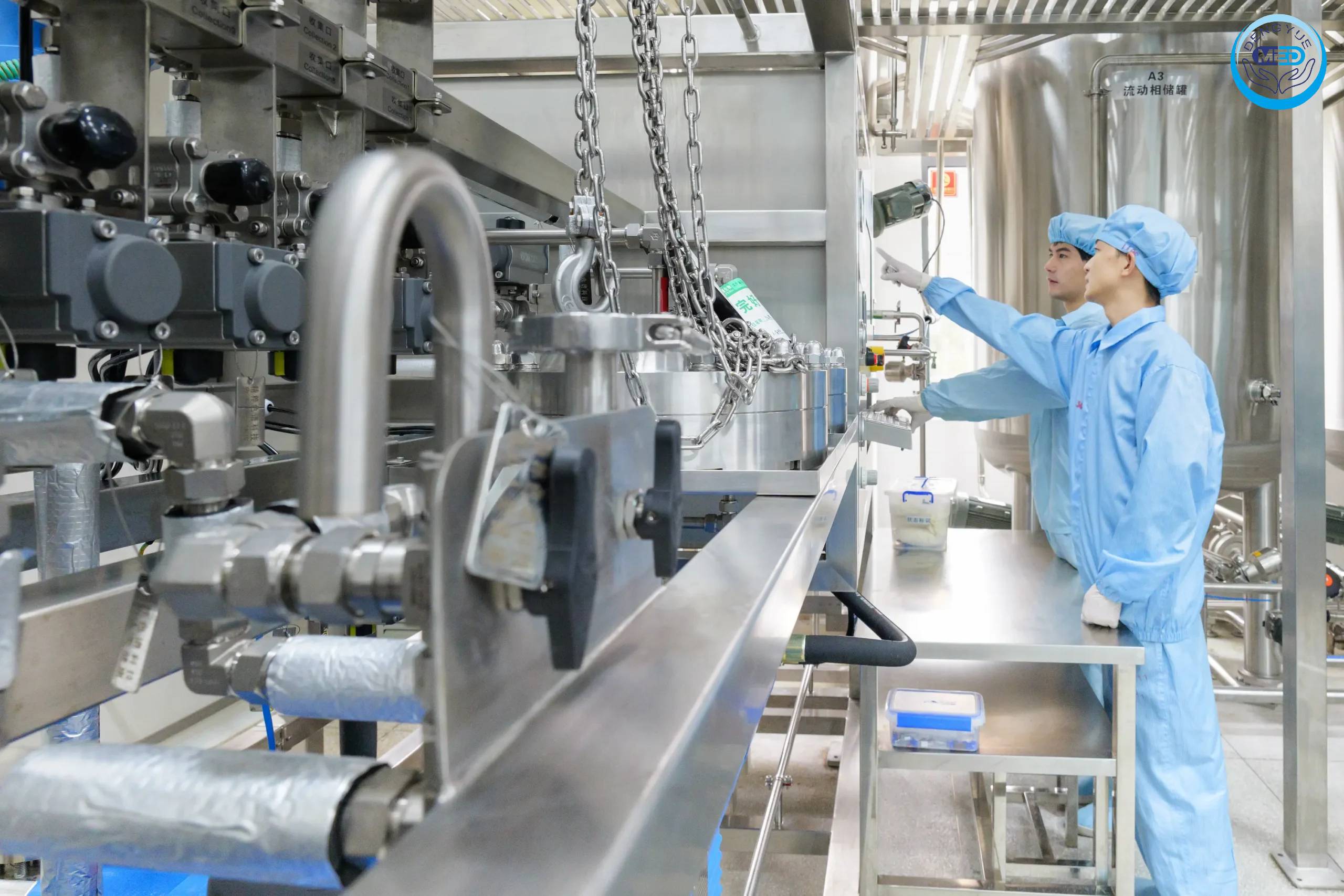
Leveraging China’s mature industrial ecosystem and proprietary core technologies, DengYueMed continues to strengthen collaboration with innovative pharmaceutical companies both domestically and internationally. By balancing product quality, production capacity, and cost efficiency, the company is helping accelerate the commercialization of next-generation weight-loss peptide drugs such as Retatrutide, while positioning itself to capture the major opportunity arising from the globalization and substitution of China’s peptide supply chain.
The Next Stage of Competition: Not Just Drugs, but Supply Chains
Following the release of Retatrutide’s Phase 3 data, the market has begun to realize that future competition in obesity drugs will no longer be limited to pharmaceutical companies alone.
It will increasingly become a competition of entire supply chain capabilities.
Even with highly effective drugs, companies may struggle to meet global demand if they face:
- Insufficient raw materials
- Limited production capacity
- Excessive manufacturing costs
- Difficulties in process scale-up
As a result, companies with advanced peptide manufacturing capabilities may become some of the most valuable “hidden core assets” in the future global pharmaceutical industry.
Conclusion
The success of Retatrutide’s Phase 3 trial not only marks another milestone for the obesity drug industry, but also signals a new restructuring of the global pharmaceutical supply chain.
From Semaglutide to Tirzepatide and now Retatrutide, the GLP-1 sector is evolving from competition around individual products into competition across:
- Technology platforms
- Manufacturing capacity
- Supply chain capabilities
In this new global race, peptide API companies are moving from behind the scenes to center stage.
For capital markets, the most valuable long-term opportunities may not simply be the next blockbuster drug, but rather the core manufacturing capabilities that can continuously support the next generation of innovative medicines.